
Updated: Thursday, July 2, 2026 · Next update: Thursday, July 9, 2026
This NC Outer Banks fishing report for early July tracks the shift into the summer pattern. Cobia lead the list, with the spring run tapering but still giving up fish to sight-casters off the beaches and around the buoys on calm, sunny days. Spanish mackerel and bluefish blitz the beaches and piers, Gulf Stream boats find mahi, tuna and billfish, and flounder and puppy drum work the sound. The main condition to plan around is calm, sunny weather in the morning, which you need for spotting cobia before the afternoon sea breeze.
What’s Hitting
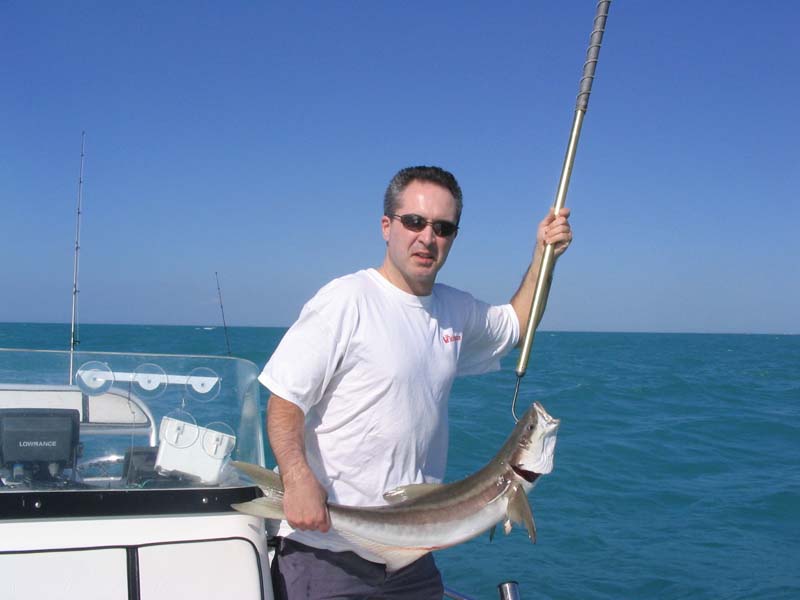
Cobia are still around, sight-cast off the beaches and around the buoys on calm, sunny days as the run winds down. Spanish mackerel and bluefish blitz bait along the beaches and off the piers. Offshore, the Gulf Stream fleet finds mahi, tuna and billfish, and inshore the flounder and puppy drum are in the sound.
Where to Find Them
Sight-cast the beachfront and buoy lines for cobia on calm mornings. Buoys and other floating structure attract bait and give cobia something to orient to, which is why they are a reliable place to look.
Spanish and blues blitz the beaches and the piers. Run to the Gulf Stream for mahi and billfish, and work the sound and inlet edges for flounder and red drum.
Tides & Conditions
Nearshore water warms into the low 70s. Calm, sunny mornings are essential for spotting cruising and buoy cobia, Spanish blitz on clean water along the beach, and the inlet on a moving tide concentrates the inshore flounder and drum. Watch the afternoon sea breeze.
Menhaden, glass minnows and small mullet school thick along the beaches, and the Spanish, blues and roaming cobia all key on that bait. Watch for birds working the bait schools; the diving gulls lead you right to the fast-moving beachfront blitzes on calm mornings.
Tackle & Tactics
- Cobia: a bucktail or a live eel thrown to fish spotted on the surface.
- Spanish: a Gotcha plug or a small spoon retrieved fast.
- Offshore: troll a ballyhoo spread for mahi and billfish.
- Flounder: drift a Gulp or minnow on a jighead along the sound and inlet edges.
Local Intel This Week
The Oregon Inlet ramp gives the fastest access to the ocean and the Gulf Stream, with Oden’s Dock in Hatteras and the Wanchese ramps serving the sound side. Launch at Oregon Inlet for the beachfront cobia and the stream run, and use Wanchese or Oden’s Dock for flounder and drum on the sound and inlet edges. Cobia concentrate along the beaches and buoys, Spanish and blues in the beachfront bait blitzes. Check current state and federal regulations and seasons before keeping fish.
This Week’s Tip
When you spot a cobia cruising the surface, don’t lead it too far. These fish are curious and track a bucktail thrown close and worked erratically right in front of them. Keep a second rod rigged and ready, because cobia often travel in pairs and the follower will eat once the first one is hooked.
Planning a trip to NC Outer Banks?
This report tells you what happened. ReelAI tells you what to do about it — a briefing for your date, your target species and how you're fishing, built from our reports plus live NOAA and USGS data.
Powered by ReelAI — fishing.digital's intelligence layer. Answers are generated from fishing.digital reports and public NOAA, NWS and USGS data, and may be incomplete or out of date. Regulations and marine safety information are summaries only; always confirm with the responsible authority before you fish.