
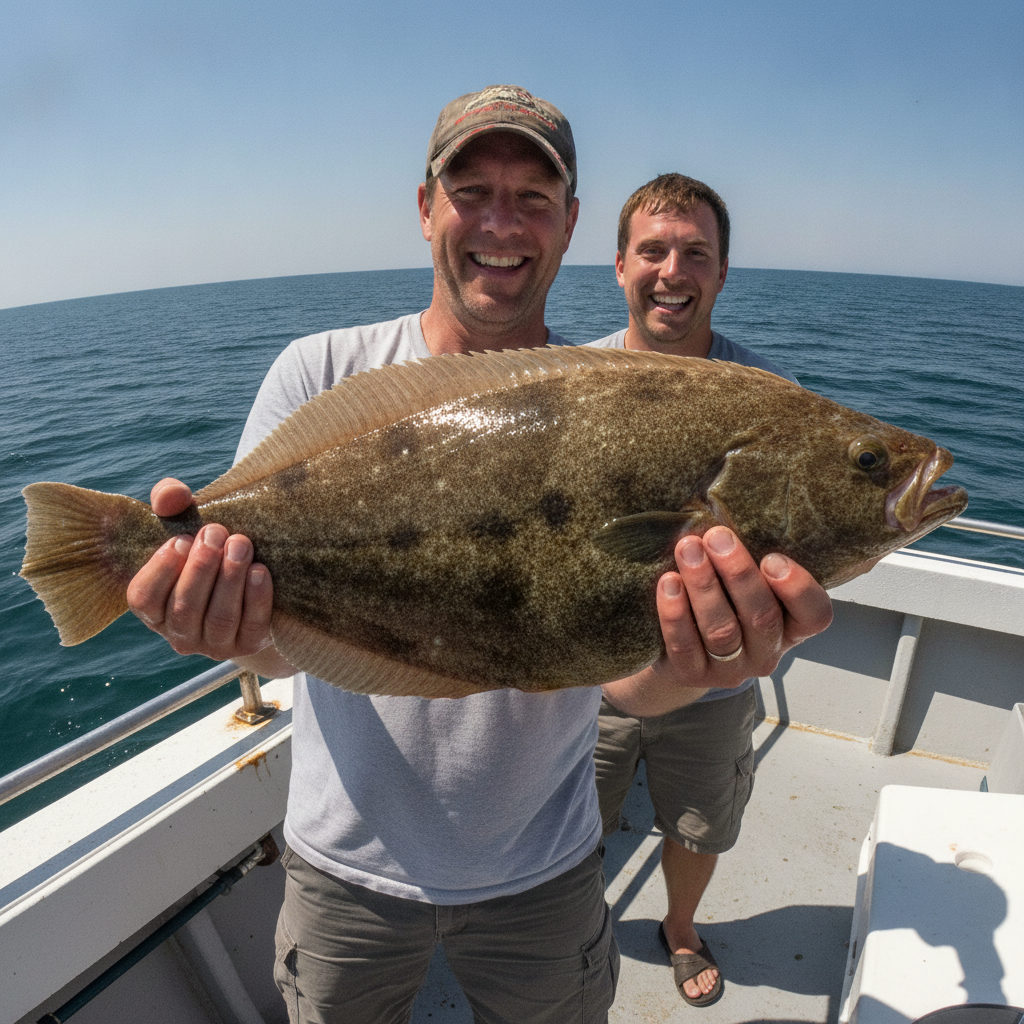
Summer flounder (Paralichthys dentatus) — called fluke in the Northeast and flounder in the South — are one of the most popular inshore saltwater fish on the East Coast. Flat, camouflaged ambush predators with both eyes on top of their head, flounder are found in bays, inlets, nearshore reefs, and sandy-bottom flats from Maine to Florida. They’re excellent table fare and provide exciting sport on light tackle.
Where to Find Flounder/Fluke: Range & Habitat
Summer flounder range from Maine to Florida on the Atlantic coast, with peak abundance from New Jersey through North Carolina. They inhabit sandy and muddy bottom in bays, river mouths, inlets, and nearshore coastal waters from spring through fall, migrating offshore to deeper water in winter. Flounder are ambush predators — they lie on the bottom and camouflage themselves, striking upward at passing prey. Current edges, drop-offs, inlet channels, and structure are all productive areas.
Best Tackle for Flounder/Fluke
Light Spinning (Inshore/Bay)
Rod: 6’6″–7’6″ medium-light to medium fast action spinning rod.
Reel: 2500–3000 size spinning reel.
Line: 10–15 lb braid with 15–20 lb fluorocarbon leader, 18–24″.
Surf/Inlet
Rod: 9–11″ medium-heavy surf spinning rod for inlet fishing.
Reel: 4000–5000 size with 20–30 lb braid.
Leader: 20–30 lb mono or fluorocarbon.
Top Techniques for Catching Flounder/Fluke
Drifting: The most productive flounder technique. Drift over sandy or mixed bottom in 10–30 feet, keeping your bait bouncing near the bottom. Control drift speed with sea anchors or a kicker motor — slow and deliberate is the target.
Jigging in Inlets: Position at the inlet mouth or channel drop-off on a moving tide and work a bucktail or Gulp jig vertically, bouncing it along the bottom. The retrieve is simple — lift 6–12″, let it fall, feel for the subtle “thump” of a flounder strike.
Anchor and Cast: Anchor up-current of a known flounder hole, channel edge, or structure and cast baits to the target area. Let them settle to the bottom and twitch slowly.
Structure Fishing: Flounder hold tight to any structure — bridge pilings, jetty rocks, dock shadows, and reef edges. Work baits slowly along the up-current face of the structure.
Best Baits & Lures for Flounder/Fluke
- Gulp Alive Shrimp (3″): The modern standard for flounder fishing. Incredibly effective — the scent trail in the water draws fish from a distance. Rig on a 1/4–1/2 oz jighead.
- Gulp Alive Mullet / Swimming Mullet: Larger profile bait for bigger flounder. Works especially well when larger fish are the target.
- Live Killifish (Mummichog): Classic bay flounder bait. Hardy, lively, and highly effective fished on a spreader rig or Carolina rig.
- Live Finger Mullet: Excellent flounder bait in the Southeast. Hook through the lips and fish on a Carolina rig near structure.
- Squid Strips: A reliable standby. Cut squid into 3–4″ strips and tip a Gulp bait or jighead. The scent and action combination is very effective.
- Bucktail Jig (1/4–1 oz): The traditional flounder jig. White is the classic color. Bounce slowly along the bottom with natural pauses.
- Soft Plastic Flukes (Zoom Fluke, Z-Man DieZel MinnowZ): Paddle-tail and fluke-style swimbaits worked near the bottom on a weighted hook or jighead.
Seasonal Patterns: When to Fish for Flounder/Fluke
Spring (April–May): Flounder move from offshore wintering grounds into the bays and inlets. The first flounder of the season are catchable in inlets and at jetties as early as April.
Summer (June–August): Peak season in the bays and nearshore. Fish are spread throughout the estuary on sandy bottom, structure, and channel edges.
Fall (September–October): The fall run — flounder fatten up before migrating offshore. This produces some of the largest fish of the year, especially at inlets as fish funnel out to open water.
Winter: Flounder move offshore to depths of 200–400 feet. Not accessible to most inshore anglers but offshore party boats target them.
Pro Tips for Flounder/Fluke
- Slow down: The most common flounder fishing mistake is moving too fast. Flounder are not aggressive chasers — they need the bait presented slowly, right in front of them.
- Pause after the strike: Flounder often “tap” a bait before fully committing. Count to 3–5 after feeling the initial bite before setting the hook. Don’t rush it.
- Find the moving tide: Flounder feed actively on moving water. Slack tide is significantly less productive than a strong ebb or flood.
- Keep bait on the bottom: Flounder feed upward but position themselves on the bottom. Your presentation needs to be at or near the bottom to get bit.
- Use a net: Never swing a large flounder — they throw hooks easily. Have a large landing net ready.
Regulations
Summer flounder regulations vary by state and change annually. New Jersey minimum is currently 16.5″, New York 17″, Virginia 15″, North Carolina 12″ (inshore). Always check current ASMFC regulations before keeping fish.
Looking for current flounder/fluke fishing conditions near you? Browse our weekly fishing reports — updated every Thursday for 18 top fishing destinations.
Looking for current flounder/fluke fishing conditions near you? Browse our weekly fishing reports — updated every Thursday. Browse all species how-to guides.
Best Flounder & Fluke Tackle
Affiliate disclosure: fishing.digital earns a small commission on qualifying purchases at no extra cost to you.
1. Gulp Alive Shrimp 3 inch
#1 flounder bait — scent-enhanced soft plastic on a 1/4 oz jighead. Check price on Amazon
2. Bucktail Jig 1/2 oz White
Classic flounder jig — bounce slowly along the bottom near inlet channels. Check price on Amazon
3. Flounder Two-Hook Bottom Rig
Pre-tied drift rig — add a squid strip for scent. Check price on Amazon
4. Ugly Stik Elite Spinning Rod 7ft Medium
Reliable, sensitive rod for flounder — feels bottom structure and subtle bites. Check price on Amazon
Shop all fishing gear: Amazon Fishing Department
Planning a trip to Flounder/Fluke?
This report tells you what happened. ReelAI tells you what to do about it — a briefing for your date, your target species and how you're fishing, built from our reports plus live NOAA and USGS data.
Powered by ReelAI — fishing.digital's intelligence layer. Answers are generated from fishing.digital reports and public NOAA, NWS and USGS data, and may be incomplete or out of date. Regulations and marine safety information are summaries only; always confirm with the responsible authority before you fish.