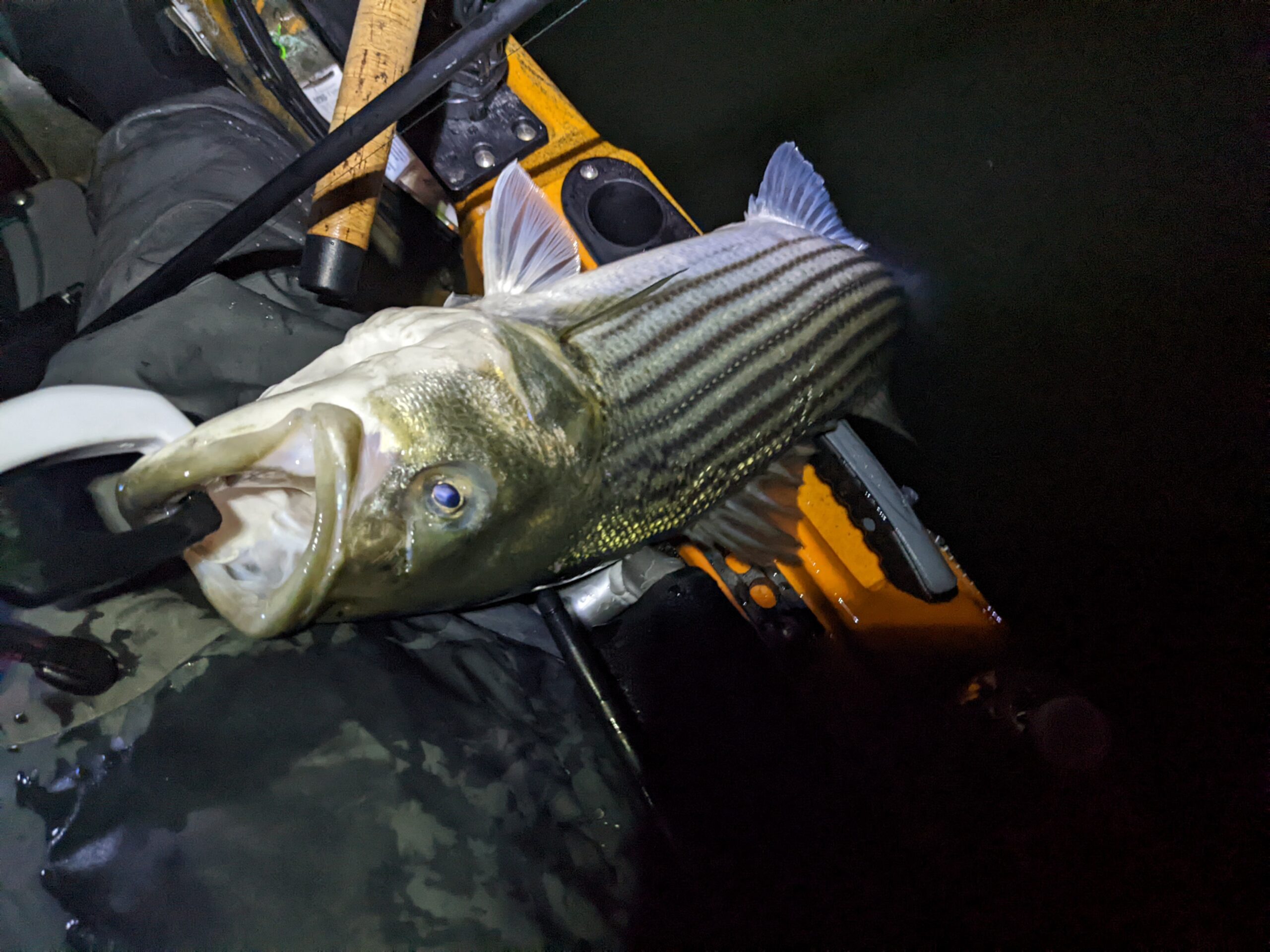
Long Island Sound is one of the most diverse and productive nearshore fisheries on the entire East Coast — a 110-mile estuary between Connecticut, New York’s Long Island, and Rhode Island that holds extraordinary populations of striped bass, bluefish, weakfish, fluke, black sea bass, tautog, and false albacore. For anglers in the New York metropolitan area and southern New England, the Sound is a year-round fishery with multiple seasons layered atop one another, and knowing when and where each species peaks is the foundation of consistent success here.
Top Species in Long Island Sound
| Species | Season | Best Area |
|---|---|---|
| Striped Bass | April–November | Race Rock, The Race, North Shore reefs, Connecticut River mouth |
| Bluefish | May–October | Throughout; surface-feeding schools May–September |
| Summer Flounder (Fluke) | May–September | Niantic Bay, Plum Gut, Mattituck Inlet |
| Weakfish (Weakies) | May–October | Eastern Sound, CT River mouth, Orient Point |
| Black Sea Bass | May–October | Rocky reefs throughout the Sound |
| False Albacore | August–October | Eastern Sound, Plum Island area |
| Tautog | April–May, October–November | Rocky reefs, jetties, bridge pilings |
| Scup (Porgy) | May–October | Rocky bottom throughout |
The Race and Race Rock — Striped Bass Ground Zero
The Race — the turbulent tidal current that flows between Race Rock lighthouse and the Connecticut shore at the eastern entrance to Long Island Sound — is one of the most famous striped bass fishing locations in the northeastern United States. On peak tidal flow, the current through this narrow passage creates violent rips that concentrate baitfish and the bass that feed on them. Bucktail jigs in 4–6 oz worked in the current seam, live-lined eels on the ebb, and large soft plastic swimmers all produce bass in the 20–40+ pound range at The Race throughout the season.
Access is exclusively by boat. The nearest launch points are Port Jefferson Harbor (NY), Fishers Island (NY), and New London/Groton (CT). The Race fishes best on the first 2–3 hours of both the ebbing and flooding tides.
Striped Bass Throughout the Sound
Beyond The Race, Long Island Sound holds excellent striped bass throughout its length:
- Connecticut River mouth (Old Saybrook area): Spring bass staging as fish push up to feed on river herring and shad. One of the first productive spots in Connecticut every spring.
- Niantic Bay: Protected bay with excellent structure and consistent bass through summer. Night fishing with live eels around the Amtrak bridge produces quality fish.
- Port Jefferson Harbor/Setauket Harbor (NY): North Shore Long Island harbors hold bass through summer, particularly at night around dock lights and bridge structure.
- Plum Gut: The passage between Orient Point and Plum Island — another powerful tidal rip that produces bluefish, bass, and false albacore on the current edges.
Fluke (Summer Flounder)
Fluke fishing is exceptional throughout Long Island Sound from May through September. The rocky-sand bottom transitions, inlets, and channel edges throughout the Sound provide excellent habitat. Niantic Bay, Mattituck Inlet, Plum Gut, and the Housatonic River mouth are among the most consistent fluke producers. Standard approach: drift with a bucktail jig tipped with a squid strip or Gulp! Shrimp in chartreuse or white over 15–30 feet of water on a moving tide. Legal fluke in the Sound average 16–19 inches; fish over 24 inches (the doormat class) are caught regularly at the productive structure spots.
False Albacore — The August Through October Excitement
False albacore begin appearing in the eastern Sound in late August and provide some of the most exciting light-tackle fishing in New England through October. Schools of “albies” crash through baitfish on the surface — casting small epoxy jigs, Deadly Dicks, or small soft plastics into the feeding schools produces explosive strikes on 8–12 lb spinning gear. Plum Island area, Fishers Island Sound, and The Race area see the highest albacore concentrations.
Fishing Access — Connecticut and New York
Connecticut maintains excellent public boat ramps at Old Saybrook, Niantic, New London, Groton, Branford, and numerous other locations. New York provides Sound access at Port Jefferson, Setauket, Mattituck, and Orient Point. Shore fishing access on Long Island Sound is limited but productive spots include the Rocky Neck State Park (CT) jetty, Hammonasset Beach State Park (CT), and Sunken Meadow State Park (NY).
Regulations
Striped bass regulations differ between Connecticut and New York — always check the regulations for the state whose waters you’re fishing. In 2026, striped bass size limits and bag limits are under significant management pressure due to stock concerns; verify current regulations at CT DEEP (ct.gov/deep) and NY DEC (dec.ny.gov) before every trip. Fluke minimum size is typically 16–17 inches depending on state and zone.
Part of: Location Fishing Guides · Fishing Guides & Reports
Planning a trip?
This report tells you what happened. ReelAI tells you what to do about it — a briefing for your date, your target species and how you're fishing, built from our reports plus live NOAA and USGS data.
Powered by ReelAI — fishing.digital's intelligence layer. Answers are generated from fishing.digital reports and public NOAA, NWS and USGS data, and may be incomplete or out of date. Regulations and marine safety information are summaries only; always confirm with the responsible authority before you fish.