
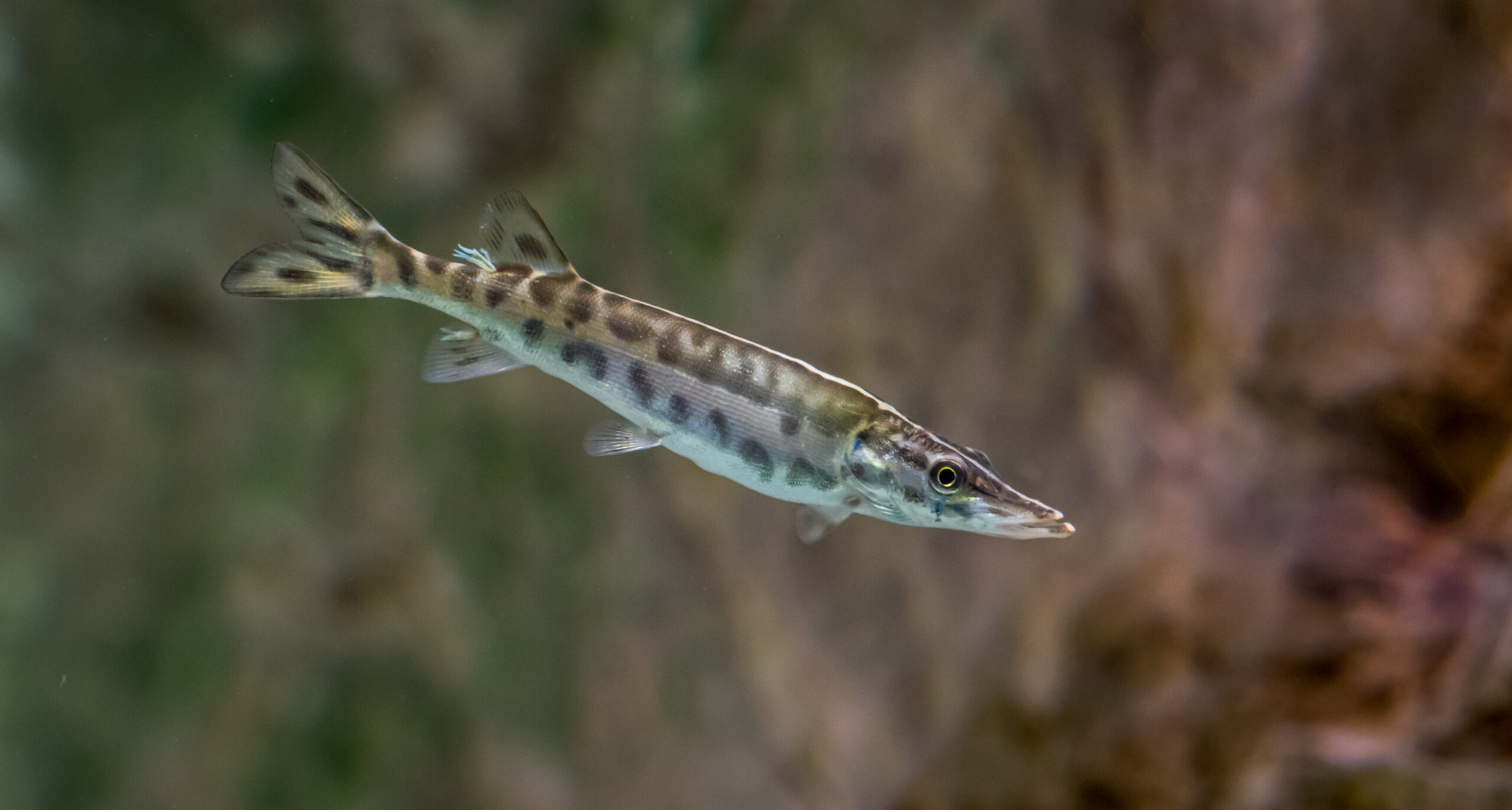
Muskellunge (Esox masquinongy) — the “fish of 10,000 casts” — is one of the most challenging and prized freshwater gamefish in North America. Musky reach 60+ inches and 60+ pounds, ambush prey with explosive violence, and demand specialized tackle, persistence, and technique. This guide covers everything from rod-and-reel choices through trolling, casting, fly fishing, and the boat-side figure-8 that puts more big musky in the net.
Where to Find Musky: Range & Habitat
Native to the Great Lakes drainage, the upper Mississippi, and the St. Lawrence basin. Today musky thrive across: Wisconsin (the historic heart of musky fishing — Hayward, Boulder Junction, Eagle River, Bone Lake, Lac Courte Oreilles), Minnesota (Cass, Leech, Mille Lacs, Vermilion), Michigan (Lake St. Clair — one of the top trophy fisheries in the world), Ontario (Lake of the Woods, Eagle Lake, Lac Seul, the St. Lawrence), the Thousand Islands region (NY/ON), the upper Niagara River, and stocked waters in Pennsylvania, Indiana, Iowa, and West Virginia. Tiger musky (a sterile musky × northern pike hybrid) extend the range into many additional waters.
Tackle for Musky
Casting Setup
Rod: 8-9′ heavy-action musky casting rod, rated for 2-8 oz lures. Brands: St. Croix Mojo Musky, Shimano Compre, Thorne Bros custom. Reel: Heavy-duty round baitcaster (Shimano Tranx 500, Daiwa Lexa 400/500). Line: 80-100 lb braid (PowerPro Super 8 Slick, Sufix 832). Leader: 130-200 lb fluorocarbon (Seaguar Threadlock) or single-strand 90 lb wire — 12-15″ connected via Stay-Lok snap. Lures: 8-12″ minimum; bigger fish eat bigger baits.
Trolling Setup
Rod: 8’6″-9′ heavy trolling rod. Reel: Large levelwind (Shimano Tekota 600, Daiwa Saltist). Line: 100 lb braid with a 200 lb fluoro leader. Lures: 9-14″ crankbaits (Drifter Believer, Smokin’ Joe, Slammer Magnum), large soft baits (Bondy Bait, Medusa).
Fly Tackle
Rod: 10-12 weight, 9-10′ fast action. Reel: Sealed disc drag, 200+ yards of 30 lb backing. Line: Sinking or sink-tip integrated heads (e.g., Rio Outbound Short or musky-specific lines). Leader: 80-100 lb fluorocarbon butt to 80 lb fluoro tippet, 6-9′ total. Flies: 8-14″ articulated streamers — Buford, Game Changer Musky, Pole Dancer.
Top Techniques
Casting Big Baits
The classic musky game. Pound shoreline structure, weed edges, points, and rock piles with bucktails (Mepps Musky Killer, Cowgirl), large jerkbaits and glide baits (Suick Thriller, Hellhound), topwater (Top Raider, Pacemaker, Whopper Plopper 230), and soft baits (Bull Dawg, Bondy Bait). Vary cadence and depth until you find the day’s pattern. A “fish of 10,000 casts” — keep your boat moving and cover water.
The Figure-8
The single most important technique in musky fishing. At the end of every cast, dip the rod tip into the water and draw a smooth, large figure-8 along the gunwale. Musky often follow lures back to the boat without committing, and the figure-8 triggers reaction strikes. Make the loops big (3+ feet across), include direction changes, and accelerate slightly. Many trophy musky are boated on the figure-8 after refusing 20+ casts.
Trolling Big Crankbaits
Especially effective on large open-water systems (Lake St. Clair, Bay of Quinte, Mille Lacs). Pull 4-9″ crankbaits at 3.5-5.5 mph along structural contours and over open-water humps in 15-30 feet of water. Cover dramatically more water than casting; particularly productive in late summer and fall.
Topwater (Summer Specialty)
The most visceral musky action. Big walking baits (Hellraiser, Top Raider), prop baits (Topraider, Stalker), and “globe” baits (Globe, Glob) provoke crashing surface strikes. Best from late June through September on calm warm evenings. Don’t set on the boil — wait until you feel weight, then drive the hooks home.
Fly Fishing for Musky
Cast big articulated streamers on heavy fly tackle. Strip aggressively with long, fast pulls. Strip-strike (don’t lift the rod) on takes. Figure-8 with the fly rod tip works just like with conventional gear. Fall on the St. Lawrence and Wisconsin lakes is fly fishing’s prime musky season.
Best Lures by Season
Spring (post-spawn): Slower presentations — small bucktails (size 8-10), slow jerkbaits (Suick Original), small rubber baits. Fish recovering from spawn; reaction baits work better than search baits. Summer: Big bucktails (Cowgirl, Posseidon), topwater, large rubber. Cover water aggressively. Fall: Largest baits — Bondy, Pounder Bull Dawg, big Pacemaker. Cold-water trophy season. Late Fall (October-November): Live bait or rigged suckers under quick-strike rigs in deep weed edges and rock structure.
Reading Musky Water
Musky are ambush predators tied to structure. Productive features: weed edges (cabbage, coontail), rock-to-weed transitions, deep main-lake humps, shoreline points, river mouths, and bridge structures. They follow forage — find perch, walleye, suckers, or shad concentrations, and musky will be near. Cool, stable weather typically outperforms hot, unstable conditions; barometric falls (just before a front) often trigger feeding. Keep a log of every follow. Musky use the same ambush points year after year, and a fish that trailed a bucktail to the boat in July is very often the fish that eats on that same weed point in October. Persistence is a tackle item in this fishery — the anglers who catch musky consistently are the ones who keep casting after four fishless days.
Best Times to Fish
Late Spring / Early Summer (post-spawn through July): Fish recovering and feeding heavily; mornings and evenings best. Mid-Summer: Active; topwater shines; figure-8 critical. Fall (September-November): Trophy season — biggest fish of the year come now. Big baits, cool water. Cold-Front Aftermath: Notoriously difficult, but slow-moving rubber baits in deep water can still produce.
Hot Spots
Wisconsin: Hayward area lakes (Chippewa Flowage, LCO, Bone Lake), Eagle River chain, Boulder Junction area. Minnesota: Cass, Leech, Mille Lacs, Vermilion, Lake of the Woods. Michigan: Lake St. Clair (world-class), Lake Hudson. New York: St. Lawrence (Thousand Islands), Niagara River, Chautauqua Lake. Ontario: Lake of the Woods, Eagle Lake, Lac Seul, the Bay of Quinte. Pennsylvania: Lake LeBoeuf, Edinboro Lake, Allegheny Reservoir.
Handling & Conservation
Musky are catch-and-release across virtually all serious musky waters — they grow slowly and are easily killed by improper handling. Essential gear: a large cradle net or a Frabill Power Stow net (24″+ hoop); jaw spreaders; long-nose pliers; bolt cutters for stuck trebles; an unhooking mat or wet boat floor. Handling rules: never lift a musky vertically by the gill plate; support the belly with one hand and grip the gill plate with the other (or use the cradle); minimize air time (target less than 30 seconds); revive in the water with the fish facing forward until it kicks off on its own.
Regulations
Most musky waters have minimum size limits of 40-54″ and 1 fish per day bag — practically a catch-and-release fishery. Wisconsin: 40″ most waters, 50″ some; 1 per day. Minnesota: 54″ on most waters. Ontario: 54″ most waters. Michigan Lake St. Clair: 42″ minimum. Always verify current state/province rules before fishing.
More Resources
How to Catch Pike · Thousand Islands Guide · All How-To Guides
Best Musky Tackle
Affiliate disclosure: fishing.digital earns a small commission on qualifying purchases at no extra cost to you.
1. Musky Mayhem Double Cowgirl
The bucktail that defines modern musky fishing — a 10-inch, double-bladed bait you burn or slow-roll along weed edges. (It is a Musky Mayhem product; it is frequently miscredited to Musky Innovations.) Check price on Amazon
2. Suick Thriller 9-Inch
The classic wooden glide bait — twitch it hard, let it hang, and be ready for a fish that has been following since the cast. Check price on Amazon
3. 9-Foot Heavy Musky Casting Rod
A purpose-built 8-9 foot heavy rod rated for 2-8 oz lures. This is the one piece of musky tackle you cannot substitute. Check price on Amazon
Planning a trip to Musky?
This report tells you what happened. ReelAI tells you what to do about it — a briefing for your date, your target species and how you're fishing, built from our reports plus live NOAA and USGS data.
Powered by ReelAI — fishing.digital's intelligence layer. Answers are generated from fishing.digital reports and public NOAA, NWS and USGS data, and may be incomplete or out of date. Regulations and marine safety information are summaries only; always confirm with the responsible authority before you fish.