
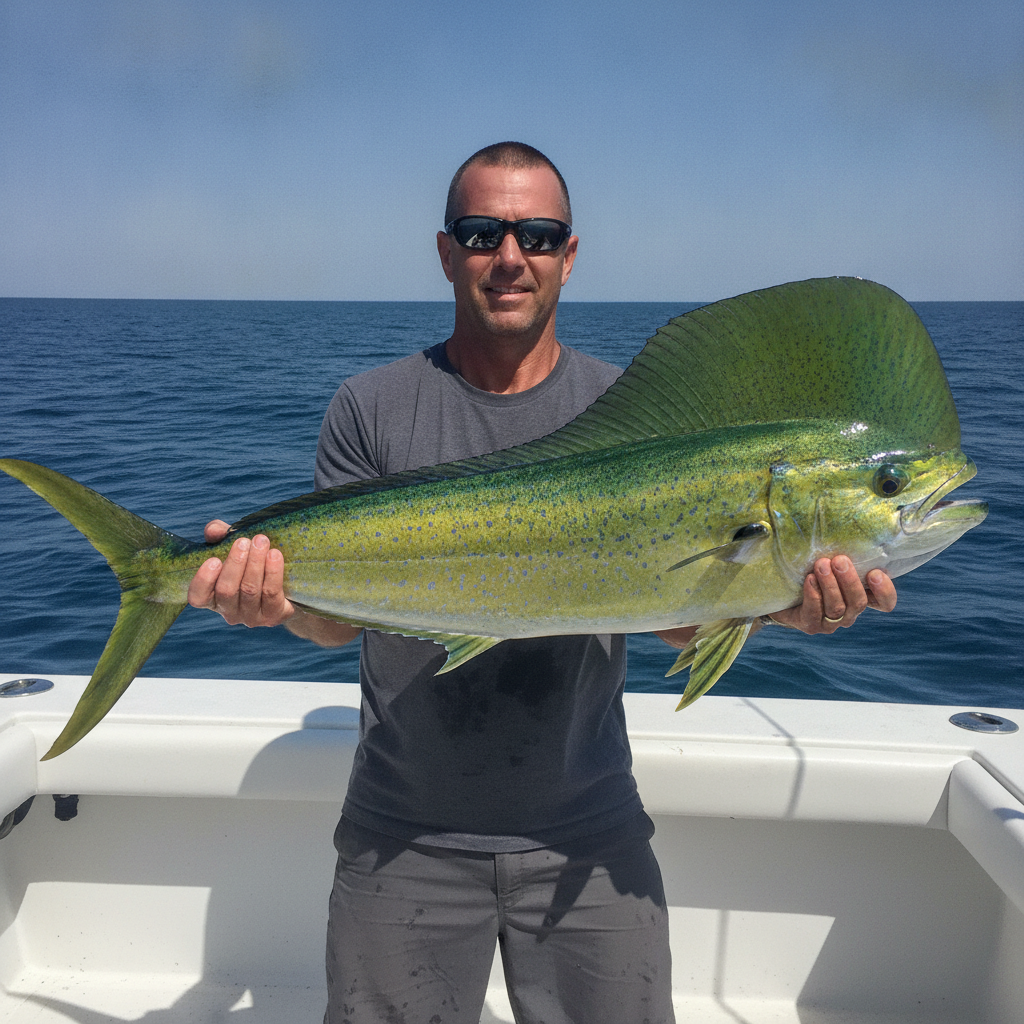
Mahi-mahi (Coryphaena hippurus) — also called dolphinfish or dorado — are one of the most exciting and colorful offshore gamefish in the world. Famous for their brilliant yellow, green, and blue colors, acrobatic jumps, and blazing speed, mahi are a bucket-list offshore target from the Carolinas to the Florida Keys and throughout tropical and subtropical oceans worldwide.
Where to Find Mahi-Mahi: Range & Habitat
Mahi are pelagic fish found in warm offshore waters worldwide, concentrated in the Atlantic from New England to South America and throughout the Gulf of Mexico. They associate strongly with floating debris, weedlines, temperature breaks, and color changes — anywhere that concentrates baitfish. On the US East Coast, the peak season runs April–September with the largest fish typically appearing April–June. They grow extraordinarily fast — up to 30 lbs in a single year — and rarely live more than 4–5 years.
Best Tackle for Mahi-Mahi
Spinning: 7–7’6″ medium-heavy spinning rod, 4000–6000 reel, 30–50 lb braid, 40–60 lb fluorocarbon leader 4–6 feet.
Conventional (trolling): 30–50 lb class conventional outfit, Penn International or Shimano Tiagra, with 50 lb mono main line.
Light tackle: 20 lb class spinning is exhilarating for school mahi — fights are spectacular on light gear.
Top Techniques for Catching Mahi-Mahi
Trolling: The primary mahi-finding method. Troll rigged ballyhoo, skirted lures, or artificial squid at 6–9 knots along weedlines, color changes, and temperature breaks. Once a fish is hooked, slow down and keep a pitch bait in the water — mahi are schooling fish and won’t leave a hooked companion.
Keep One in the Water: The most important mahi technique. When a fish is hooked, fight it alongside the boat without boating it — the rest of the school will follow. Pitch additional baits to the following fish before boating the first one.
Pitch Baiting: Once a school is located, pitch live or rigged dead baits to visible fish. Mahi are visual feeders and will attack a well-presented bait aggressively.
Jigging: Vertical jigs and large paddle tail swimbaits are effective for mahi when fish are located. This is a fun and productive alternative to bait fishing.
Best Baits & Lures for Mahi-Mahi
- Rigged Ballyhoo: The standard offshore mahi bait. Rig with a chin weight and hook through the bill. Trolled naked or under a skirted lure.
- Live Goggle Eyes/Pilchards: The most effective pitch bait when a school is located. Free-line alongside the boat to following fish.
- Skirted Trolling Lures: Ilander, Sea Witch, and similar skirted lures trolled over ballyhoo at 7–9 knots are top mahi producers.
- Artificial Squid (chain): A daisy chain of plastic squids with a pitch bait at the end is deadly for large bull mahi.
- Vertical Jigs (2–4 oz): Butterfly jigs and knife jigs worked quickly through the water column produce excellent results on located fish.
- Large Paddle Tail Swimbaits: 5–8″ swimbaits in white, chartreuse, or natural baitfish colors are effective when fish are feeding near the surface.
Seasonal Patterns
Spring (April–June): Peak season for large bull mahi on the US East Coast. Fish are moving north with warming water. April–May typically produces the largest fish of the year.
Summer (June–August): Excellent numbers throughout the season. School mahi are abundant — look for weedlines and floating debris.
Fall (September–October): Fish begin moving south as water cools. Still excellent action, particularly in the southern part of the range.
Keys/South Florida: Year-round mahi fishing with peak seasons in spring and fall.
Pro Tips
- Find the weedline: Sargassum weedlines are the #1 mahi attractor. Current lines concentrate weed, bait, and mahi together.
- Color change = fish: The edge where blue water meets green water concentrates baitfish and the predators that chase them.
- Keep a pitch bait ready at all times: When trolling, always have a live bait or rigged dead bait ready to pitch the instant a fish is hooked.
- Don’t boat the first fish: Keep the first hooked mahi in the water until you’ve hooked additional fish from the school.
- Watch for birds: Frigatebirds and boobies circling indicate bait and mahi below.
- Use lighter leader in clear water: In gin-clear offshore water, dropping to 40 lb leader gets more strikes from wary fish.
Regulations
Always verify current size and bag limits with your state fisheries agency before keeping fish.
Want current mahi-mahi conditions near you? Browse our weekly fishing reports — updated every Thursday.
Planning a trip to Mahi-Mahi?
This report tells you what happened. ReelAI tells you what to do about it — a briefing for your date, your target species and how you're fishing, built from our reports plus live NOAA and USGS data.
Powered by ReelAI — fishing.digital's intelligence layer. Answers are generated from fishing.digital reports and public NOAA, NWS and USGS data, and may be incomplete or out of date. Regulations and marine safety information are summaries only; always confirm with the responsible authority before you fish.