
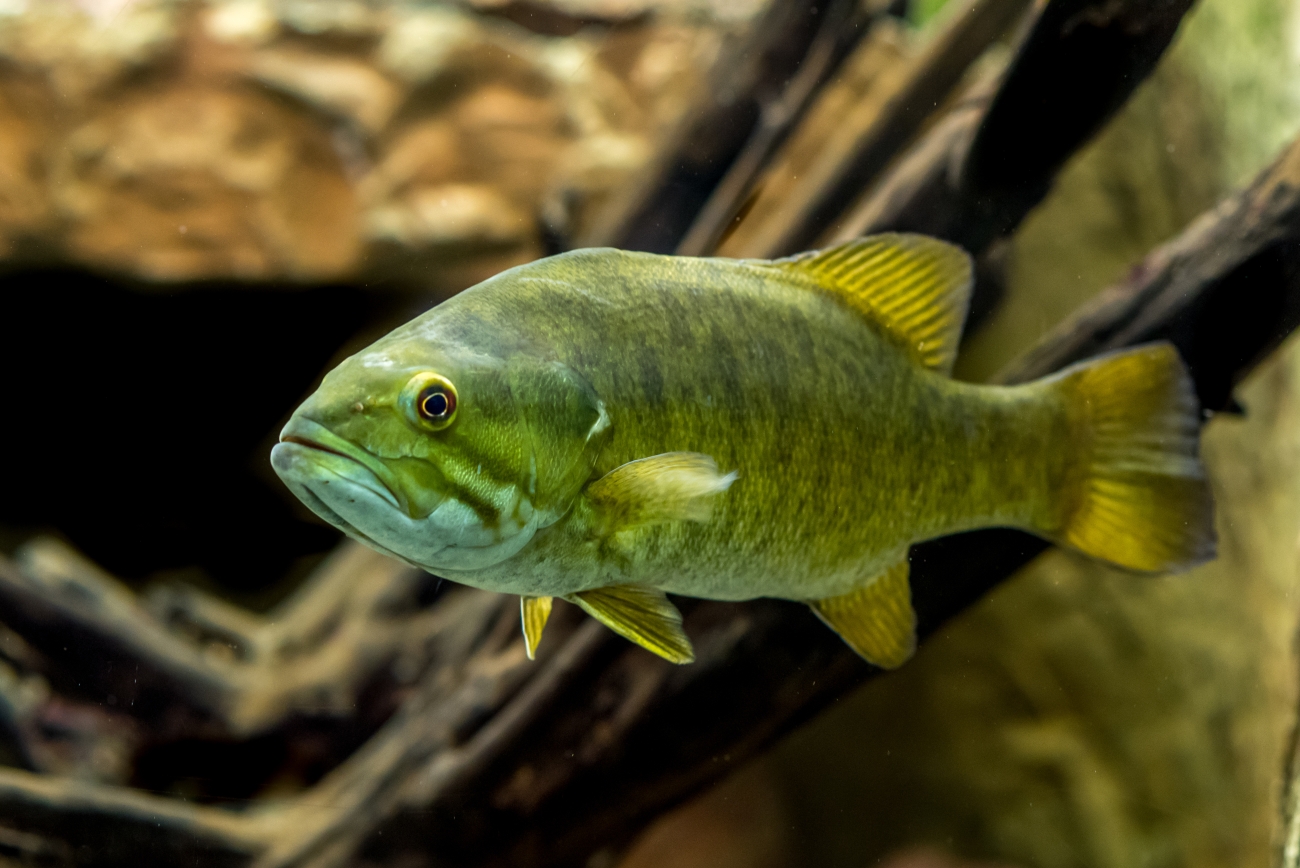
Smallmouth bass (Micropterus dolomieu) are pound for pound the hardest-fighting freshwater fish in North America. Smaller than largemouth on average but more acrobatic, more powerful for their size, and found in some of the country’s most beautiful rivers and clear-water lakes, smallmouth are a cult obsession for a passionate contingent of freshwater anglers. They hit hard, jump repeatedly, and demand respect. Once you’ve caught a few bronze fish in a cold Ozark river or a crystal-clear Great Lakes bay, largemouth seem tame by comparison.
Range & Habitat
Smallmouth are native to the upper Midwest and the Appalachian region and have been widely introduced across North America. They thrive in clear, cool, well-oxygenated water in the 55–75°F range — rocky rivers with current, clear northern lakes, and Great Lakes tributaries. The Susquehanna, Delaware, James, and the rocky lakes of the north country are the classic fisheries. Smallmouth are inseparable from rocky structure: boulders, ledges, gravel bars, cobble, current seams, and main-lake points. They avoid the warm, weedy environments largemouth prefer.
Best Tackle
Medium spinning (the choice of most river anglers): 6′6″–7′ medium or medium-light fast-action rod, 2500–3000 reel, 8–14 lb fluorocarbon or braid with a 10–15 lb fluorocarbon leader. Baitcaster: 7′ medium rod for larger lures on lakes. Lighter is better: Smallmouth in clear water are leader-shy — drop to 6–8 lb fluorocarbon in ultra-clear conditions.
Top Techniques
Drop Shot: The most effective clear-water smallmouth technique. A 2–4″ finesse worm suspended 8–18 inches above the sinker, positioned on structure or in a current seam, produces when nothing else will.
Ned Rig: A small mushroom-head jig with a short, buoyant ElaZtech plastic. It works on the slowest presentations — deadly in cold water, in current, and in post-frontal conditions.
Tube Bait: The classic smallmouth lure. A 4″ tube on a 1/4–3/8 oz jighead, hopped and dragged along rocky bottom.
Jerkbaits: Suspending hard baits worked with a jerk-jerk-pause cadence, especially in cold, clear water where the long pause does the work.
Topwater (poppers, walking plugs): Extraordinary smallmouth surface fishing in rivers and rocky lake shallows at dawn and dusk.
Best Baits & Lures
- 4″ Tube Bait: The all-time great smallmouth lure. Smoke/purple, watermelon, green pumpkin, or natural shad on a jighead, dragged and hopped along rocky bottom.
- Drop Shot Worm (Roboworm, Strike King Ocho): The finesse presentation for pressured or clear-water fish.
- Ned Rig (Z-Man Finesse TRD): The most forgiving and effective smallmouth bait in cold water.
- Crawfish Imitations: Smallmouth eat an enormous number of crayfish. Anything crawfish-colored worked near rock is in the game.
- Crankbait (smaller sizes): Square-bills and medium divers in shad or crawfish patterns, deflected off rocks.
- Inline Spinner (Rooster Tail, Mepps): The classic river smallmouth spinner. Gold blade in stained water, silver in clear.
- Live Crayfish: The best natural bait there is — hooked through the tail and drifted in current.
- Topwater Popper (Rebel Pop-R, Heddon Tiny Torpedo): Dawn and dusk surface action is spectacular in rivers and rocky shallows.
Seasonal Patterns
Spring (April–June): Pre-spawn is the peak season. Smallmouth move onto shallow rocky areas to spawn in May and June, and topwater and medium-depth crankbaits produce the best pre-spawn action. Summer: Deep rocky structure in lakes; in rivers, current seams and the slack behind mid-river boulders. Fall: The second peak — fish fatten on baitfish and crayfish and often school up in lakes. Winter: Slow finesse presentations in the deepest rocky structure and river pools. Still catchable, but it takes patience.
Pro Tips
- Find the rock: Smallmouth and rocks are inseparable. No rocks, no smallmouth. Gravel, boulders, cobble, and ledges are where the fish live.
- Fish the current seams: River smallmouth hold in the calm water behind big boulders and along the seam where fast and slow water meet. Position upstream and cast down, letting the bait drift naturally through the seam.
- Go lighter in clear water: Smallmouth in ultra-clear rivers and lakes see everything. Drop to 6 lb fluorocarbon and smaller baits when fish get finicky.
- Natural colors win in clear water: Green pumpkin, smoke, and watermelon consistently outproduce bright colors where visibility is good.
- They jump more than largemouth: When a smallmouth comes up, lower the rod tip so the hook doesn’t tear free in mid-air. They are acrobatic fighters and they use it.
Regulations
Size and bag limits vary by state, and many premier smallmouth rivers carry special regulations — catch-and-release stretches, protected slot limits, and seasonal closures around the spawn. Check your state agency’s rules for the specific water before you fish it.
Best Smallmouth Bass Tackle
Affiliate disclosure: fishing.digital earns a small commission on qualifying purchases at no extra cost to you.
1. Yamamoto Tube, 4 inch Smoke/Purple
The definitive smallmouth lure. Smoke/purple is the most productive color on most rocky water. Check price on Amazon
2. Z-Man Mushroom Ned Jigheads, 1/16 oz
The jighead half of the Ned rig — pair it with a Finesse TRD. Deadly for river smallmouth in current near rocky bottom. Check price on Amazon
3. Tungsten Drop-Shot Weight Kit
A kit of tungsten drop-shot weights in a range of sizes. Drop shot is the most effective technique for pressured clear-water smallmouth. Check price on Amazon
4. Shimano Stradic FL Spinning Reel (2500 Size)
A smooth, light reel for finesse smallmouth presentations — pick the 2500 size for drop shot and Ned rig work. Check price on Amazon
Browse all species guides: How To Catch Fish — Complete Species Guides | Weekly Fishing Reports — updated every Thursday.
Planning a trip to Smallmouth Bass?
This report tells you what happened. ReelAI tells you what to do about it — a briefing for your date, your target species and how you're fishing, built from our reports plus live NOAA and USGS data.
Powered by ReelAI — fishing.digital's intelligence layer. Answers are generated from fishing.digital reports and public NOAA, NWS and USGS data, and may be incomplete or out of date. Regulations and marine safety information are summaries only; always confirm with the responsible authority before you fish.