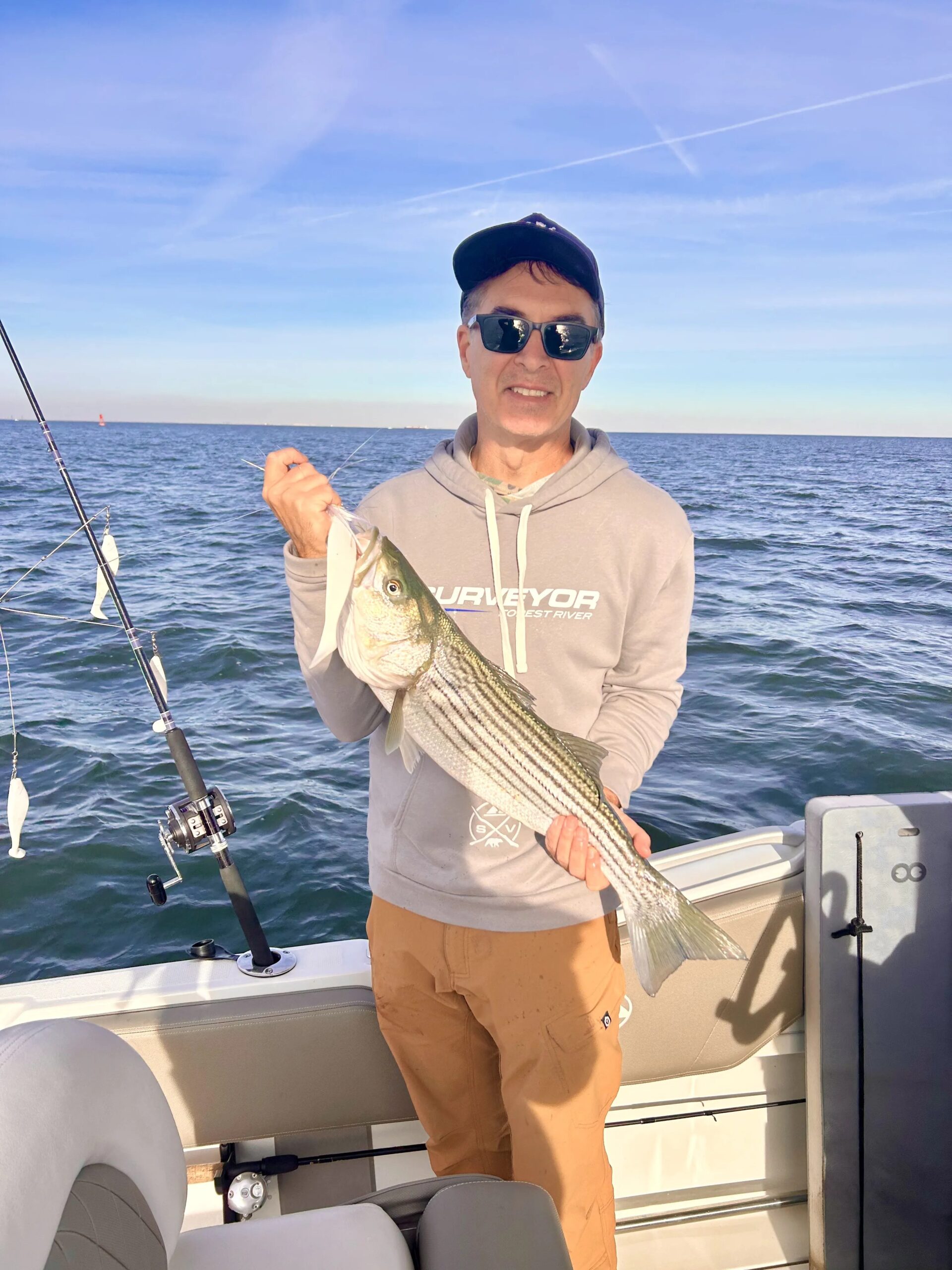
The Outer Banks of North Carolina — a thin strip of barrier islands extending 200 miles from Corolla to Ocracoke — is one of the most dramatic fishing environments on the East Coast. Cape Hatteras, where the warm Gulf Stream and the cold Labrador Current collide, creates a convergence zone that concentrates baitfish and attracts an extraordinary diversity of species. The surf fishing for red drum and striped bass along the outer beach is legendary, while the nearshore Gulf Stream delivers offshore fishing that rivals South Florida in species diversity.
Top Species on the Outer Banks
Surf/Beach: Red drum (the outer beach red drum run is one of the most celebrated events in East Coast fishing — large channel bass from 20–50+ lbs in the surf), striped bass (fall and spring migrations), bluefish, pompano, and Spanish mackerel.
Inshore/Sound: Speckled trout, flounder, red drum (smaller slot fish), blue crab, and occasional tarpon in summer in the Pamlico and Albemarle Sounds.
Offshore: Bluefin tuna (the Gulf Stream runs extremely close to Cape Hatteras — one of the most accessible bluefin ports in the world), yellowfin tuna, mahi, wahoo, sailfish, and blue marlin.
Top Fishing Spots
- Cape Hatteras Point: The most famous surf fishing location on the East Coast. The point creates a powerful rip where the currents meet — channel bass, stripers, and bluefish feed aggressively here during the fall run. 4WD vehicle required for beach access.
- Oregon Inlet: The primary access to the Pamlico Sound and offshore Gulf Stream from the northern Outer Banks. Excellent flounder and trout inshore; offshore boats depart from Oregon Inlet Fishing Center.
- Rodanthe / Waves area: The outer beach between Oregon Inlet and Cape Hatteras is prime channel bass territory in October and November. Wade fishing and surf casting produce large red drum.
- The Gulf Stream (30–40 miles from Hatteras): The closest approach of the Gulf Stream to the North American mainland outside of South Florida — bluefin tuna, yellowfin, mahi, and billfish all accessible on day trips from Oregon Inlet or Hatteras village.
Seasonal Calendar
Spring (March–May): Striped bass migration through the Outer Banks. Spanish mackerel appear at the inlets. First cobia of the season.
Summer (June–August): Offshore peak — mahi, yellowfin, and blue marlin in the Gulf Stream. Spanish mackerel and bluefish inshore. Speckled trout in Pamlico Sound.
Fall (September–November): The pinnacle of OBX fishing. Red drum (channel bass) on the outer beach — October and November are the prime months. Striped bass arrive from the north. Bluefin tuna offshore at Cape Hatteras.
Winter: Tautog on nearshore wrecks. Stripers through the inlets. Channel bass holdovers on the beach.
Beach Access and Regulations
4-wheel drive vehicle required for most outer beach access — the Cape Hatteras National Seashore requires an off-road vehicle permit ($50 annually). Red drum: 18–27″ slot limit in NC, 1 fish over 27″ per day. Striped bass: 18″ minimum, 1 fish per day in state waters. Always verify NCDMF current regulations.
Plan Your Outer Banks Fishing Trip
The Outer Banks offers surf, pier, sound, inlet, nearshore, and offshore fishing across a long chain of barrier islands. Read the latest Outer Banks fishing report, browse the report archive, and use the seasonal calendar.
Surf anglers should search for sloughs, cuts, points, and bait rather than remaining at the nearest access. Sounds and marshes support redfish, trout, flounder, and striped bass in some areas. Oregon and Hatteras inlets concentrate current and migrating fish, while offshore fleets target tuna, mahi, wahoo, billfish, and bottom species.
Boat Ramps and Public Access
- Oregon Inlet Fishing Center: major launch and charter access near Oregon Inlet.
- Bonner Bridge Pier: shore access near inlet water and structure.
- Hatteras Inlet public access facilities: sound and inlet launching options; verify the selected site.
- Cape Hatteras National Seashore ramps: beach access subject to permits, closures, tides, and seasonal wildlife management.
Check National Park Service access status, beach-driving permits, ramp conditions, and inlet forecasts. Soft sand, overwash, strong current, and rapidly changing weather are real hazards.
Local Strategy, Safety, and Regulations
Carry varied sinker weights and fresh bait for surf fishing, plus metal lures or plugs when bluefish and mackerel are moving. Offshore and inlet boaters should use conservative weather limits. Check current North Carolina and federal seasons and regulations before keeping fish. Our surf rods under $200 guide and seasonal guide hub help with preparation.
Planning a trip?
This report tells you what happened. ReelAI tells you what to do about it — a briefing for your date, your target species and how you're fishing, built from our reports plus live NOAA and USGS data.
Powered by ReelAI — fishing.digital's intelligence layer. Answers are generated from fishing.digital reports and public NOAA, NWS and USGS data, and may be incomplete or out of date. Regulations and marine safety information are summaries only; always confirm with the responsible authority before you fish.