
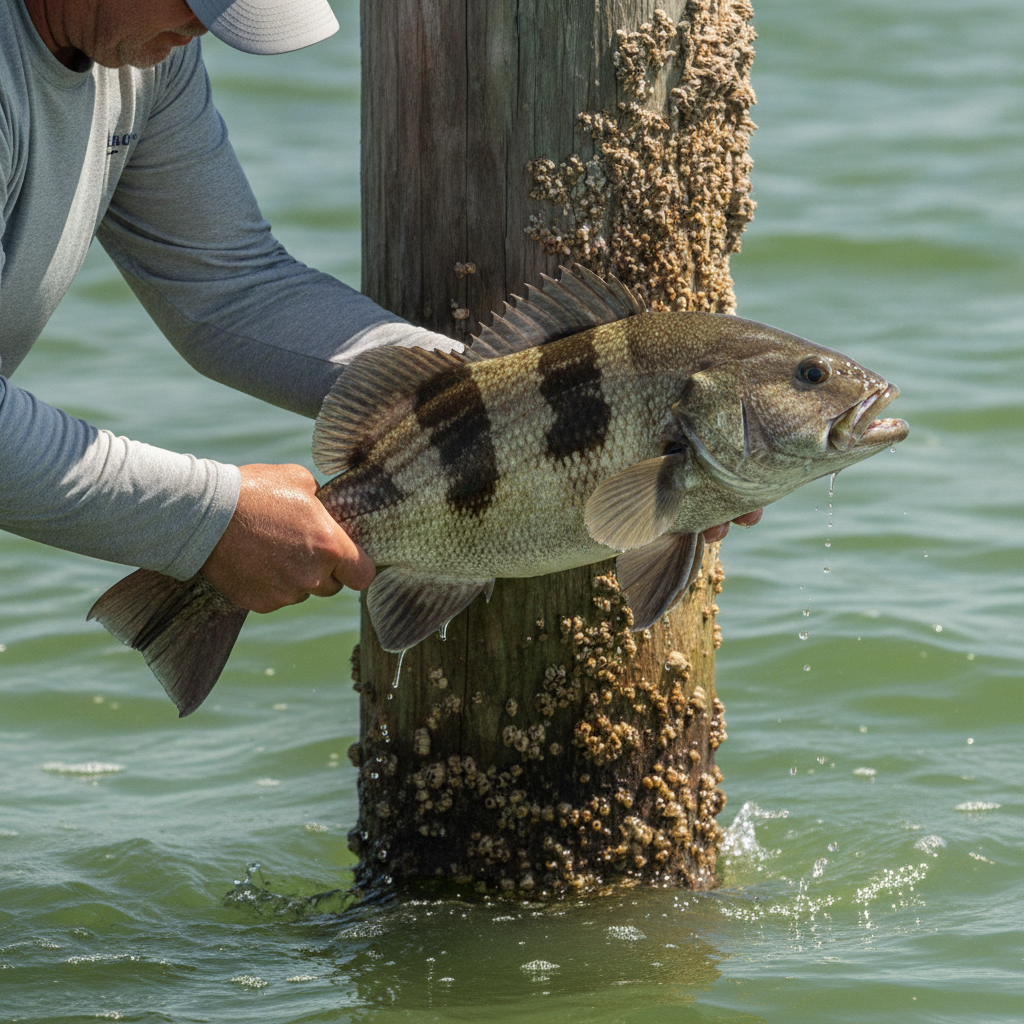
Tripletail (Lobotes surinamensis) is one of the most unique and prized inshore-to-nearshore gamefish in the southern U.S. Named for the appearance of three tails (the soft dorsal and anal fins extend back near the caudal fin), tripletail are sight-fishing targets — drifting under floating debris, crab trap buoys, channel markers, and weed lines. They’re strong fighters, excellent on the table, and finding them is half the sport.
Where to Find Tripletail: Range & Habitat
Tripletail are found in warm waters throughout the U.S. Gulf Coast (Texas to Florida) and along the southeastern Atlantic from Florida to North Carolina, with stragglers as far north as the Mid-Atlantic in summer. They’re a “drift” species — orienting to anything floating: crab trap buoys (a tripletail magnet), channel markers, jetty structure, palm fronds, weed lines, and even man-made debris. Mississippi, Alabama, Florida’s Gulf Coast, and Georgia’s Wassaw and St. Catherines Sound areas are tripletail hotspots. Texas’ coastal bend (Port Aransas, Rockport) holds excellent fall numbers.
Tackle for Tripletail
Rod: 7-7’6″ medium spinning rod, fast action. Reel: 3000-4000 size spinning reel. Main line: 15-20 lb braid. Leader: 20-30 lb fluorocarbon, 24-36 inches. Tripletail have rough mouths and crush bait — fluorocarbon resists abrasion and is less visible than mono.
Top Techniques
Sight-Casting to Structure: The classic method. Idle slowly along buoy lines or crab trap floats, scanning each one. When you spot a tripletail (it looks like a dark, leaf-shaped lump suspended just below the surface), shut down, drift in, and cast a live shrimp, small live finger mullet, or small soft plastic past the fish — then twitch it past the target. Sight-Casting to Floating Debris: Weed lines, palm fronds, and floating boards all hold tripletail. Sight-Casting to Channel Markers: Markers along the ICW and major channels are tripletail magnets, especially in summer.
Best Baits & Lures
Live shrimp is the gold standard — hooked through the carapace on a 1/0-2/0 hook with minimal weight. Live finger mullet (3-5″) on a single hook is excellent for bigger fish. Small live pinfish. Artificial: 3-4″ soft plastic shrimp (DOA, Vudu, LiveTarget) on light jigheads; small soft plastic jerkbaits worked slowly across the surface.
Approach & Stealth
Tripletail are extremely spooky. Idle slowly, kill the engine 30+ yards out, and drift the last stretch. A trolling motor on low works for the final approach. Cast WELL past the fish (10-15 feet beyond) and bring the bait toward it — don’t cast directly at the fish or land bait on its head.
Hook-Set & Fight
Tripletail crush bait but their bony mouths require a firm hook-set. Wait until the line goes tight, lift the rod sharply, and reel through. Expect a strong initial run — they often dive for the structure they were holding to. Steer them away from buoy lines or floating debris that can cut your leader.
Best Times to Fish
Tripletail are warm-water fish — summer through early fall produces best. May through October in most Gulf and South Atlantic locations. Calm days with sun overhead make spotting much easier. Plan for the morning bite, after the sun is up high enough to see into the water.
Hot Spots
Northern Gulf: Mobile Bay, Mississippi Sound, Pensacola crab trap line, Apalachicola Bay. Florida Gulf: St. Petersburg-Tampa Bay markers, Sarasota Bay, Charlotte Harbor, Fort Myers nearshore. Florida Atlantic: Daytona-Cape Canaveral channel markers, ICW marker lines. Georgia & Carolinas: Wassaw, St. Catherines, and the Brunswick-area river mouths. Texas: Port Aransas and Aransas Pass jetties in fall.
Regulations
Florida: 18″ minimum, 2 per harvester per day. Georgia: 18″ minimum, 2 per angler. Alabama: 18″, 3 per day. Mississippi: 17″, 5 per day. Texas: 17″, 3 per day. Federal: 18″, 2 per harvester. Always verify current state and federal rules — tripletail regulations have changed in recent years as the fishery grows in popularity.
Why Tripletail Matter
Tripletail are arguably the most “fun to find” inshore species in the South. The sight-fishing component combines hunting with angling — you spot the fish before you cast. Their willingness to eat shrimp on light tackle makes them accessible to all skill levels, and their table quality (firm white flesh, mild flavor) is exceptional.
More Resources
Browse all How-To Guides · Location Guides
Planning a trip to Saltwater Fishing?
This report tells you what happened. ReelAI tells you what to do about it — a briefing for your date, your target species and how you're fishing, built from our reports plus live NOAA and USGS data.
Powered by ReelAI — fishing.digital's intelligence layer. Answers are generated from fishing.digital reports and public NOAA, NWS and USGS data, and may be incomplete or out of date. Regulations and marine safety information are summaries only; always confirm with the responsible authority before you fish.