
Updated: Thursday, July 30, 2026 · Next update: Thursday, August 6, 2026
This Jacksonville fishing report covers late July, a hot, humid stretch of glassy mornings and violent afternoon thunderstorms across Northeast Florida. King mackerel on the nearshore reefs and pogy schools are the most dependable target, and the St. Johns jetties give up redfish consistently on the early tide. Plan every trip around the morning window: post-full-moon tides run strong through midweek, the river runs dirty after rain, and the sea breeze and storms shut things down by early afternoon.
What’s Hitting
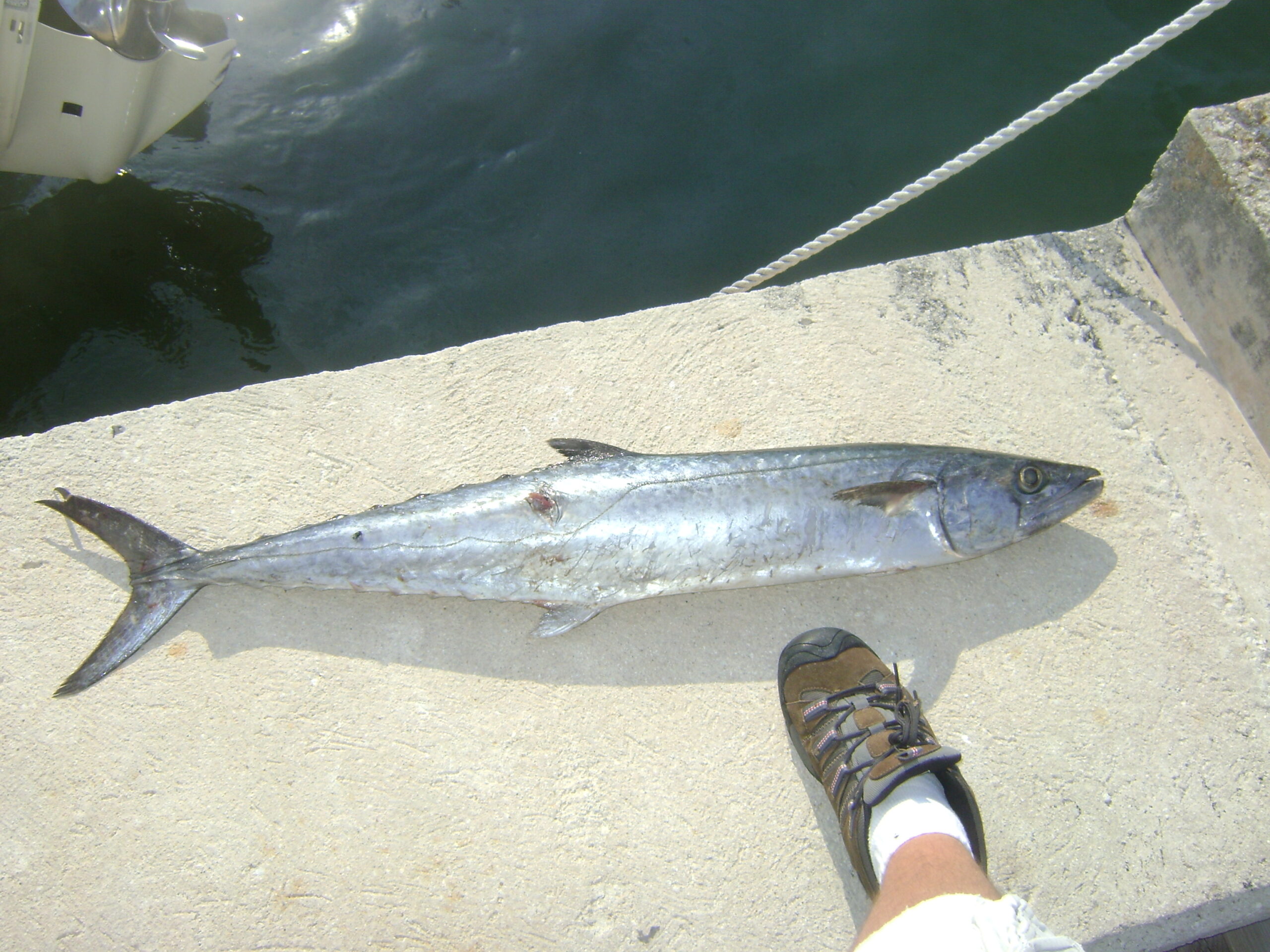
King mackerel lead the lineup, feeding on the nearshore reefs and around the bait pods just off the beach. Redfish hold at the St. Johns jetties and in the creek mouths, with slot fish and some bull reds mixed in. Tarpon roll in the river mouth and off the beaches at first light.
Mangrove snapper and flounder sit on the jetty rocks and the ICW bridges. Sharks are thick everywhere, so expect to lose baits.
Where to Find Them
Kings sit on the reefs in 40 to 70 feet and anywhere you find pogy schools within a few miles of the beach. Menhaden schools drive the summer king fishery on this coast, so finding bait is usually the same as finding fish.
Redfish work the north and south jetties on the last of the outgoing and the first of the flood. Around the tide change, the current eases enough for fish to hold close to the rocks and feed. Look for tarpon rolling in the Mayport area and off Little Talbot on calm mornings. Flounder hug the jetty rocks and the Sisters Creek bridge pilings, and trout sit in the creek mouths off the Intracoastal early.
Tides & Conditions
Post-full-moon tides run strong through midweek. Water temperatures sit in the mid-80s inshore and the low 80s nearshore. The St. Johns runs dirty after recent rain, which pushes fish tighter to the jetties and the cleaner ocean-side water.
Morning is the window. The sea breeze and storms shut things down by early afternoon, so be on the reefs or the rocks at first light.
Tackle & Tactics
- Kings: slow-troll live pogies on stinger rigs with light wire. A 5/0 lead hook and a treble trailer covers short strikes from fish that slash at the tail of the bait.
- Jetty reds: a heavy jighead with a paddletail, or a live mullet fished on the bottom with 40-pound leader. A heavy head gets down and stays down in jetty current.
- Flounder: a Carolina rig with a live mud minnow slow-dragged along the rocks; the sliding sinker lets a flounder pick up the bait without feeling weight.
- Tarpon: a live pogy on a 7/0 circle hook with 80-pound fluorocarbon.
Local Intel This Week
The Sisters Creek ramp, the Mayport ramp and the Palms Fish Camp ramp are the main public launches for jetty and river access. Sisters Creek and Mayport put you minutes from the jetties and the nearshore bait pods, and Palms Fish Camp covers the river side. Huguenot Memorial Park is a shore option on the inlet side for anglers without a boat. Focus on the inlet and the nearshore bait rather than heading up the river.
Redfish, flounder and king mackerel all carry size and bag rules. Check current FWC and federal regulations and seasons before keeping fish.
This Week’s Tip
When you find a pogy school and the kings will not commit, drop a live bait deep with a small trolling sinker instead of keeping everything on the surface. The bigger fish sit under the school and rarely come up to the flat lines.
Planning a trip to Jacksonville?
This report tells you what happened. ReelAI tells you what to do about it — a briefing for your date, your target species and how you're fishing, built from our reports plus live NOAA and USGS data.
Powered by ReelAI — fishing.digital's intelligence layer. Answers are generated from fishing.digital reports and public NOAA, NWS and USGS data, and may be incomplete or out of date. Regulations and marine safety information are summaries only; always confirm with the responsible authority before you fish.