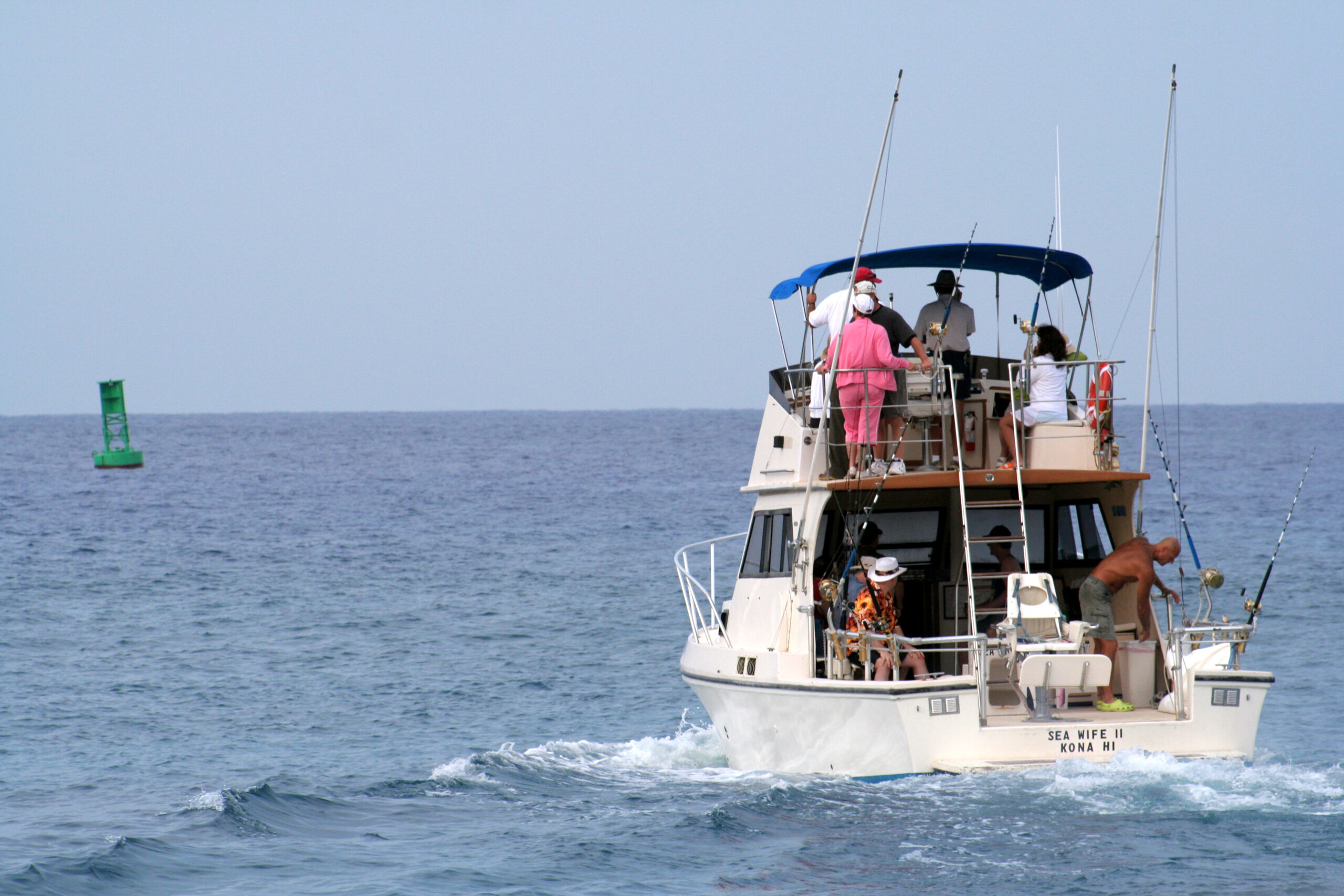
Hawaii offers year-round deep-sea fishing unlike anywhere else in the United States — the Big Island alone produces more Pacific blue marlin over 1,000 pounds than any other fishery in the world. The deep water off Kona drops from near-shore to several thousand feet within miles, meaning world-class pelagic fish are accessible on half-day trips that would require overnight offshore runs on the mainland. For light tackle inshore fishing, Hawaii’s flats, reefs, and nearshore structures produce a completely different set of exotic species.
Top Species in Hawaii
| Species | Hawaiian Name | Season | Best Island |
|---|---|---|---|
| Pacific Blue Marlin | A’u | Year-round (peak June–September) | Big Island (Kona) |
| Yellowfin Tuna | Ahi | Year-round | All islands |
| Mahi-Mahi | Dorado | Year-round (peak spring) | All islands |
| Wahoo | Ono | Year-round (peak fall/winter) | All islands |
| Striped Marlin | Nairagi | October–April | Big Island, Maui |
| Giant Trevally (GT) | Ulua | Year-round | All islands (shore) |
| Bonefish | O’io | Year-round | Oahu, Molokai flats |
Best Fishing Locations in Hawaii
Kona, Big Island — Marlin Capital
Kona on the Big Island’s leeward coast is the undisputed world capital of Pacific blue marlin fishing. The Kona Coast drops from the harbor to several thousand feet within 2–3 miles, meaning grander marlin (1,000+ lbs) are accessible on half-day trips. The Kona charter fleet at Honokohau Harbor is the largest in Hawaii and operates year-round. Summer months (June–August) produce the highest marlin numbers; September and October often produce the biggest individual fish. The Hawaii International Billfish Tournament held in Kailua-Kona in August is one of the world’s most prestigious billfish events.
Offshore — All Islands
Yellowfin tuna (ahi) are available year-round off all Hawaiian islands — fish from 20 to over 200 pounds are caught regularly. Chunking with squid and live bait near FADs (fish aggregating devices) maintained by the state is highly productive. Wahoo (ono) peak from October through February, responding to high-speed trolling at 15–18 knots with black/purple skirts. Mahi-mahi are available all year with spring weedlines producing the largest concentrations.
Shore Fishing — Giant Trevally and Bonefish
Hawaii offers unique inshore fishing not found on the mainland. Giant trevally (ulua) — a powerful reef predator growing to over 100 pounds — are caught from shore by casting large lures and live baits at rocky points and channels on all islands. Bonefish inhabit the shallow flats of Oahu’s Kaneohe Bay, Molokai’s southern flats, and several locations on Oahu’s north shore. Hawaiian bonefish average 3–6 pounds with fish over 8 pounds encountered regularly — larger than most Bahamian bonefish.
Hawaii Fishing Licenses
Hawaii does not require a state fishing license for saltwater (ocean) fishing. A license is required for freshwater fishing (inland streams and reservoirs) at $26/year for residents, $9 for non-residents. Certain commercial fish ponds may have their own access requirements. Bag limits and size minimums apply to many species — check DLNR regulations before fishing.
Planning Your Hawaii Fishing Trip
Offshore charter trips from any island run $600–$1,200+ for a half-day (4 hours) and $1,200–$2,000+ for a full day (8 hours). Split charter options (share a boat with other anglers) run approximately $200–$350 per person. FishingBooker.com and HawaiiSportFishing.com are the primary booking platforms for the Kona fleet.
Planning a trip?
This report tells you what happened. ReelAI tells you what to do about it — a briefing for your date, your target species and how you're fishing, built from our reports plus live NOAA and USGS data.
Powered by ReelAI — fishing.digital's intelligence layer. Answers are generated from fishing.digital reports and public NOAA, NWS and USGS data, and may be incomplete or out of date. Regulations and marine safety information are summaries only; always confirm with the responsible authority before you fish.