
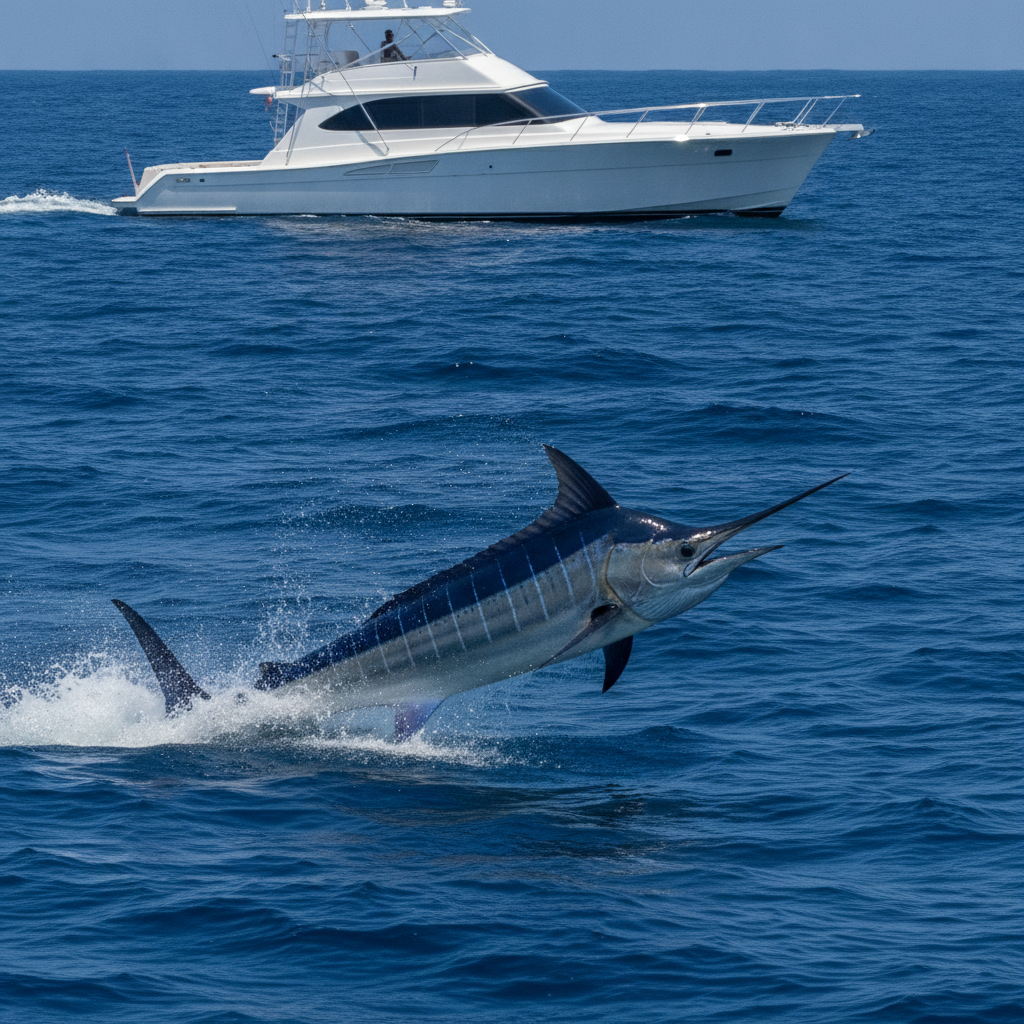
Late August keeps Hawaii squarely in its blue-water season. The Kona coast is fishing well in the lee of the island, the offshore buoys are holding tuna, and the ledges are producing ono for boats working the edges early. Conditions have been typical for the season — calm mornings on the Kona side and building trades by afternoon.
What’s Hitting
Blue marlin are the headline and the reason most boats leave the harbor. Fish are around the ledges and the buoys, and August remains one of the more productive stretches of the Kona calendar.
Ahi — yellowfin tuna — are on the offshore buoys and the porpoise schools, with spearfish and shortbill releases mixed into the trolling spread. Ono are along the 40 to 60 fathom ledges and are most cooperative in the first two hours of light. Mahi are scattered on the debris lines. Inshore, the reef edges hold ulua, uku and papio for shore and small-boat anglers.
Where to Find Them
The Kona coast from Keahole Point south past Kailua and Honokohau is the primary marlin ground, with the offshore FADs and the weather buoys concentrating tuna and the boats that chase them.
Ono hold on the 40 to 60 fathom ledges and the drop-offs — troll the contour rather than running straight out. Mahi come off floating debris and current lines, which are worth investigating any time you cross one. On the other islands, the Maui and Oahu offshore grounds are producing similar mixed bags, and the shoreline ledges statewide give shore casters access to ulua at night.
Tides & Conditions
Water is warm and blue on the Kona side, and the island lee keeps conditions fishable when the trades are up. Mornings are typically calm and glassy with the wind building through the afternoon.
Current has been the key variable offshore — a working current edge near a buoy will hold bait and everything that eats it, while slack water around the same buoy can be lifeless. Check the buoy conditions before committing to a long run, and watch for the bird activity that marks a productive edge.
Tackle & Tactics
Marlin fishing here is a trolling game: a spread of skirted lures run at seven to nine knots on 80- to 130-pound class gear, with a live bait ready to pitch when a fish comes up on a teaser. Lure position and pattern matter more than color for most crews.
Ahi come on smaller skirted lures and feathers run in the same spread, or on live opelu fished around the buoys. Ono demand speed and wire — a fast-trolled bullet head or a wire-rigged bait along the ledge. For shore anglers targeting ulua, heavy conventional gear, a sliding bait rig and a long night on the rocks is the tradition and it still works.
Local Intel This Week
Access: Honokohau Harbor is the primary Kona launch and charter base, with Kawaihae Harbor to the north and Keauhou to the south. On Oahu, Haleiwa and Kewalo Basin serve the north and south shores. Shore access along the coastal lava ledges is extensive but genuinely dangerous — never turn your back on the water, and know that people are swept off these rocks every year.
Fish are concentrating around the buoys and along the ledge contours where current is working. Hawaii regulations include size limits on several inshore species, seasonal closures, and specific rules within marine life conservation districts. Billfish are also subject to federal HMS reporting requirements — check current Hawaii DAR and NOAA regulations before keeping fish.
This Week’s Tip
Do not judge a buoy by what you see on the surface. Idle a full circle around it and watch your sounder for the bait ball and the marks holding underneath before you decide it is dead. Ahi frequently sit forty to eighty feet down and well off to the down-current side, completely invisible from the tower, and boats that make one pass and leave miss them routinely.
Planning a trip to Hawaii?
This report tells you what happened. ReelAI tells you what to do about it — a briefing for your date, your target species and how you're fishing, built from our reports plus live NOAA and USGS data.
Powered by ReelAI — fishing.digital's intelligence layer. Answers are generated from fishing.digital reports and public NOAA, NWS and USGS data, and may be incomplete or out of date. Regulations and marine safety information are summaries only; always confirm with the responsible authority before you fish.