
April marks one of Fort Lauderdale’s most celebrated transitions: the winter sailfish migration winds down and the spring mahi-mahi season opens with extraordinary force. The first significant weedlines of the year push north with the Gulf Stream — often visible from the beach — loaded with 10-30 pound mahi and the occasional bull pushing 40+. Offshore, the diversity of species available from a Fort Lauderdale boat in April is unmatched anywhere on the Atlantic coast.
Inshore Fishing — April 2026
Tarpon — Year-Round Canal Residents
Fort Lauderdale’s urban canal system harbors a permanent population of tarpon, and April conditions — warming water, abundant bait — make them especially active. Fish from 40 to over 100 pounds cruise the wider canals of Port Everglades, the New River system, and the finger canals throughout the city. Night fishing from bridges and canal banks with large white or chartreuse streamer flies, live mullet, or large DOA soft plastics is productive throughout April and into summer. The tarpon in these canals are uniquely accessible — you can park your car and walk to fish that elsewhere would require an expensive offshore boat.
The 17th Street Causeway and the Las Olas Bridge are among the most productive canal tarpon spots, particularly on outgoing tides when bait is flushed from the canals into the Intracoastal.
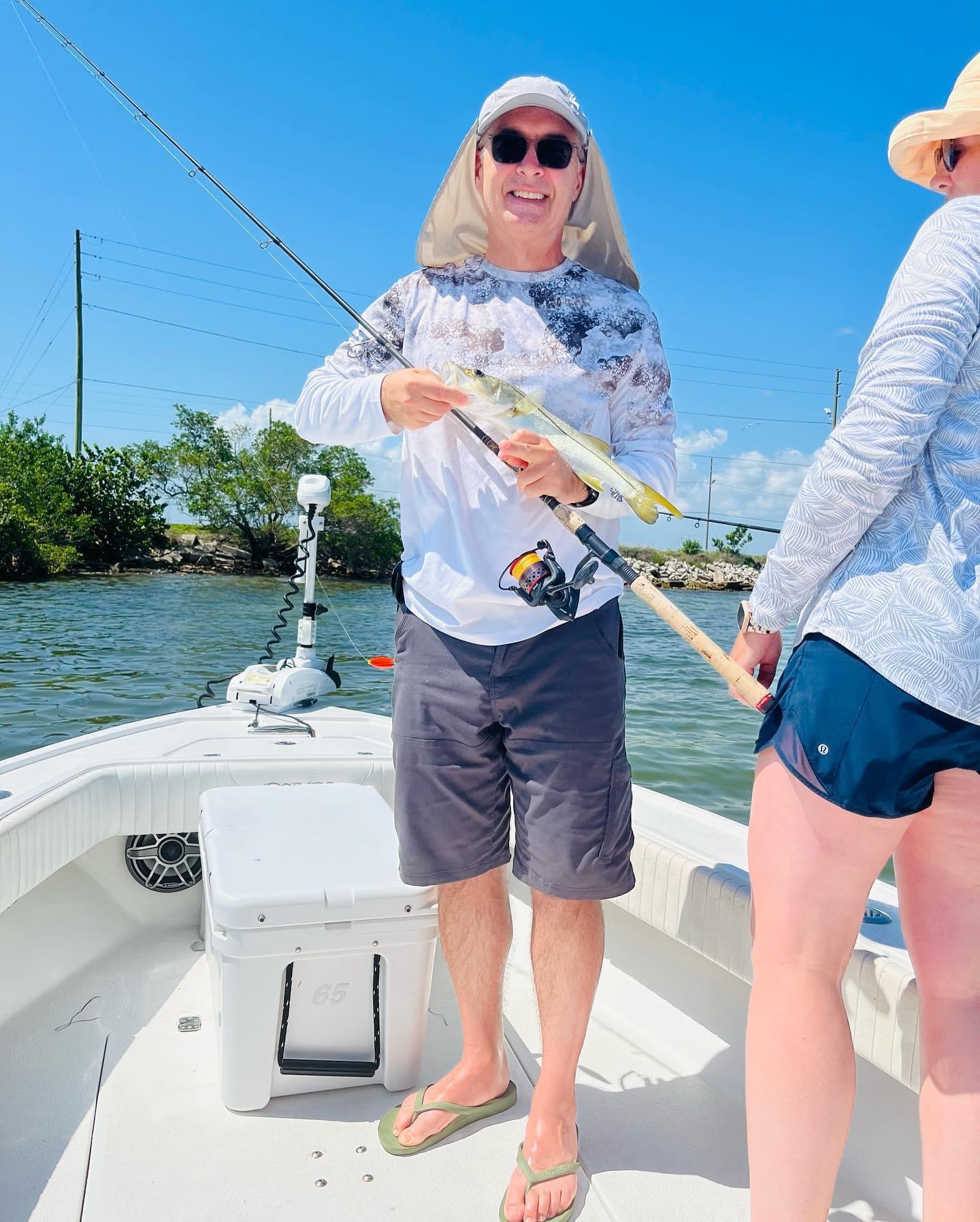
Snook and Seatrout — Intracoastal Action
Snook are pre-spawn feeding in April along the Fort Lauderdale Intracoastal Waterway and in the passes. Dock lights at night produce large snook on free-lined live pilchards. Bridge structure along the ICW — particularly the older concrete bridges with heavy barnacle growth — holds both snook and seatrout. A DOA Shrimp or Hogy Paddle Tail on a 3/8 oz jig head worked through the shadow line of a lighted dock is a classic April Fort Lauderdale approach.
Offshore Fishing — April 2026
April is a peak offshore month. Mahi-mahi are appearing on spring weedlines 8-15 miles from the Fort Lauderdale Inlet — find floating grass, debris, or birds and there are mahi beneath. The Gulf Stream runs within 3-4 miles of shore in April, making these weedlines accessible even on moderate-sized boats. Sailfish are still being caught in April — the last of the winter migration — and a mixed bag of sails and mahi on the same trip is possible in early April. Wahoo have been building on the deep edge through March and April — high-speed trolling at the 80-100 fathom curve at dawn produces fish in the 25-60 pound range.
For the ultimate April Fort Lauderdale experience: an overnight daytime swordfish trip targeting fish at 1,800+ feet is one of the most remarkable fishing experiences available anywhere. Fort Lauderdale pioneered the daytime swordfishing technique and the fleet here is the most experienced in the world.
Top Techniques — April
1. Weedline mahi fishing: Troll a spread of small feathers and naked ballyhoo at 8 knots along the up-current edge of floating grass lines. When the first mahi is hooked, stop the boat and begin casting small jigs and soft plastics into the school — mahi are intensely competitive feeders and the whole school follows the hooked fish. Keep someone fighting a fish at all times to hold the school.
2. Canal tarpon on fly: April canal tarpon are some of the most approachable large fish on fly in Florida. An 11-weight fly rod with an intermediate sink tip and a large black or purple Deceiver or tarpon toad pattern, cast ahead of a cruising fish in the canal on a falling tide, produces heart-stopping strikes. The challenge is the surrounding structure — dock pilings, seawalls, boat hulls — make fighting tarpon in the canals as technical as any fishing in Florida.
3. Night dock light fishing: Pull up to any illuminated dock on the ICW at night and fish the shadow line where darkness meets light with a free-lined live pilchard (no weight, no cork). Snook, seatrout, jacks, and tarpon all ambush bait in this transition zone after dark in April.
Insider Tips
Fort Lauderdale weedlines move daily. The Gulf Stream current and wind direction determine where floating grass accumulates. Check the GOES satellite sea surface temperature imagery (available free at coastwatch.noaa.gov) the morning of your trip to identify the strongest color change — mahi concentrate on the boundary between warm blue Gulf Stream water and cooler green nearshore water.
The tarpon in the canals are not catch-and-release optional. Canal tarpon are wild fish that provide extraordinary fishing in an urban setting. Handle with care, minimize air exposure, and release immediately. The Fort Lauderdale canal tarpon population exists because of responsible catch-and-release practices by the local guide community.
Looking Ahead to May
Check back every Thursday for the updated Fort Lauderdale fishing report. See our complete Fort Lauderdale Fishing Guide for full year-round coverage.
Planning a trip to Fort Lauderdale?
This report tells you what happened. ReelAI tells you what to do about it — a briefing for your date, your target species and how you're fishing, built from our reports plus live NOAA and USGS data.
Powered by ReelAI — fishing.digital's intelligence layer. Answers are generated from fishing.digital reports and public NOAA, NWS and USGS data, and may be incomplete or out of date. Regulations and marine safety information are summaries only; always confirm with the responsible authority before you fish.