
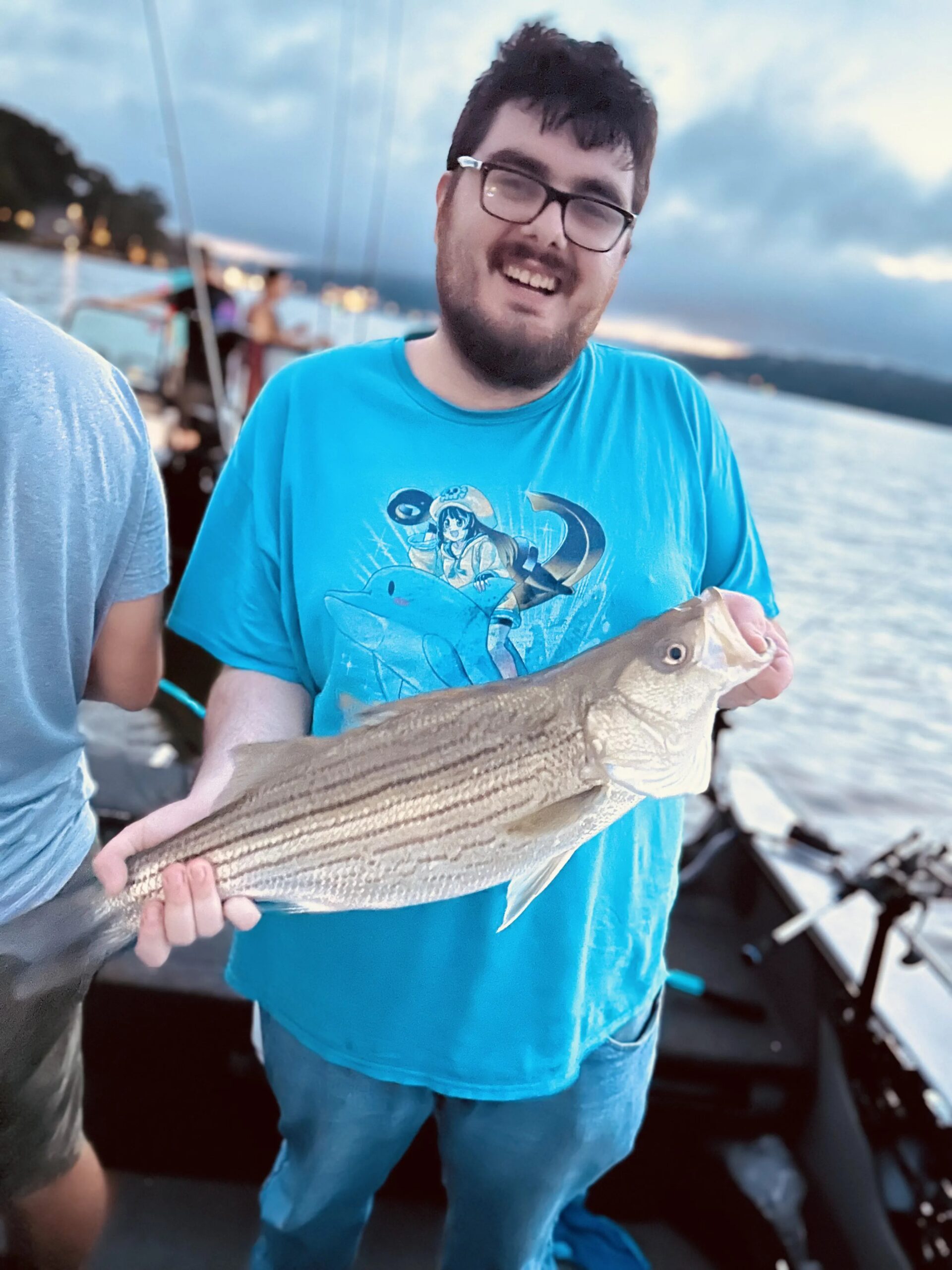
March is when the Outer Banks fishing year really begins. The spring striper run kicks off at Oregon Inlet, the first cobia sightings happen along the beaches in late month, tautog action continues on the nearshore wrecks, and the offshore bluefin tuna run is still going strong out of Hatteras.
Stripers — Spring Run Begins
The spring striped bass migration along the Outer Banks kicks off in March. Fish moving up the coast stack at Oregon Inlet on the outgoing tide, and live menhaden, trolled Mojos, and large soft plastics on jigheads are all producing.
Most fish are in the 28 to 36 inch slot, with bigger over-slot bass (which must be released under current NC regs) increasingly common as the month progresses. The bite typically peaks around the new and full moons of late March and April.
The Albemarle Sound striper season is closed during the spawning run — fishing the ocean side and the inlet itself is where the action happens. Use circle hooks when bait fishing per NC regulations.
Cobia — First Sightings
The first cobia of the year typically show up along the Outer Banks beaches in late March, riding the warm water push from the south. Tower boats running the beaches off Nags Head and Hatteras in calm weather can sometimes pick off the early arrivals on bucktails.
The cobia peak doesn’t hit until late April through May, but March is when scouting and pre-fishing pays off. The fish are spread thin and skittish this early.
Tautog — Still Strong
Tautog action on the nearshore wrecks continues to be excellent in March. The water is still cold (50-58°F), and tog are stacked on structure in 50 to 80 feet. Green crabs on a tautog rig is the time-tested approach.
March often has better weather windows than January and February, making tautog trips more feasible. The bite remains consistent through the month.
Offshore — Bluefin Tail End, Yellowfin Begins
The Hatteras bluefin tuna run continues through March, though catches typically taper as the month progresses and the giants push north. The last hot windows for trophy bluefin are usually first 2 weeks of March.
By late March, yellowfin tuna start to show on the temperature breaks. Trolling ballyhoo behind sea witches in spreader bars and on the rigger pulls is the standard approach. Most yellowfin are 30 to 60 pounds with shots at bigger fish.
Mahi-mahi are not yet a player in March on the OBX — they show up in May.
Inshore — Speckled Trout Recovery, Black Drum, Reds
Speckled trout activity picks up significantly in March as water temps climb into the upper 50s. The Pamlico River and Neuse River creek mouths produce solid trout on slow-twitched MirrOlure suspending plugs and Gulp baits.
Black drum show up on the bay flats and around the bridges. Cut clam and shrimp on the bottom is the easy approach. Most fish are 5 to 15 pounds with shots at bigger drum.
Redfish in the marsh creeks become more active. Cut mullet, gold spoons, and topwaters on warming afternoons all start to produce.
Conditions and Best Windows
Water temps along the OBX in March climb from the mid-40s at the start of the month to the upper 50s by month’s end. The shift triggers everything from the striper run to the cobia migration.
Weather is still variable — northeasters are common — but the calm windows are longer and more frequent than in deep winter.
Where to Be This Month
Oregon Inlet for the spring striper run. Nearshore wrecks for tautog. Hatteras for the last of the bluefin tuna. And start scouting the beaches for early cobia in the last week of the month.
Related on fishing.digital:
Planning a trip to NC Outer Banks?
This report tells you what happened. ReelAI tells you what to do about it — a briefing for your date, your target species and how you're fishing, built from our reports plus live NOAA and USGS data.
Powered by ReelAI — fishing.digital's intelligence layer. Answers are generated from fishing.digital reports and public NOAA, NWS and USGS data, and may be incomplete or out of date. Regulations and marine safety information are summaries only; always confirm with the responsible authority before you fish.