
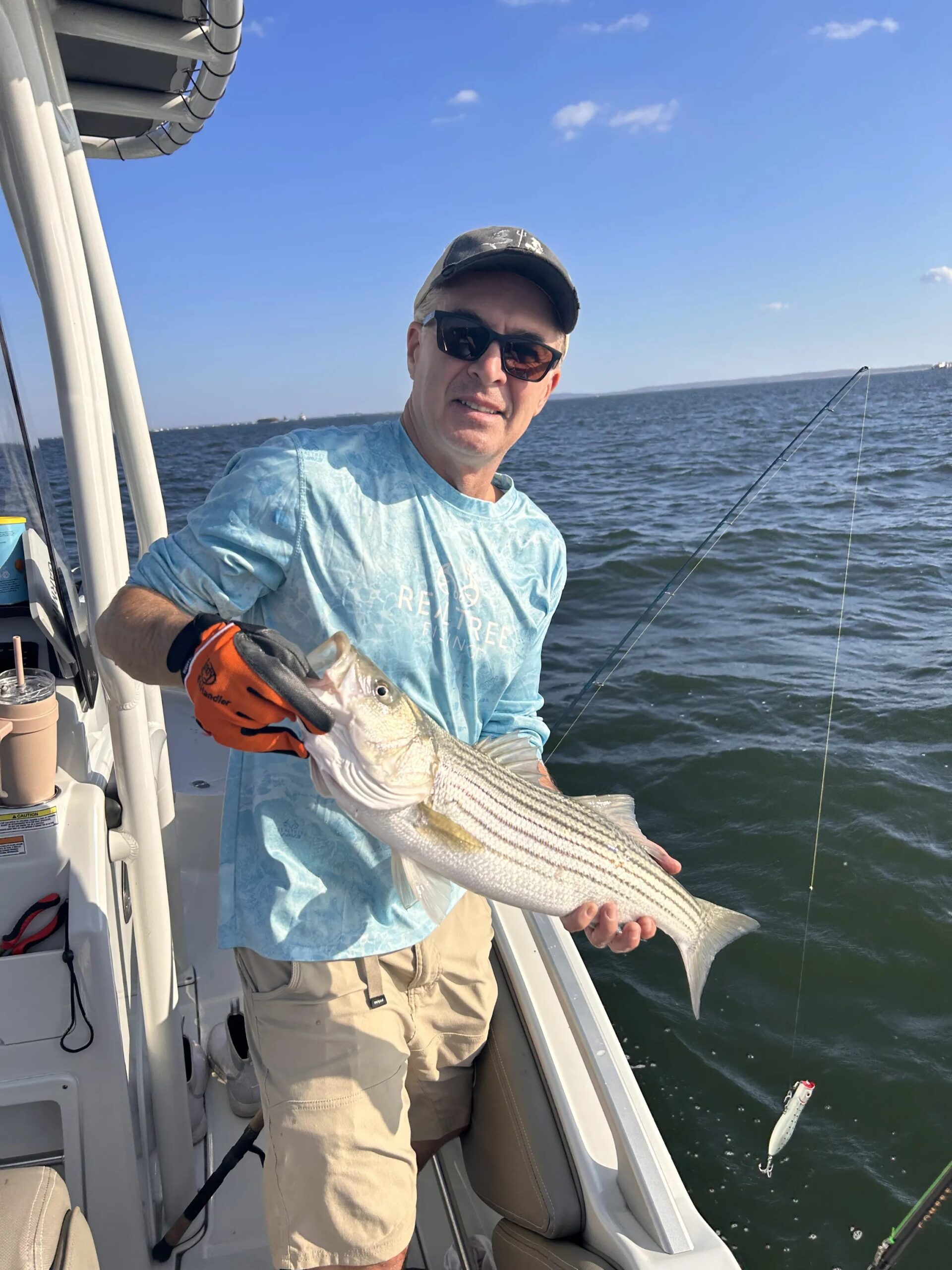
January is the tautog angler’s month in New Jersey. Water temperatures along the Jersey Shore have bottomed out in the mid-30s°F, and the blackfish are stacked on hard structure in exactly the spots you’d expect — nearshore artificial reefs, offshore wrecks, and the rock piles at Barnegat Ridge and Sea Girt Reef. This is also the month when serious striper anglers start thinking about the coming spring, watching water temps and monitoring Chesapeake Bay tributary reports for early signs of the migration to come.
Inshore Fishing — January 2026
Tautog (Blackfish)
Tautog are the story in January and there’s no reason to fish for anything else in the nearshore zone. Fish are at their heaviest weight of the year — fat from months of feeding on mussels, crabs, and sea bass — and concentrated on structure between 30 and 80 feet of water. Green crabs and fiddler crabs fished on a 3/0–5/0 Virginia-style rig are the standard, with Gulp! peeler crab a productive alternative when live bait is scarce.
Top January spots: Barnegat Ridge (the most consistent reef complex on the Jersey Shore), Sea Girt Reef, the IBSP (Island Beach State Park) reef, Axel Carlson Wreck (off Manasquan), and the Cholesterol Corner reef system off Barnegat Inlet. Fish the incoming tide — tautog feed most aggressively as water floods the structure. Use enough weight to hold bottom in the current; a 4–6 oz bank sinker is standard in most conditions.
Tautog regulations in New Jersey: 16″ minimum, 5 fish per day through January 31, then a brief winter closed season — always verify current NJDEP regulations before you go.
Late-Season Striped Bass
A small population of striped bass winters in the Delaware Bay and lower Raritan Bay. Patient anglers fishing large live bunker or cut chunks in 20–40 feet of water around the Cape May shipping channel and the Delaware Bay mouth can connect with fish from 20 to occasionally over 40 pounds. These are not blitz conditions — it’s slow, methodical fishing in cold water. But the fish that show up in January are often the largest of the year.
Offshore Fishing — January 2026
True offshore fishing is limited to weather windows in January, but cod fishing on the deep offshore wrecks — particularly the Cholesterol Corner complex, the Lindenkohl Canyon area, and wrecks in 80–150 feet of water — can be exceptional for anglers willing to make the run on flat-calm days. Norwegian jigs, heavy metal jigs, and cut clam on a 3-hook dropper loop rig produce cod in the 10–30 lb range. Party boats out of Belmar, Point Pleasant, and Atlantic Highlands run cod trips throughout the winter.
Top Techniques — January
1. High-low tautog rig: Two-hook Virginia rig, 4–6 oz bank sinker, 30 lb fluorocarbon, 4/0–5/0 wide-gap hooks. Fish directly on bottom with just enough weight to hold. Tap the bottom periodically to feel for soft patches of shell — tautog congregate there.
2. Tautog jigging: When fish are holding 3–5 feet off bottom, a 2–4 oz white or chartreuse bucktail tipped with peeler crab or Gulp! can out-fish a conventional bait rig. Jig slowly — tautog don’t chase fast presentations in cold water.
3. Delaware Bay striper chunking: Fresh-cut bunker on a 7/0–9/0 circle hook, 60–80 lb fluorocarbon leader, fished on the bottom in current seams near channel edges. Anchor up-current of known striper structure and let the chunk drift back naturally.
Insider Tips — January
Tide timing is everything for tautog. Plan your reef fishing around the first 2 hours of the incoming tide — fish that have been scattered at slack water consolidate and feed actively as current begins to run. Don’t waste gas running out to the reef at dead low.
Go deeper in January cold. Fish that were holding in 40–50 feet in November often push to 60–80 feet or deeper by January. If your usual spots are producing only small fish or nothing, try running to the deep edge of the reef structure.
Check sea surface temperature charts before any January offshore trip. NOAA’s CoastWatch browser shows current SST and helps identify where the 50°F line sits — tautog and cod respond to these temperature boundaries even in winter.
Looking Ahead — February
February is tautog’s finest month in New Jersey — fish are at peak weight and the bite often improves as water temperatures stabilize. Late February brings the first weakfish to the southern bays, and striper scouts will be watching the Raritan Bay and Sandy Hook for the advance guard of the spring migration. Winter cod fishing remains productive through February on favorable weather days.
For full seasonal detail, species guides, and local resources, see our New Jersey Fishing Guide.
Planning a trip to New Jersey?
This report tells you what happened. ReelAI tells you what to do about it — a briefing for your date, your target species and how you're fishing, built from our reports plus live NOAA and USGS data.
Powered by ReelAI — fishing.digital's intelligence layer. Answers are generated from fishing.digital reports and public NOAA, NWS and USGS data, and may be incomplete or out of date. Regulations and marine safety information are summaries only; always confirm with the responsible authority before you fish.