
Updated: Thursday, October 15, 2026 · Next update: Thursday, October 22, 2026
This Tampa Bay fishing report covers mid-October, one of the best stretches of the year in Tampa Bay, with cooling mornings, active bait and fish feeding hard on the flats and around the passes. Redfish work the shallow flats and mangrove edges, trout hold on the grass, and snook still roam the beaches and passes on their way toward winter haunts. Plan around easing tides as the moon builds toward first quarter, and fish the moving water early and late in the day.
What’s Hitting
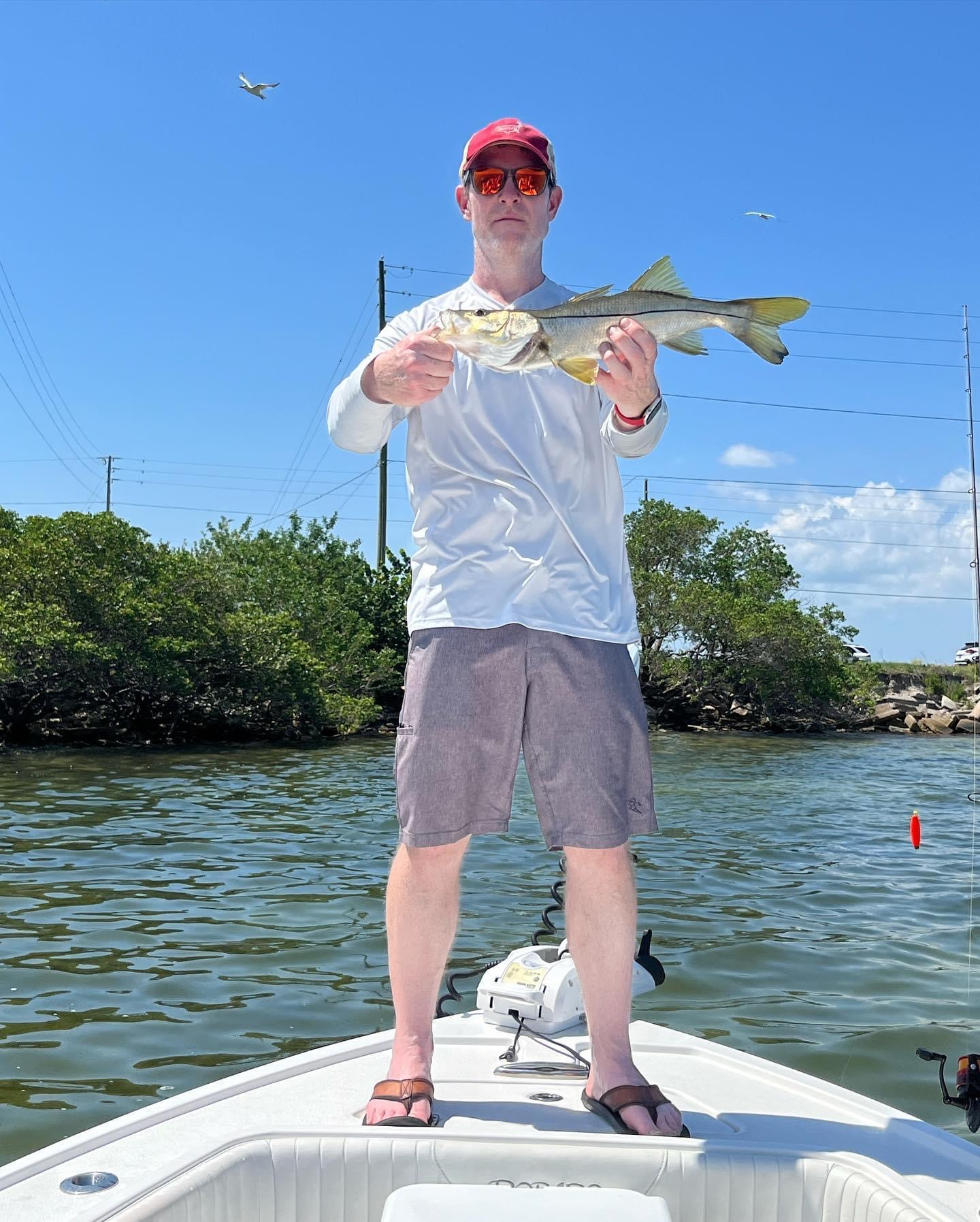
Redfish are on the shallow flats and around the mangrove edges, trout are holding on the grass in 3 to 5 feet, and snook are still working the beaches and passes as they move toward winter haunts. Spanish mackerel and bluefish mix in with the bait pods, and tripletail sit around the channel markers and crab trap buoys.
Through the rest of October, cooler nights keep pushing redfish and trout onto the shallow flats, while snook slowly shift toward the backcountry creeks and the warmer water near power-plant outflows later in the fall.
Where to Find Them
Work the flats of lower Tampa Bay and Boca Ciega Bay on a rising tide for redfish. A rising tide floods the mangrove edges and oyster bars, giving redfish access to crabs and baitfish that are out of reach at low water.
Drift the grass beds for trout, and fish the passes at Fort De Soto and the Skyway on the outgoing tide for snook and mackerel. Scan the channel markers for tripletail.
Tides & Conditions
Tides are easing as the moon builds toward first quarter. Moving water early and late is the best bet, and calm mornings make sight-fishing the flats easy. Wind direction can push water on or off the Tampa Bay flats as much as the tide itself, so check the wind forecast and a tide chart together.
Tackle & Tactics
Light spinning gear with 10 to 15 pound braid is plenty for this fishery.
- Trout: live shrimp under a popping cork; the noise mimics feeding fish and draws trout to the bait below.
- Redfish: a paddle-tail soft plastic or gold spoon.
- Snook and mackerel: live pilchards and small jerkbaits.
- Low light: topwater plugs over the grass for explosive strikes from trout and redfish.
If the action slows at midday, move to deeper edges and switch to a slow-sinking soft plastic. Keep your leader fresh, as oyster bars chew through line quickly.
Local Intel This Week
Fort De Soto Park puts you right on the passes for snook and mackerel on the outgoing tide. Cypress Point Park in Tampa gives wade and kayak access to the upper bay flats, and the ramps around Weedon Island and the Gandy Boat Ramp are the launches for the grass beds and channel markers.
Fish concentrate at the passes, the flats and the channel edges. Check current FWC and federal regulations and seasons before keeping fish. Snook and redfish rules in particular are specific.
This Week’s Tip
Look for birds. Diving terns and pelicans mark bait pods, and the trout and mackerel are usually right beneath them. Approach quietly from upwind and cast to the edge of the activity to keep the school feeding longer.
Planning a trip to Tampa/St. Pete?
This report tells you what happened. ReelAI tells you what to do about it — a briefing for your date, your target species and how you're fishing, built from our reports plus live NOAA and USGS data.
Powered by ReelAI — fishing.digital's intelligence layer. Answers are generated from fishing.digital reports and public NOAA, NWS and USGS data, and may be incomplete or out of date. Regulations and marine safety information are summaries only; always confirm with the responsible authority before you fish.