
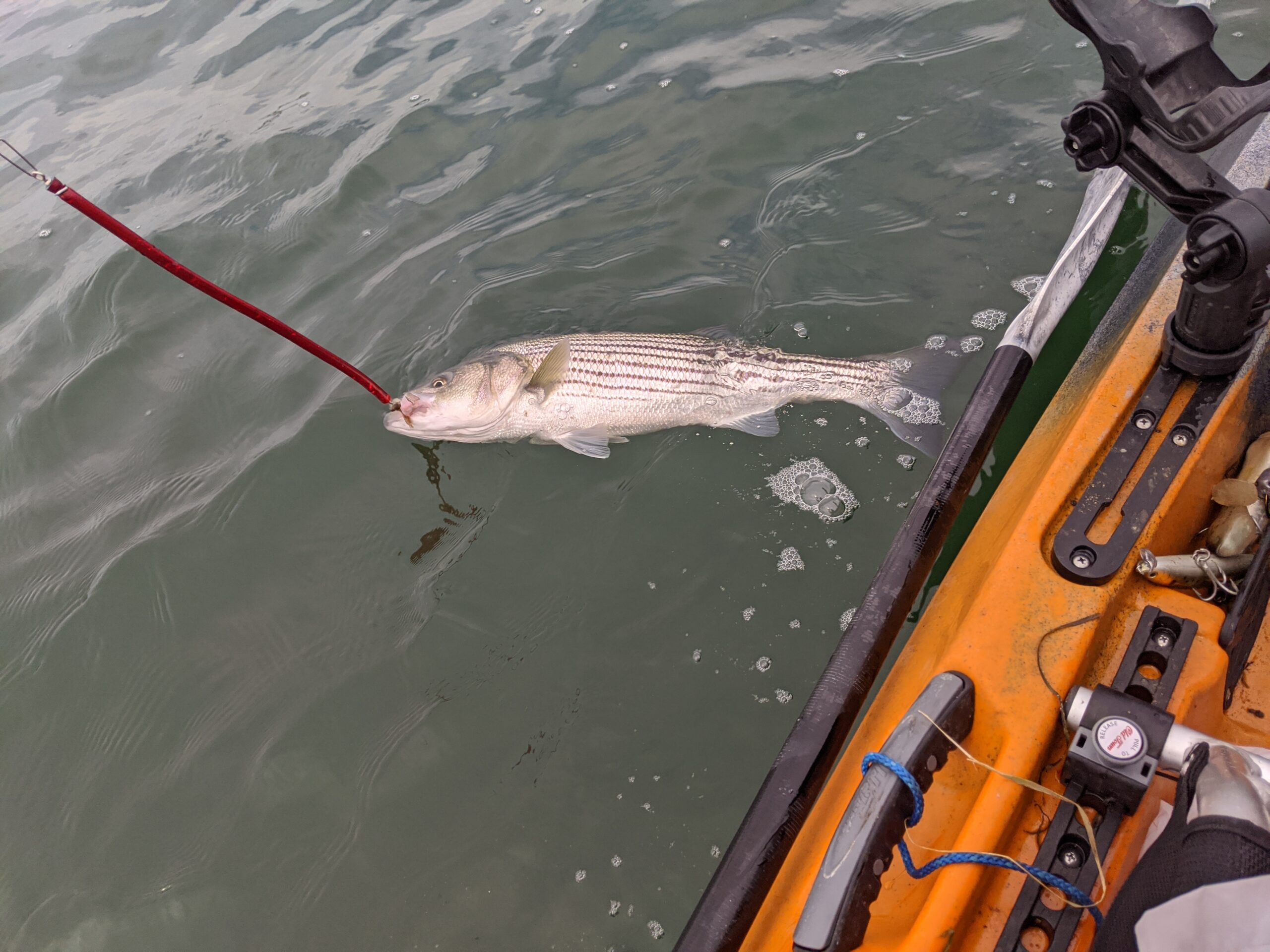
Landlocked striped bass (Morone saxatilis) — called stripers, rockfish, or linesiders — were introduced into freshwater reservoirs across the South and West beginning in the 1960s and have become one of the most exciting freshwater game fish available. They grow large (20+ lbs), form massive feeding frenzies on the surface called “schooling” or “breaking” fish, and fight with all the power of their saltwater cousins. When a school of freshwater stripers is up on the surface blitzing shad, it’s one of the most exciting sights in freshwater fishing.
Where to Find Freshwater Striped Bass
Landlocked stripers are found in large reservoirs throughout the Southeast, Mid-Atlantic, and increasingly in western states. Major fisheries include Lake Texoma (TX/OK), Santee Cooper (SC), Kerr Reservoir (VA/NC), Lake Ouachita (AR), and dozens of other reservoirs. They require large bodies of water with adequate forage (primarily gizzard shad and threadfin shad) and cold, oxygenated deep water refuges in summer.
Best Tackle
Medium-heavy to heavy: 7-8″ medium-heavy to heavy spinning or conventional, 4000-6000 reel with 300 yards of 30-50 lb braid, 50-65 lb fluorocarbon leader. Freshwater stripers are powerful fish that make long runs and require substantial gear.
Top Techniques
Live Bait Under Floats: The most productive method for large fish. A large live shad or threadfin suspended 8-15 feet under a large float positioned over a school detected by sonar. Topwater during schooling: When stripers are blitzing on the surface (typically early morning and late evening), cast large topwater lures and swimbaits into the breaking fish. One of fishing’s most exciting experiences. Trolling: Large lures trolled at 3-5 mph locate nomadic fish over large areas. Umbrella rigs, large swimbaits, and crankbaits all work.
Best Baits and Lures
- Live Gizzard Shad: The definitive freshwater striper bait. Hook through the lips or back and suspend under a float.
- Live Threadfin Shad: Where available, threadfin are preferred — smaller and more active than gizzard shad.
- Large Swimbaits (6-10″): White and shad patterns for surface schooling fish.
- Topwater (Zara Spook Super Spook): Large walking bait for surface blitzing fish.
- Large Crankbaits (Mann’s Stretch 25+): Deep-diving trolling plugs for locating fish.
Seasonal Patterns
Spring and Fall: Peak seasons when stripers chase shad aggressively and are most likely to come to the surface. Summer: Fish retreat to deep, cold water during the day — locate them with sonar and present live bait vertically. Early morning surface schooling can be spectacular. Winter: Fish are accessible at mid-depths, often following bait balls vertically.
Pro Tips
- Use sonar to find both the fish and the shad — stripers stack below baitfish schools. Locate the bait, find the fish directly below.
- Be ready for the morning blitz — freshwater stripers typically school on the surface for 15-30 minutes at first light. Position in a likely area before dawn.
- Strong drag from the start — freshwater stripers make powerful initial runs that will expose any drag weakness.
Regulations
Freshwater striper regulations vary by reservoir. Many have 18-20″ minimums and 2-4 fish bag limits. Some waters have trophy size minimums. Always check your state DNR for the specific reservoir you’re fishing.
Browse all species guides: How To Catch Fish — Complete Species Guides | Weekly Fishing Reports.
Best Freshwater Striper Tackle
Affiliate disclosure: fishing.digital earns a small commission on qualifying purchases at no extra cost to you.
1. Large Live Shad Hook Rig
Live gizzard shad under a large float positioned over a sonar-marked school. Check price on Amazon
2. Super Spook Topwater
Walk-the-dog lure for the morning blitz when stripers crash shad on the surface. Check price on Amazon
3. Penn Battle III 4000
Strong drag for the powerful initial runs of landlocked stripers. Check price on Amazon
4. Mann’s Stretch 25 Deep Diver
Deep-diving trolling plug for locating nomadic stripers over large reservoirs. Check price on Amazon
Shop all fishing gear: Amazon Fishing Department
Planning a trip to Striped Bass (freshwater)?
This report tells you what happened. ReelAI tells you what to do about it — a briefing for your date, your target species and how you're fishing, built from our reports plus live NOAA and USGS data.
Powered by ReelAI — fishing.digital's intelligence layer. Answers are generated from fishing.digital reports and public NOAA, NWS and USGS data, and may be incomplete or out of date. Regulations and marine safety information are summaries only; always confirm with the responsible authority before you fish.