
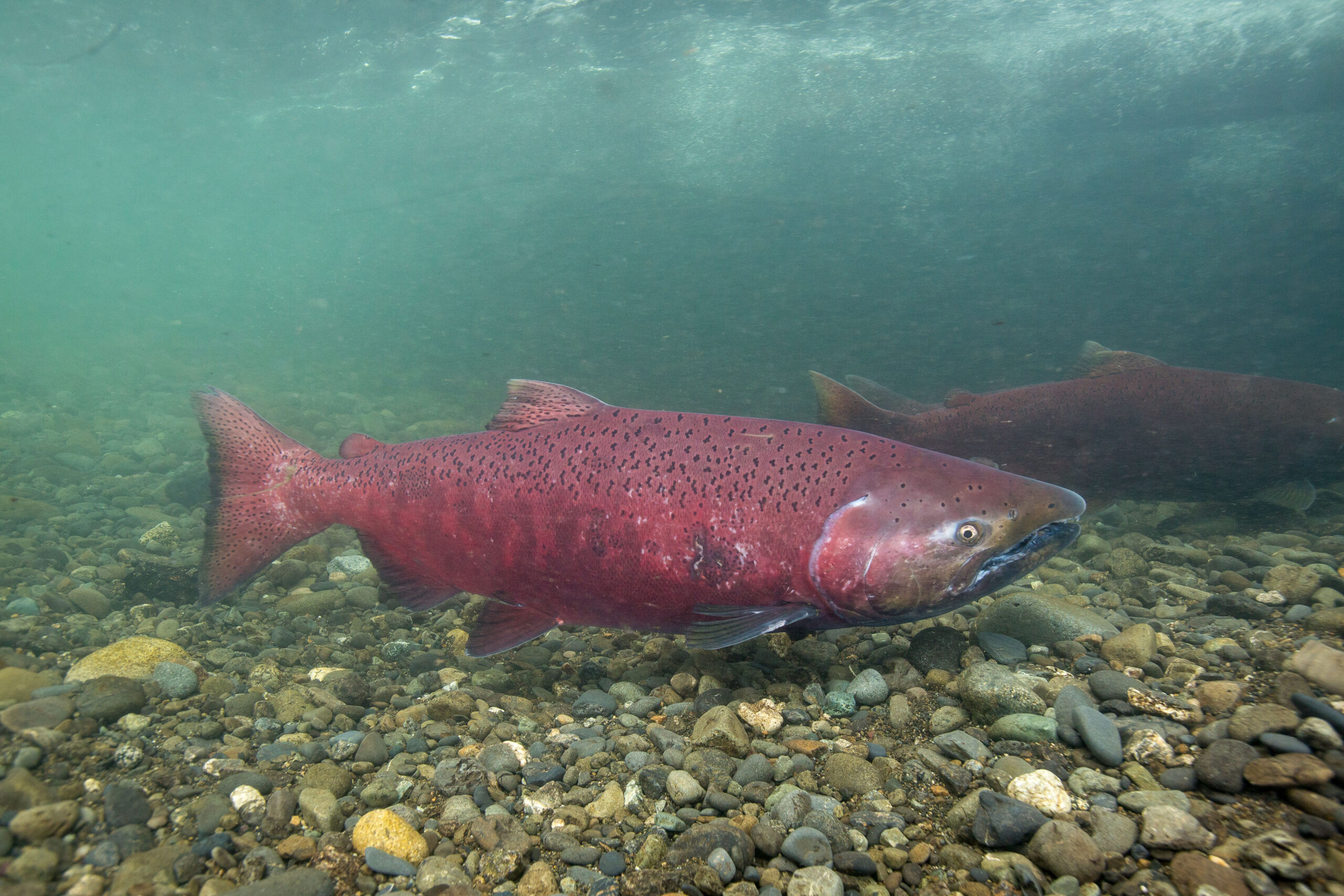
Chinook salmon — the king of the Pacific salmon family — are the largest and most prized of the five Pacific species. A mature chinook in a major river system like the Sacramento, Columbia, or Kenai can exceed 50 pounds, and the fight they deliver on heavy fly or spinning gear is unmatched in freshwater fishing. Understanding their migration timing, preferred holding water, and the specific techniques that produce consistent hookups separates successful chinook anglers from everyone else.
Affiliate disclosure: fishing.digital earns a small commission on qualifying Amazon purchases — at no extra cost to you.
Where Chinook Salmon Are Found
Chinook have the broadest range of any Pacific salmon. Ocean populations range from California’s Sacramento River system north through Oregon, Washington, British Columbia, and throughout Alaska — with the Kenai River in Alaska holding world-class kings exceeding 60 pounds. The Columbia River system (Oregon/Washington) hosts multiple runs throughout the year. In California, the Sacramento, Feather, and American Rivers hold both spring and fall runs. In the Great Lakes, stocked chinook (known as “kings” locally) provide exceptional trolling in Lake Michigan and Lake Ontario from May through September.
Chinook Salmon Runs — When to Go
| Location | Run Timing | Peak |
|---|---|---|
| Kenai River, Alaska | May–July (early run), July–August (late run) | Mid-June to mid-July |
| Columbia River, OR/WA | March–November (multiple runs) | April–May (spring), September–October (fall) |
| Sacramento River, CA | September–December | October–November |
| Lake Michigan tributaries | August–November | September–October |
| Puget Sound/coastal WA | July–October | August–September |
| Muskegon/Pere Marquette, MI | August–November | September |
Best Techniques for Chinook Salmon
Drift Fishing (Rivers)
The most universal river technique for chinook. Rig a size 2/0–4/0 octopus hook on 15–20 lb fluorocarbon leader with a pencil lead sinker heavy enough to maintain bottom contact. Fresh cured roe (salmon eggs cured in Pautzke Balls O’ Fire or Fire Cure) is the premier bait. Work the drift through the deepest part of holding water — the tail-outs of deep pools and the seam between fast and slow current. Allow the rig to tick along the bottom with no rod tip action; a chinook bite feels like a subtle tick or the current stopping.
Plug Fishing (Rivers)
Pulling large diving plugs — Mag Lips, Hot Shots, and Kwikfish in sizes K14–K16 — upstream against the current from an anchored boat or drifting backward is one of the most effective chinook river techniques. The plug’s wobbling action in the current drives holding fish to strike. Wrap a sardine fillet on the belly of the plug with thread to add scent. This technique excels on the Columbia and Sacramento systems.
Back-Trolling (Rivers)
In wide, deep river pools, slowly backing a jet boat downstream while trolling large Flatfish or Kwikfish lures covers water efficiently and keeps the lure in the strike zone longer. The Kenai River guide fleet built its reputation on this method for big kings.
Trolling (Great Lakes and Ocean)
Open-water chinook are caught trolling flasher-fly combinations and large spoons at depth using downriggers, planer boards, and divers on Lake Michigan and Lake Ontario. Standard Lake Michigan king setup: 20–30 lb monofilament main line, downrigger to 40–80 feet, 8–10 foot leader of 20 lb fluorocarbon, and chartreuse or green Spin Doctors with Paddle Flies (Bloody Nose or Green/Chartreuse patterns). In the ocean, heavier flasher-hoochie rigs in 4–6 oz sizes produce off the Pacific Northwest coast.
Fly Fishing (Rivers)
Swinging large intruder-style patterns and Spey flies through holding runs is the highest-art form of chinook fishing. 10–12 weight two-handed Spey rods with sink-tip lines deliver large flies (size 2/0–4/0) at depth in the critical lower one-third of the water column. Black, purple, and orange intruder patterns and large Marabou spiders are proven producers. The Sandy, Deschutes, and Sol Duc Rivers in the Pacific Northwest are classic fly fishing destinations for returning kings.
Best Tackle for Chinook Salmon
- River rod: 9–10 ft medium-heavy spinning or casting rod, 15–25 lb monofilament or braid, 15–20 lb fluorocarbon leader
- Trolling rod: 8–9 ft medium-heavy downrigger rod, level-wind reel, 20–30 lb monofilament
- Fly rod: 10–11 weight single or two-hand, 450–550 grain sink-tip line
- Hook: Octopus 2/0–4/0 for bait; wide-gap 2/0 for soft plastic trailers
Browse chinook salmon fishing rods on Amazon →
Top Chinook Salmon Locations in the US
The Kenai River, Alaska is the world standard for trophy kings — fish exceeding 60 pounds are landed every summer. The Columbia River hosts the largest runs in the lower 48 states with multiple distinct seasonal runs. The Muskegon and Pere Marquette Rivers in Michigan deliver the best Great Lakes tributary chinook fishing in September and October. Puget Sound and the waters off Westport, Washington offer exceptional ocean chinook trolling from July through September.
Chinook Salmon Regulations
Chinook salmon regulations vary significantly by state, river, and run. Always check current regulations with your state fish and wildlife agency before fishing — size limits, bag limits, gear restrictions, and wild fish retention rules change annually. In many Pacific Northwest rivers, retention of wild (unclipped) chinook is prohibited; only hatchery fish (identified by a clipped adipose fin) may be kept.
Planning a trip to Saltwater Fishing?
This report tells you what happened. ReelAI tells you what to do about it — a briefing for your date, your target species and how you're fishing, built from our reports plus live NOAA and USGS data.
Powered by ReelAI — fishing.digital's intelligence layer. Answers are generated from fishing.digital reports and public NOAA, NWS and USGS data, and may be incomplete or out of date. Regulations and marine safety information are summaries only; always confirm with the responsible authority before you fish.