
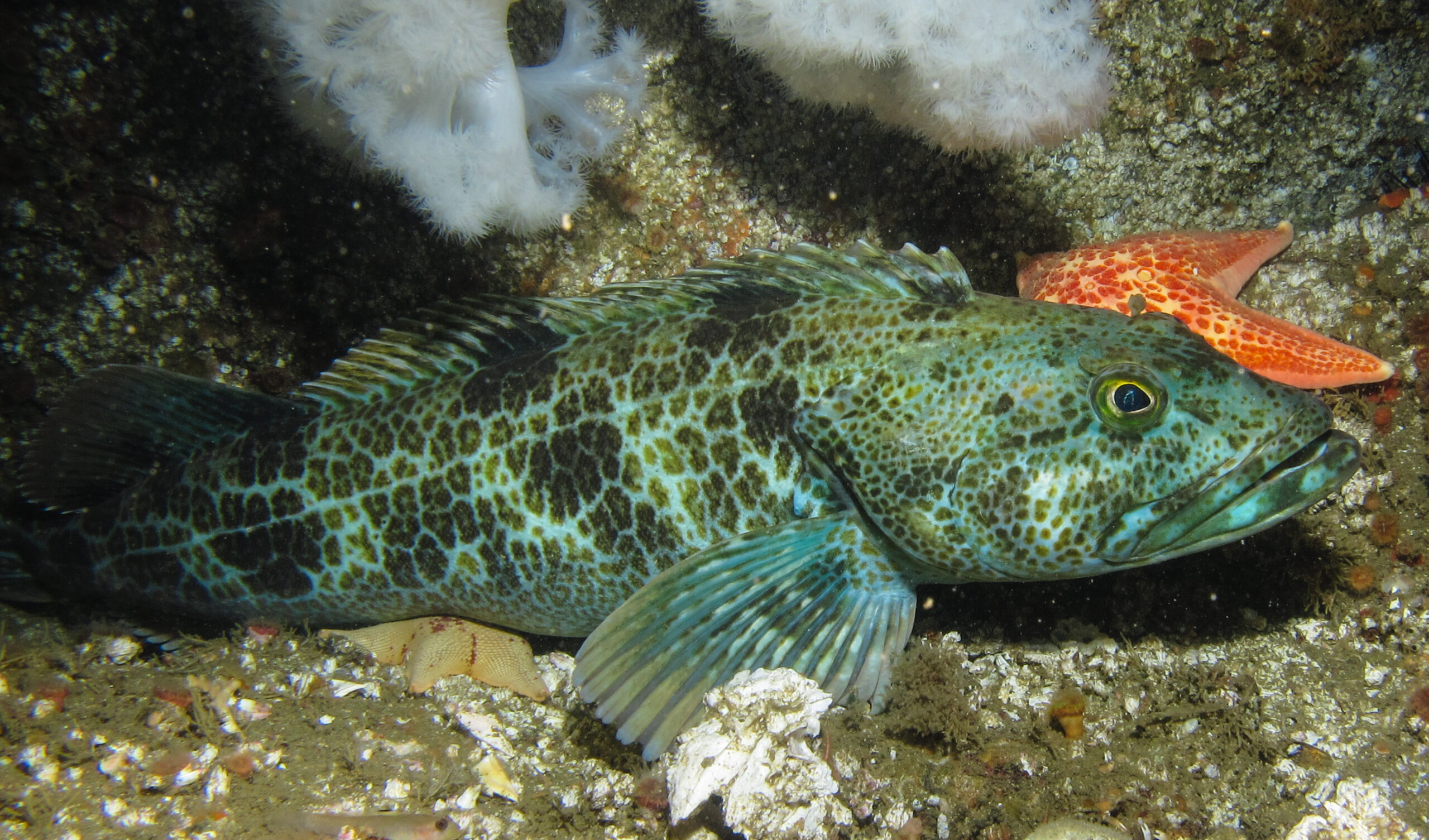
Lingcod are one of the Pacific Coast’s most distinctive bottom fish — a voracious predator with a disproportionately large mouth, mottled green-brown camouflage, and a personality that involves attacking lures nearly as large as itself. They’re found from Alaska to Baja California, grow to over 80 pounds, and are among the finest eating fish in the Pacific. For West Coast anglers, a trip targeting lingcod over rocky reef structure is one of the most exciting bottom-fishing experiences available — the strikes are violent, the fights are powerful, and the fish are visually stunning.
Affiliate disclosure: fishing.digital earns a small commission on qualifying Amazon purchases at no extra cost to you.
Where Lingcod Are Found
Lingcod inhabit rocky reef structure throughout the Pacific Coast. They prefer water temperatures between 45–65°F and are found from the intertidal zone to 1,400 feet deep, though most sport-caught fish are taken in 30–300 feet. Prime locations: The entire Oregon coast (Newport, Depoe Bay, Brookings produce excellent ling); Puget Sound (particularly around rocky headlands and the San Juan Islands); Northern California (Bodega Bay north); Southeast Alaska (near-ubiquitous in rocky habitat).
Seasonal Patterns
- Fall and winter (September–February): Peak lingcod season on the Pacific Coast. Fish are aggressive and abundant. The Oregon and Washington lingcod seasons typically run through winter — check current ODFW and WDFW regulations for season dates, which change annually.
- Spring: Lingcod spawn in winter and males guard nests through early spring — spawning aggregations on shallow reefs can produce spectacular fishing when open.
- Summer: Fish move deeper during the warmest months; still catchable but require deeper water targeting.
Best Techniques for Lingcod
Jigging — The Primary Method
Large metal jigs worked vertically over rocky reef are the most effective lingcod technique. 6–12 oz bar jigs, lead-head jigs with large paddle-tail swimbaits (6–10 inches), and large bucktail/octopus combos all produce ling. White, chartreuse, and natural colors (green/brown to match their camouflage environment) work well. Work the jig in large, aggressive sweeps with the rod — ling respond to erratic, large presentations far better than subtle finesse approaches. Hold bottom contact: ling are bottom-oriented ambush predators and rarely chase a jig more than 3–5 feet off the bottom.
Live Bait
Live rockfish (released as legal bycatch then re-rigged as bait — where legal) and large live herring are devastating lingcod baits. A large, struggling live fish near rocky bottom is nearly impossible for a lingcod to resist. Check local regulations before using live rockfish as bait — restrictions vary by state and area.
The “Lingcod Grab”
Lingcod frequently grab a hooked fish and hold on tenaciously rather than immediately swallowing. When you feel a large fish grab your jig or bait, resist the urge to immediately set the hook — keep steady pressure and the ling will often hang on long enough to be led to the boat or net. Many experienced lingcod anglers use a large treble-hook “teaser” below the main jig for exactly this situation.
Best Tackle for Lingcod
- Rod: Heavy boat rod, 6–7 ft, rated for 2–6 oz jigs minimum
- Reel: Level-wind conventional or large spinning reel, 30–50 lb braid
- Leader: 40–60 lb fluorocarbon, 18–36 inches — ling have strong, abrasive teeth
- Jigs: 6–12 oz metal bar jigs; large paddle-tail swimbaits on heavy jig heads
Browse lingcod jigs on Amazon →
Regulations
Lingcod regulations on the Pacific Coast are managed by NOAA and state agencies and change annually. Oregon and Washington typically have fall/winter lingcod seasons; California has specific open areas and season dates. Always check current regulations at ODFW (dfw.state.or.us), WDFW (wdfw.wa.gov), and CDFW (wildlife.ca.gov) before targeting lingcod.
Planning a trip to Saltwater Fishing?
This report tells you what happened. ReelAI tells you what to do about it — a briefing for your date, your target species and how you're fishing, built from our reports plus live NOAA and USGS data.
Powered by ReelAI — fishing.digital's intelligence layer. Answers are generated from fishing.digital reports and public NOAA, NWS and USGS data, and may be incomplete or out of date. Regulations and marine safety information are summaries only; always confirm with the responsible authority before you fish.