
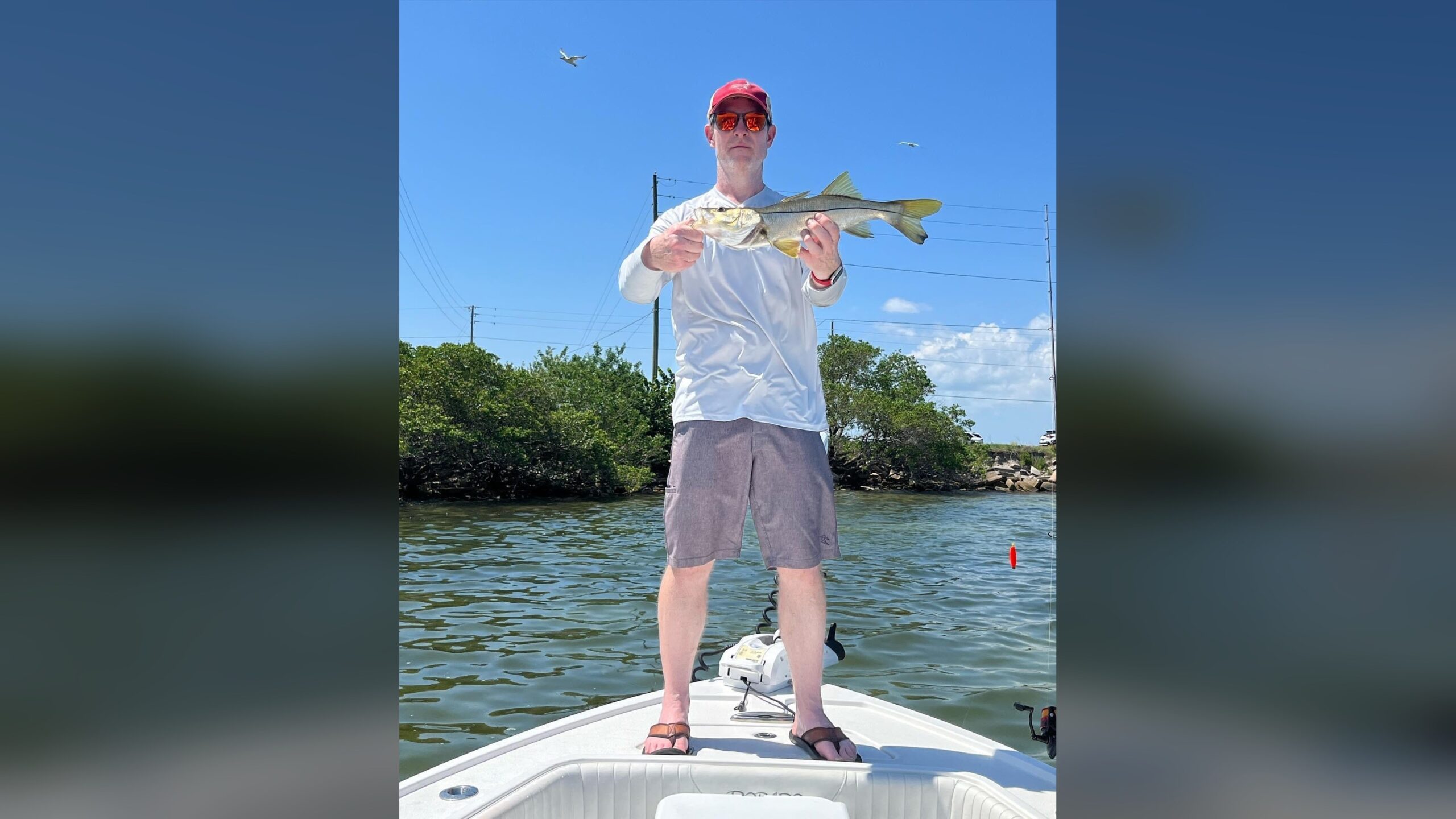
The Tampa Bay tarpon season is in full swing this week, with fish stacked around the Skyway and rolling along the beaches at first light. The inshore bite has shifted firmly into its summer pattern — snook on the beaches and passes, trout on the deeper grass, and snapper around any hard structure. Here is what to look for around the bay.
What’s Hitting
Tarpon are the star. Big strings are working the beaches from Anna Maria up through the mouth of the bay, and fish are holding around the Skyway pilings and the ship channel edges. Snook have pushed to the beaches and passes for their summer spawn — keep in mind snook season is closed June 1 through August 31 on the Gulf coast, so handle and release them carefully. Spotted seatrout are holding on the deeper grass flats in the cooler morning hours, and mangrove snapper fishing around docks, bridges, and rock piles is heating up. A few redfish are scattered on the flats.
Where to Find Them
The Skyway, Egmont Key, and the beach troughs from Anna Maria to Bean Point are the prime tarpon zones. Snook are on the beaches and stacked in the passes — Bunces, Pass-a-Grille, and the mouth of the bay. Work deeper grass in 4–7 feet for trout, and hit the bridges, the Skyway rubble, and residential docks for snapper.
Tides & Conditions
Early morning is everything in June — fish the first two hours of light before the sun and boat wakes shut things down. Tarpon respond best to a strong moving tide, and the snook bite on the beaches turns on with the incoming clean water. Watch for the daily afternoon storms and plan accordingly.
Tackle & Tactics
For tarpon, a live crab or a threadfin on a circle hook is the standard around the Skyway and beaches; a quiet drift and a long cast beat running up on rolling fish. Snook on the beaches will eat a white soft-plastic, a small swimbait, or a live pilchard on light leader. For trout, work a popping cork with a shrimp or soft-plastic over the grass. Drop to 20-pound fluorocarbon and small hooks for snapper.
Spots & Access This Week
Fort De Soto Park has the most direct ramp to the Skyway and the lower-bay tarpon, with plenty of trailer parking on weekdays. The Gandy Bridge ramp on the Tampa side covers the middle bay and the bridge snook, and the Cockroach Bay ramp on the east shore puts you on the trout flats in minutes. Shore anglers have been doing well from the Skyway Fishing Pier at night and along the Fort De Soto seawalls.
Tarpon are concentrating along the Skyway spans and the Egmont Channel edges on the moving tide, and snook are on the mangrove points and the passes on the outgoing water.
Local Intel & Tactics
Snook are closed to harvest during the summer on this part of the Gulf coast, and the June closure is strict, so this is a release fishery through the end of August. Check current FWC regulations and seasons before keeping any fish. For the Skyway tarpon, the bite window is the first two hours of the outgoing tide, and the fish move along the pilings in a predictable direction with the current. Set up on the down-current side of a span, present a live threadfin or a crab on a 6/0 circle hook with 80-pound leader, and let the current carry it back into the shadow of the bridge. Bow to the fish on every jump.
This Week’s Tip
Don’t run-and-gun the tarpon schools on the beach. Set up ahead of a moving string, cut the motor, and let the fish come to you — a single well-placed bait in front of relaxed fish will hook up far more often than chasing.
More Tampa Bay Resources
Tampa Bay Fishing Guide · Tampa Bay Seasonal Calendar · All Tampa Bay reports →
Also read: Tampa Bay Fishing Report — Week of July 30, 2026: Tarpon Tail End, Mangrove Snapper
Reports updated every Thursday on fishing.digital.
Planning a trip to Tampa/St. Pete?
This report tells you what happened. ReelAI tells you what to do about it — a briefing for your date, your target species and how you're fishing, built from our reports plus live NOAA and USGS data.
Powered by ReelAI — fishing.digital's intelligence layer. Answers are generated from fishing.digital reports and public NOAA, NWS and USGS data, and may be incomplete or out of date. Regulations and marine safety information are summaries only; always confirm with the responsible authority before you fish.