
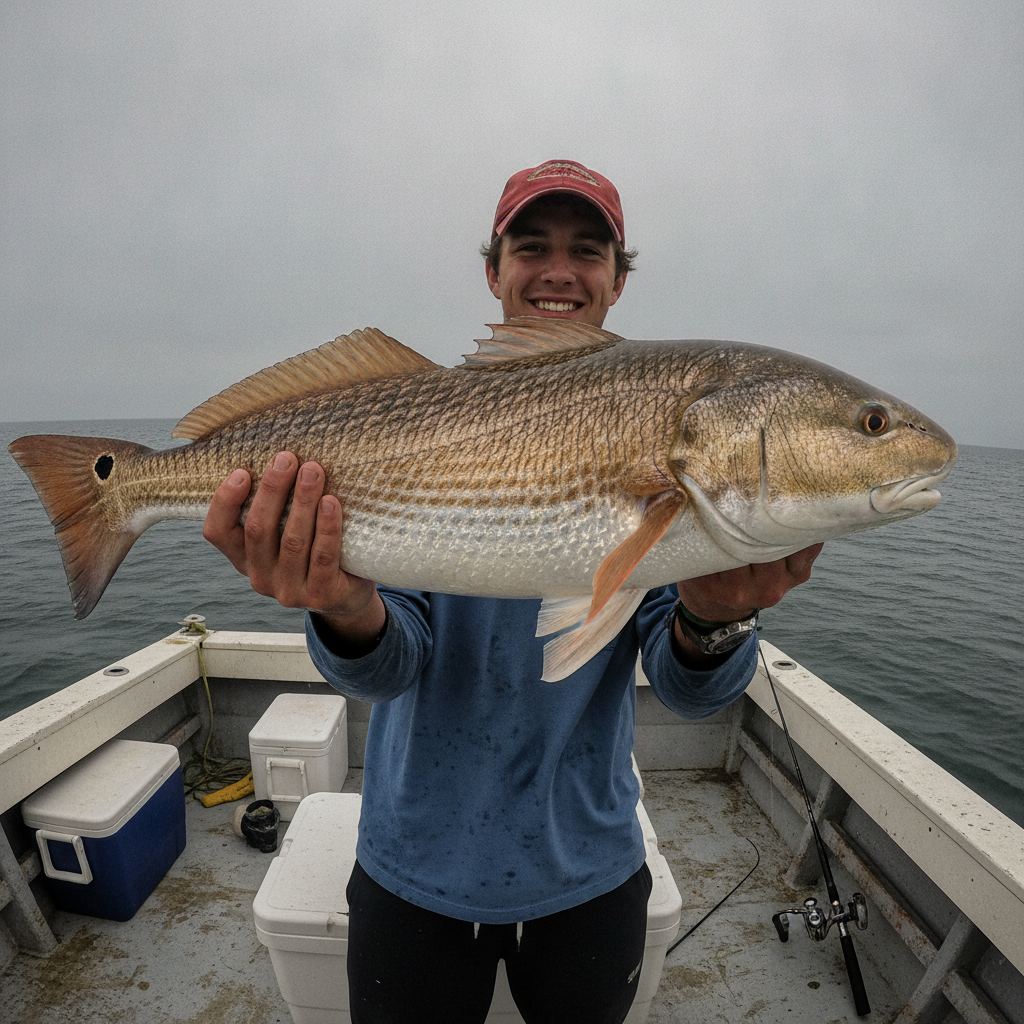
Late July on the Outer Banks means two very different fisheries running at once. Offshore, the Gulf Stream boats are getting mahi and billfish out of Oregon and Hatteras inlets. Inshore, the trophy red drum have moved into Pamlico Sound and are feeding hard after dark on the warm nights.
What’s Hitting
Citation-class red drum are the headline, with fish in the 40- to 50-inch class working the Pamlico Sound shoals at night. Offshore, mahi are the most consistent catch, with white marlin, sailfish, and blackfin tuna in the mix. Spanish mackerel and bluefish are thick just off the beach and around the inlets. Cobia have mostly moved on. In the surf, sea mullet, pompano, and small blues are steady, and there are flounder around the inlet structure.
Where to Find Them
Night drum fishing is centered on the shoals and drop-offs in Pamlico Sound south of Oregon Inlet and around the Hatteras flats — you want the edge of a shoal in 4 to 8 feet with current running over it. Offshore action is out of Oregon Inlet and Hatteras Inlet to the Gulf Stream edge. Spanish are on the bait pods within a mile of the beach from Nags Head to Avon. Surf fishing has been best at the Rodanthe and Avon piers and in the sloughs at Cape Point.
Tides & Conditions
Post-full-moon tides are strong through midweek, which is exactly what the sound drum bite wants. Ocean temps are near 80, sound water in the mid-80s. Southwest wind has been the daily driver, laying down overnight. Storms build over the sound in the afternoon and can be severe.
Tackle & Tactics
Drum fishing at night is a heavy setup — a 10- to 12-foot rod, 8/0 circle hook, fish-finder rig with 80-pound leader, and a fresh chunk of mullet or menhaden. Keep the drag set to let the fish turn on the circle. Offshore is a standard ballyhoo trolling spread with dink baits for mahi. Spanish take a small silver spoon trolled behind a planer or cast at breaking fish. Surf anglers want a two-hook bottom rig with shrimp or Fishbites.
Local Intel This Week
The Oregon Inlet Fishing Center ramp, the Hatteras Landing area ramps, and the Manns Harbor ramp are the primary public launches. Cape Point and the Rodanthe and Avon piers are the top land-based spots. Fish are concentrating on the sound shoals at night and the offshore edge by day. North Carolina red drum are managed with a tight slot and citation fish must be released — check current NC Division of Marine Fisheries regulations and seasons before keeping any fish.
This Week’s Tip
For big sound drum, fish the down-current side of a shoal, not the top of it. The fish stage in the deeper water where the current dumps off the edge and ambush bait as it washes over. Anchor up-current and let your baits sit in that trough.
More NC Outer Banks Resources
NC Outer Banks Fishing Guide · NC Outer Banks Seasonal Calendar · All NC Outer Banks reports →
Also read: NC Outer Banks Fishing Report — Week of July 23, 2026: Spanish in the Suds, Billfish Offshore
Reports updated every Thursday on fishing.digital.
Planning a trip to NC Outer Banks?
This report tells you what happened. ReelAI tells you what to do about it — a briefing for your date, your target species and how you're fishing, built from our reports plus live NOAA and USGS data.
Powered by ReelAI — fishing.digital's intelligence layer. Answers are generated from fishing.digital reports and public NOAA, NWS and USGS data, and may be incomplete or out of date. Regulations and marine safety information are summaries only; always confirm with the responsible authority before you fish.