
Updated: Thursday, July 30, 2026 · Next update: Thursday, August 6, 2026
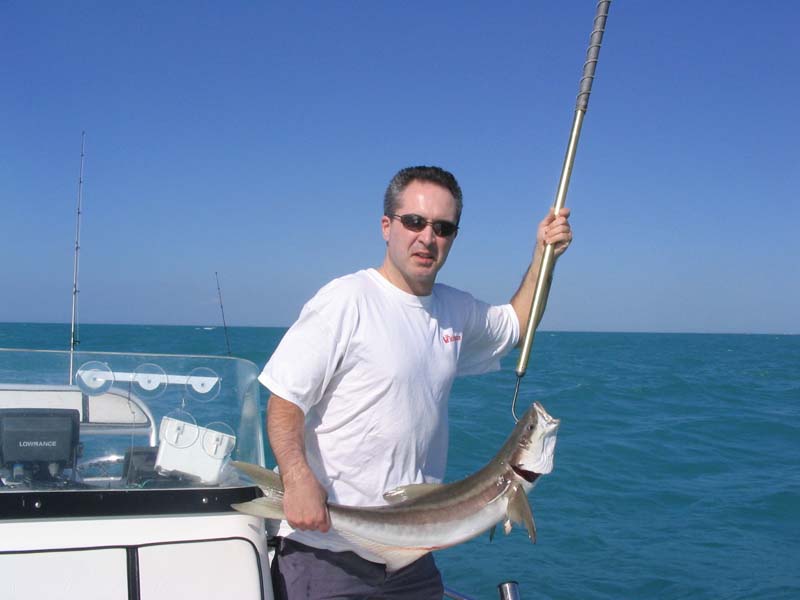
This Chesapeake Bay fishing report covers late July, the lower bay’s best cobia weeks of the year. Cobia are the marquee fish, and flat mornings and clear water make the sight-casting game as good as it gets. The rest of the bay settles into a hot-weather routine of early trout, plentiful panfish, and a striper picture that goes quiet in the heat. Plan around bay water of 82 to 85, light southwest wind in the mornings with a chop by noon, and frequent fast-moving afternoon thunderstorms.
What’s Hitting
Cobia are the lead target, with good numbers of sight-castable fish in the lower bay from the Middle Grounds down to the CBBT. Speckled trout work the shoreline structure and grass edges, especially on the Eastern Shore and around the Poquoson flats. Red drum are around, both puppy drum inshore and bull reds on the shoals.
Spot, croaker and white perch are everywhere and easy, making this the best kid fishing of the year. Striped bass are lethargic in the warm water; most of the action is early morning topwater in the rivers, and catch-and-release care is critical.
Where to Find Them
Cobia sight-casting works best from the Cape Charles area south along the buoy lines and over the shoals in 15 to 25 feet. You need sun overhead and light wind: high sun lights up the water column, and a calm surface lets you spot fish cruising. Trout sit on the Eastern Shore grass edges and around the CBBT pilings. Puppy drum work the Poquoson and Mobjack shorelines. Panfish are on any hard bottom in the middle bay and around the bridge pilings. Early stripers hit topwater at daybreak in the Potomac, Rappahannock and Choptank.
Tides & Conditions
Post-full-moon tides run strong. Bay water temps of 82 to 85 are very warm, which is why the striper bite fades and the cobia bite peaks. Expect light southwest wind most mornings, a chop building by noon, and frequent, fast-moving afternoon thunderstorms. Do your sight-casting in the calm late-morning hours when the sun is high and the chop has not built yet.
Tackle & Tactics
- Cobia: a heavy spinning outfit, 60-pound fluoro leader, and a large bucktail or a live eel to pitch at a fish you have spotted.
- Trout: a soft plastic on a light jighead, or a topwater at first light.
- Puppy drum: a gold spoon or cut bait on the bottom.
- Panfish: a simple bottom rig with bloodworm.
- Summer stripers: use single hooks, skip the treble-armed plugs, and get fish back fast.
Local Intel This Week
The Cape Charles town ramp, Kiptopeke State Park and the Sandy Point State Park ramp up north are the main public launches; Cape Charles and Kiptopeke put you closest to the lower-bay cobia shoals. The CBBT islands offer good land-based access, and the Matapeake Fishing Pier and Point Lookout State Park are other shore options on the bay. Expect fish to concentrate on the shoals and structure in the lower bay. Cobia and striped bass both have specific Virginia and Maryland seasons and permit requirements. Check current state and federal regulations and seasons before keeping fish.
This Week’s Tip
When you spot a cobia on the surface, lead it and let the bucktail sink into its path rather than casting on top of it. A bait dropping in front of a cruising fish gets eaten. A bait that lands on its back sends it down every time.
Planning a trip to Chesapeake Bay?
This report tells you what happened. ReelAI tells you what to do about it — a briefing for your date, your target species and how you're fishing, built from our reports plus live NOAA and USGS data.
Powered by ReelAI — fishing.digital's intelligence layer. Answers are generated from fishing.digital reports and public NOAA, NWS and USGS data, and may be incomplete or out of date. Regulations and marine safety information are summaries only; always confirm with the responsible authority before you fish.