
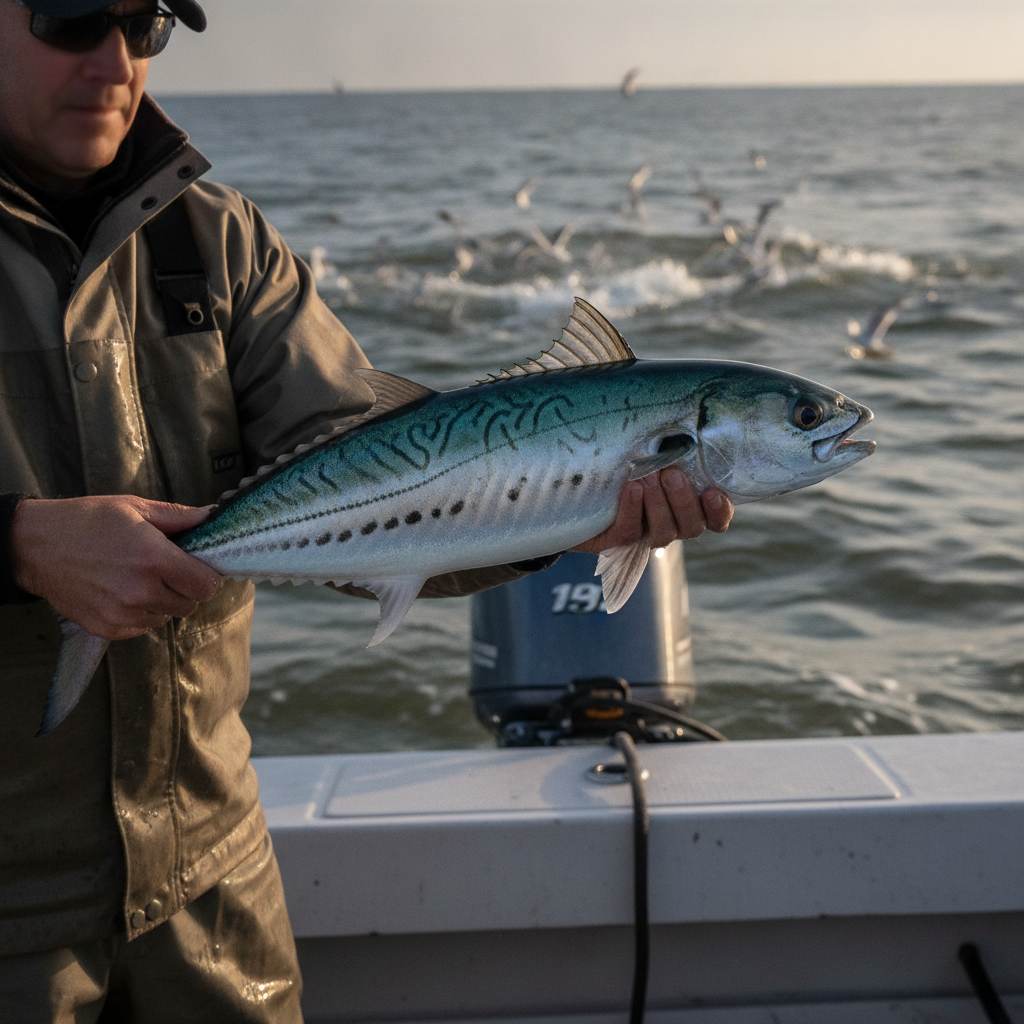
This is the week Cape anglers wait for all summer. The first real push of false albacore has shown along the south side, the Canal is still giving up fish on the breaking tides, and the whole system has that late-August feeling of things about to accelerate. Water is at its warmest of the year, which is why the best action is at either end of the day.
What’s Hitting
False albacore are the news. Fish have shown along the south-side beaches, the rips and the harbor mouths, and the numbers are building. Bonito are mixed in with them.
Striped bass remain the backbone — Canal fish on the breaking tides, rip fish along the backside, and schoolies with better fish mixed in around the estuary mouths after dark. Bluefish are widespread and aggressive. Fluke are on the sandy edges and channel drops in Nantucket Sound and Buzzards Bay. Black sea bass and scup are on every piece of hard structure, and there are still tuna offshore for boats with the range.
Where to Find Them
For albies and bonito, work the south-side beaches and harbor entrances — Falmouth, Woods Hole, the Vineyard Sound rips — and look for birds and nervous bait rather than casting blind.
The Cape Cod Canal fishes on the breaking tides, particularly the east tide at dawn. The backside beaches from Nauset to Race Point hold stripers in the wash and along the bars at night and first light. Fluke are on the sand edges in Nantucket Sound and around the Bourne and Wareham channels. Scup and sea bass are on every rockpile and wreck.
Tides & Conditions
Water temps are at their annual peak — low to mid 70s on the south side and cooler on the backside and in the Canal. That warm south-side water is exactly what has brought the albies in.
The Canal runs on its own schedule; the breaking tide is the event and everything else is waiting. Plan around it. On the south side, the moving tide through the harbor mouths and the rips concentrates bait and predators. Fog has been an on-and-off morning feature, and afternoon sea breezes have been building steadily from the southwest.
Tackle & Tactics
For albies, a 7-foot-6 to 8-foot medium spinning outfit, 20-pound braid and a 15- to 20-pound fluorocarbon leader with a small metal — an epoxy jig or a slim profile lure that matches the tiny bait they are on. Cast ahead of the direction the fish are moving, not at the last swirl.
Canal anglers know the drill: heavy conventional or a long surf spinner, braid, and a jig or pencil popper depending on the stage. On the backside, a darter or needlefish worked slowly in the wash at night. Fluke want a bucktail with a squid or Gulp trailer bounced along the bottom on the drift.
Local Intel This Week
Access points: the Canal service road is walkable and bikeable from Scusset Beach and the Herring Run for the full length. Ramps include the Sandwich Marina, the Falmouth Harbor ramp, the Sesuit Harbor ramp in Dennis and the Rock Harbor ramp in Orleans. Race Point and Nauset offer over-sand and walk-on beach access with permits where required.
Fish are concentrating at the harbor mouths and rips as the albies push in, and in the Canal on the breaking tides. Striped bass in Massachusetts is under a strict slot and circle-hook requirement for bait fishing, and fluke and sea bass carry their own seasons — check current Massachusetts Division of Marine Fisheries regulations before keeping fish.
This Week’s Tip
When albies blow up and vanish before your lure lands, stop chasing. Pick a spot where the current pushes bait — a harbor mouth, the down-tide side of a bar — anchor your feet there, and wait for the school to come to you. They are running a circuit. The angler who stands still and casts to the third boil beats the one who runs the beach and casts to the first one.
Planning a trip to Cape Cod?
This report tells you what happened. ReelAI tells you what to do about it — a briefing for your date, your target species and how you're fishing, built from our reports plus live NOAA and USGS data.
Powered by ReelAI — fishing.digital's intelligence layer. Answers are generated from fishing.digital reports and public NOAA, NWS and USGS data, and may be incomplete or out of date. Regulations and marine safety information are summaries only; always confirm with the responsible authority before you fish.