
Late August is peak season in Ocean City, and the fleet is running on all cylinders. The canyons have been the best they have been all summer, the back bays are holding good flounder numbers, and the nearshore shoals have enough mackerel and cobia around to give a smaller boat a real day. Weather windows have been the limiting factor, not the fish.
What’s Hitting
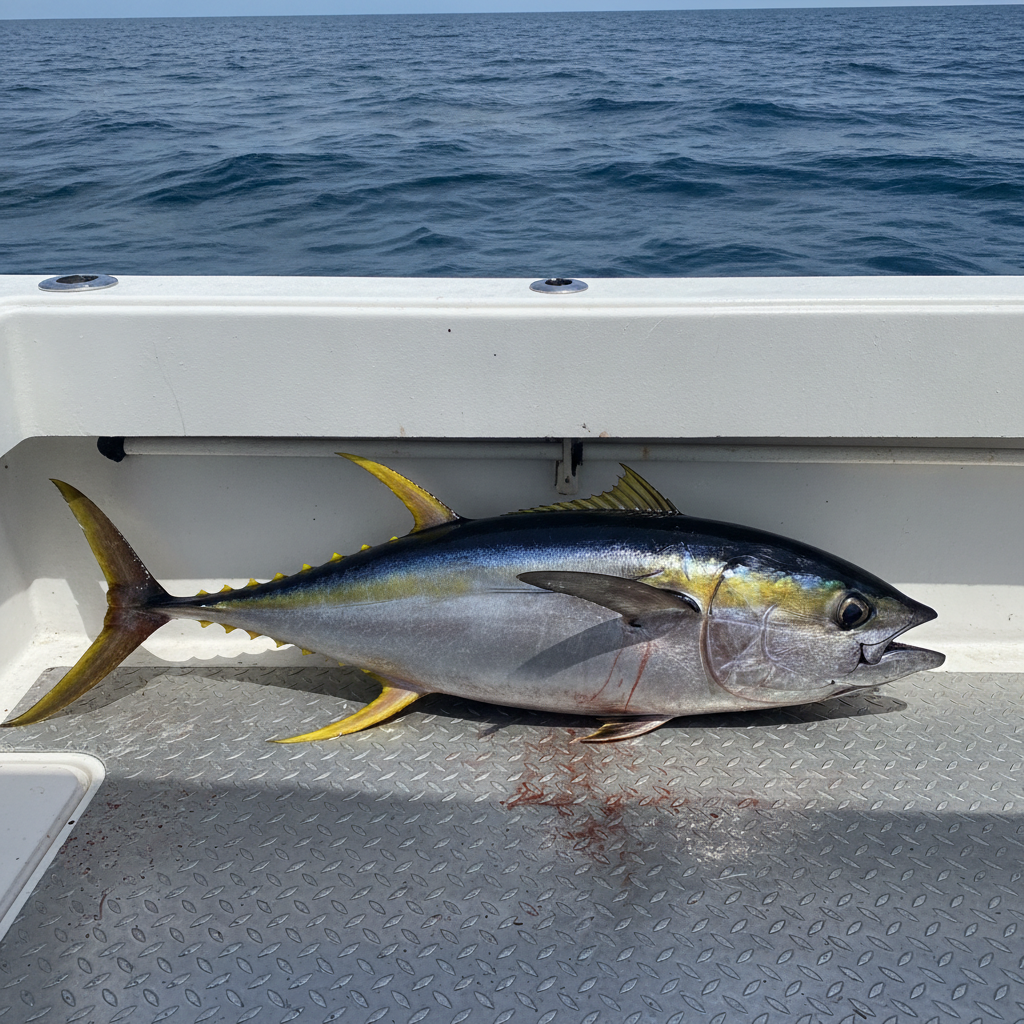
Offshore is the headline. Yellowfin tuna are the meat fish in the canyons, with white marlin around in good numbers and enough blue marlin releases to keep crews honest. Mahi are on the pots and the weedlines on the way out and back.
Bay and inlet fishing is producing flounder in the channels and along the drop-offs. Nearshore, king mackerel, Spanish mackerel and a few late cobia are working the shoals and the wrecks. Sea bass and triggerfish are on the wrecks. In the surf, kingfish, croaker, spot and a scattering of small bluefish are keeping the beach anglers busy.
Where to Find Them
The Baltimore, Poor Man’s and Washington canyons and the surrounding 30 to 50 fathom edge are where the tuna and billfish are. Look for temperature breaks and bait marks rather than fixed numbers.
Inshore, work the Route 50 bridge, the East Channel, the Thorofare and the drop-offs behind Assateague for flounder. The Great Gull and Fenwick shoals and the inshore wrecks hold kings, Spanish and sea bass. The inlet itself fishes well on the moving tide for flounder, stripers and the occasional big bluefish.
Tides & Conditions
Ocean temps are in the mid 70s inshore and warmer at the edge, with the offshore water clean and blue when the weather allows. Bay water is in the upper 70s.
Tides run a moderate range with strong flow through the inlet — plan bay and inlet trips around the moving water, and fish the last of the incoming for the cleanest conditions. Afternoon thunderstorms have been rolling off the mainland several days a week, and a hard southwest breeze will chop the ocean up quickly. Watch the forecast and go early.
Tackle & Tactics
For canyon tuna, trolling ballyhoo and spreader bars by day and chunking butterfish at night both have been productive. Run 50-pound class gear with 80- to 100-pound fluorocarbon leaders, and be prepared to switch to a light spinning outfit when white marlin come up on the dredge.
Flounder in the bay take a live minnow and squid strip combo on a bucktail or a Chesapeake-style rig, drifted slowly along the channel edges — the drift speed is the whole technique. For shoal kings, slow-troll live spot or bunker on a wire stinger rig. Surf anglers should run a top-and-bottom rig with bloodworm or Fishbites on small hooks.
Local Intel This Week
Ramps and access: the West Ocean City Harbor ramp, the Public Landing ramp on Chincoteague Bay, and the Homer Gudelsky Park ramp. Shore anglers have solid access at the Ocean City Inlet jetty, the Route 50 bridge and the Assateague Island beaches.
Fish are concentrating on the offshore temperature breaks and along the bay channel edges inshore. Summer flounder, black sea bass, striped bass and the highly migratory species all carry seasons, size limits and federal permit requirements that change year to year — check current Maryland DNR and NOAA HMS regulations before keeping fish or targeting billfish.
This Week’s Tip
On a flounder drift in the back bays, watch your drift speed above everything else. If you are moving faster than about a knot, your bait is sliding past fish that will not chase it in warm water. Deploy a drift sock and slow yourself down — the same drift that produced two shorts at full speed will produce keepers at half of it.
Planning a trip to Ocean City MD?
This report tells you what happened. ReelAI tells you what to do about it — a briefing for your date, your target species and how you're fishing, built from our reports plus live NOAA and USGS data.
Powered by ReelAI — fishing.digital's intelligence layer. Answers are generated from fishing.digital reports and public NOAA, NWS and USGS data, and may be incomplete or out of date. Regulations and marine safety information are summaries only; always confirm with the responsible authority before you fish.