
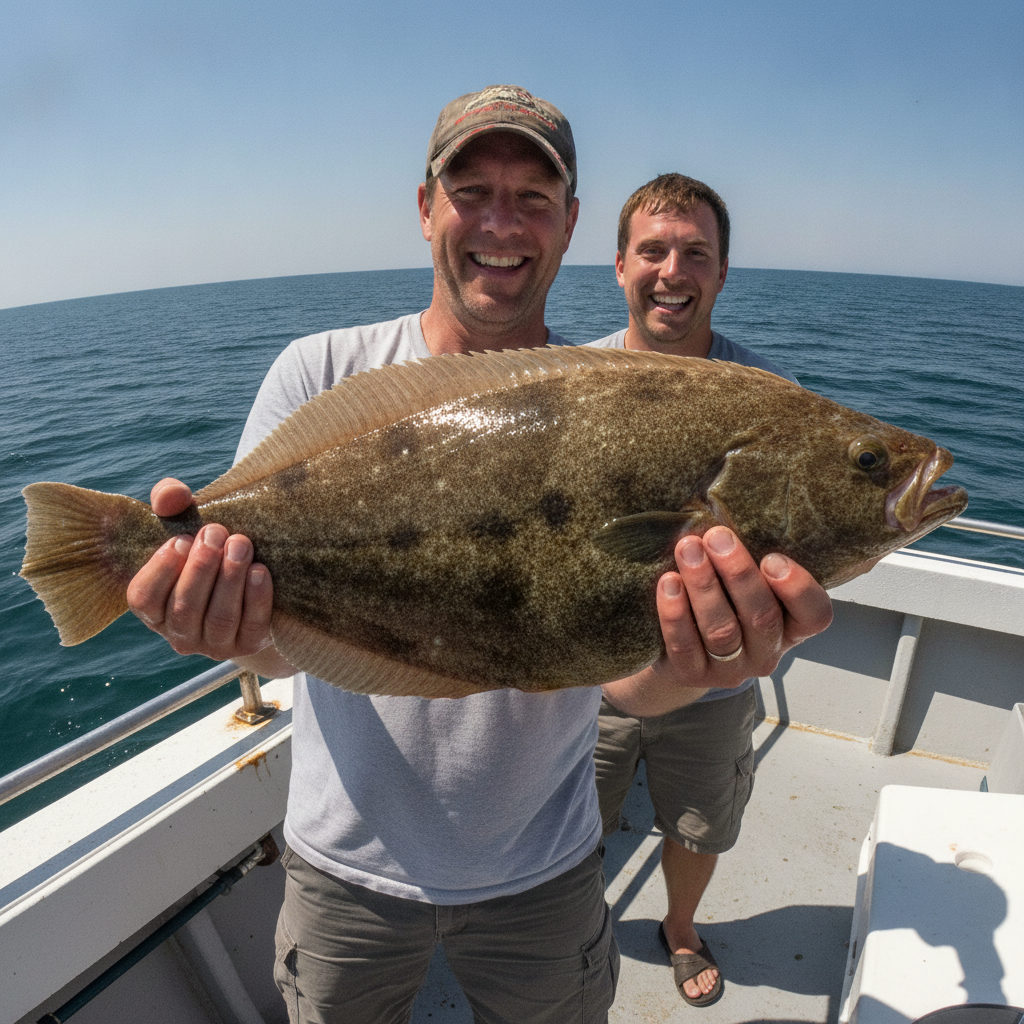
The last week of August is a transition week on the Jersey coast. Fluke fishing has moved off the flat sand and onto the harder structure, the canyon fleet is having a strong stretch, and the first hints of the fall pattern are showing in the bays. Ocean water is at its warmest, so the inshore day starts early and ends early.
What’s Hitting
Fluke are the primary inshore target and the better fish have moved to the rough stuff — reefs, wrecks, rockpiles and the inlet jetties. Sea bass and porgies are on the same structure.
Offshore, yellowfin tuna are in the canyons with mahi on the pots and lobster gear along the way, and there are enough bigeye around at night to keep chunkers out late. Nearshore, bluefish, Spanish mackerel and bonito are working bait pods, and there are cocktail blues in the back bays. Kingfish, croaker and spot are in the surf, and striped bass are around in the back bays and rivers early and late, with the fall run still ahead.
Where to Find Them
The inshore reefs — Sea Girt, Axel Carlson, Barnegat Light and the Sandy Hook area rough bottom — are where the keeper fluke are. Work the edges of structure, not the middle of it.
The Hudson, Toms and Lindenkohl canyons are producing the tuna. In the bays, work the Barnegat and Manasquan inlet edges, the Point Pleasant Canal and the back-bay channel drops for fluke and stripers. Surf anglers should work the troughs and cuts from Island Beach south through LBI and Brigantine for kingfish and blues.
Tides & Conditions
Ocean temps are in the low to mid 70s inshore and warm offshore. Bay water is warmer still, which pushes the striper and fluke action into the low-light hours.
Tides run a moderate range with strong current through the inlets — fish the moving water. Southwest sea breezes have been building most afternoons, and a hard southerly will stack a chop on the beach. Watch for the first meaningful northeast blow of the season; it typically kicks the fall pattern into gear more than any date on the calendar does.
Tackle & Tactics
For structure fluke, a bucktail with a Gulp or squid strip trailer on 20-pound braid, fished vertically with a short drift and a lot of attention. Add a teaser above the bucktail. Losing rigs on structure is part of the cost of catching keepers.
In the canyons, troll ballyhoo and spreader bars by day, chunk butterfish at night on 50-pound class gear with fluorocarbon leaders. For surf kingfish, a two-hook top-and-bottom rig with small hooks and bloodworm or Fishbites, fished in the trough. Bay stripers at dawn will eat a small swimming plug or a soft plastic on a light jighead worked along the channel edges.
Local Intel This Week
Ramps and access: the Manasquan River ramps in Brielle, the Barnegat Light and Waretown ramps on Barnegat Bay, the Leonardo State Marina ramp on Raritan Bay, and the Atlantic City Frank S. Farley ramp. Shore anglers have access at the Manasquan and Barnegat inlet jetties, Island Beach State Park and the Sandy Hook beaches.
Fish are concentrating on hard structure inshore and along the canyon edges offshore. Summer flounder, black sea bass and striped bass in New Jersey all carry seasons, size limits and gear requirements — including circle-hook rules for bait-fished stripers — that change year to year. Check current NJ Division of Fish and Wildlife regulations before keeping fish.
This Week’s Tip
When you are fluking structure, shorten your drift. Set up so you cross the piece in sixty seconds rather than five minutes, then reset. Most anglers spend eighty percent of a long drift over barren sand and only cross the productive edge briefly. Ten short, well-aimed drifts across the same rockpile will out-produce two long ones every trip.
Planning a trip to New Jersey?
This report tells you what happened. ReelAI tells you what to do about it — a briefing for your date, your target species and how you're fishing, built from our reports plus live NOAA and USGS data.
Powered by ReelAI — fishing.digital's intelligence layer. Answers are generated from fishing.digital reports and public NOAA, NWS and USGS data, and may be incomplete or out of date. Regulations and marine safety information are summaries only; always confirm with the responsible authority before you fish.