
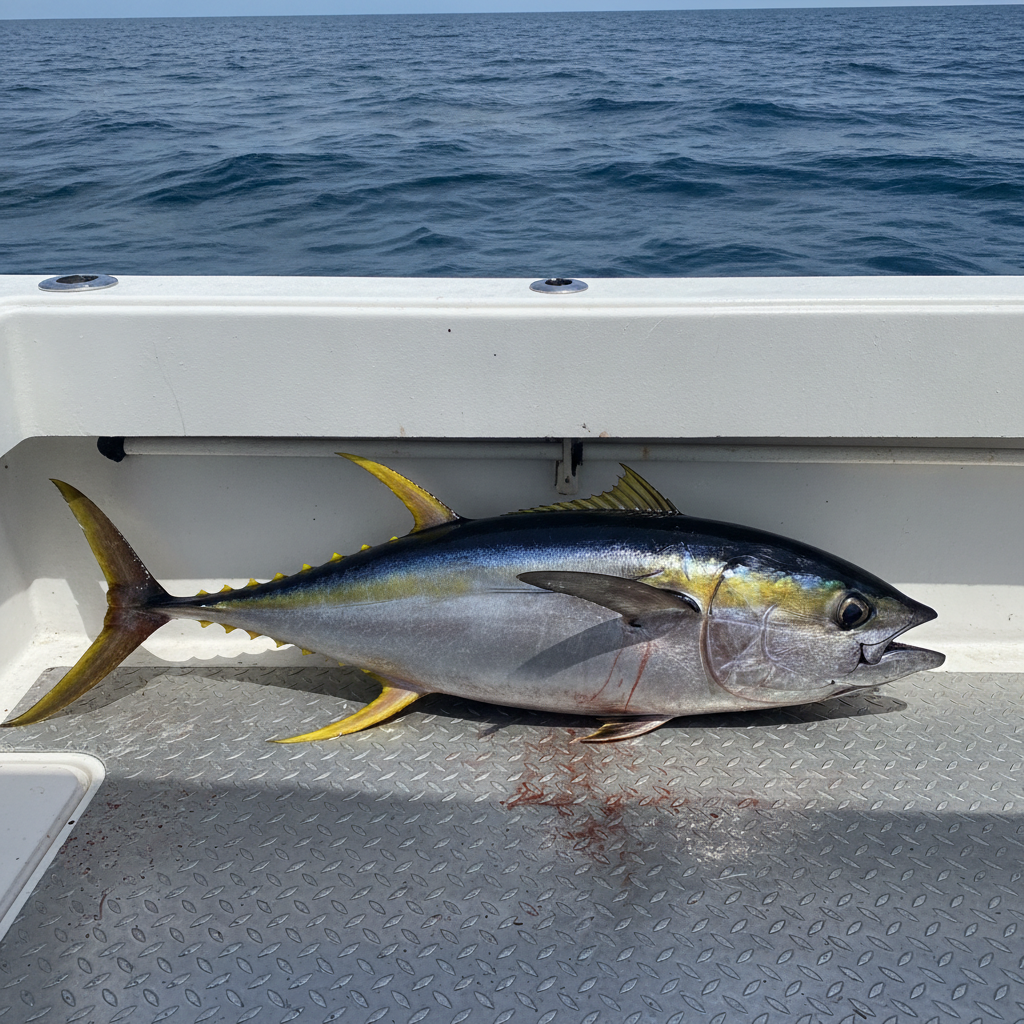
Long Island NY fishing report for the week of September 17, 2026. The fall run has started on Long Island. The albies are blitzing at every south shore inlet, the first mullet and peanut bunker have pushed out of the bays, and the stripers are beginning to show behind them. Offshore, the canyons are producing yellowfin for the boats making the overnight run.
What’s Hitting
What’s hot is false albacore. They are blitzing bay anchovies and peanut bunker at Shinnecock, Moriches, and Fire Island inlets, along the south shore beaches from Montauk to Jones Beach, and in the north shore harbors at Port Jefferson and Huntington, with bonito mixed in. The first fall stripers are on the mullet and peanut bunker along the ocean beaches and in the inlets, mostly schoolies with a few keepers, and the fish in the Long Island Sound rips off Orient and Plum Gut have been better. Bluefish are everywhere. Fluke are in their last days on the ocean structure and the inlets, and sea bass and porgies are steady on the wrecks and rocks. Offshore, yellowfin, longfin, and a few bigeye are in the Hudson and Block canyons, with mahi around the pots.
Where to Find Them
Albies are at the inlets on the moving tide and along the beaches wherever the bait is, so cover ground and look for birds and breaking fish. Shinnecock and Moriches inlets have been the most consistent. Stripers are on the beaches at first light around the bait and in the Orient Point and Plum Gut rips on the moving tide. Fluke are on the ocean reef sites and the inlet channels. Sea bass and porgies are on the wrecks and the rocks off the north shore. The canyons from the Hudson to the Block have held the tuna along the temperature breaks.
Tides & Conditions
Moderate tides this week between the moons, with the morning outgoing setting up the inlets. Ocean water is in the upper 60s to low 70s and dropping, which started the bait moving. Winds have been light out of the northwest most mornings with a flat surf and comfortable canyon runs. Water clarity along the beaches is excellent.
Tackle & Tactics
For albies, a small epoxy jig, a metal, or a soft-plastic bay anchovy on 20-pound fluorocarbon with a fast retrieve, on a 7 to 8-foot medium spinning rod with 20-pound braid. For stripers in the surf, a small swimming plug, a bucktail, or a paddle tail on a 9 to 10-foot surf rod, and a live eel or bunker chunk after dark. Fluke want a bucktail tipped with Gulp. Sea bass and porgies want clam or squid on a high-low rig. Offshore, trolled ballyhoo and spreader bars by day and chunking at night for the tuna.
Local Intel This Week
The Shinnecock Canal ramp and the Ponquogue ramp serve Shinnecock, the Smith Point and Moriches town ramps serve Moriches, and the Captree State Park ramp serves Fire Island Inlet. On the north shore, the Port Jefferson and Mount Sinai ramps cover the harbors and the Orient Point ramp the eastern rips. Shore anglers are catching albies and stripers from the Shinnecock and Moriches inlet jetties, Robert Moses State Park, and the Jones Beach jetties. Fish are concentrating at the inlets on the moving tide and along the beaches around the bait. Striped bass have a slot limit and the fluke season closes shortly; check current NY DEC regulations before keeping fish.
This Week’s Tip
At the inlets, the albies feed on the outgoing tide where the bay water meets the ocean, and they set up on the same seam every day. Find the color change and the rip line outside the inlet and work that edge rather than chasing every splash you see.
More Long Island NY Resources
All Long Island NY fishing reports · Seasonal fishing calendars · Submit your own report
Planning a trip to Long Island NY?
This report tells you what happened. ReelAI tells you what to do about it — a briefing for your date, your target species and how you're fishing, built from our reports plus live NOAA and USGS data.
Powered by ReelAI — fishing.digital's intelligence layer. Answers are generated from fishing.digital reports and public NOAA, NWS and USGS data, and may be incomplete or out of date. Regulations and marine safety information are summaries only; always confirm with the responsible authority before you fish.