
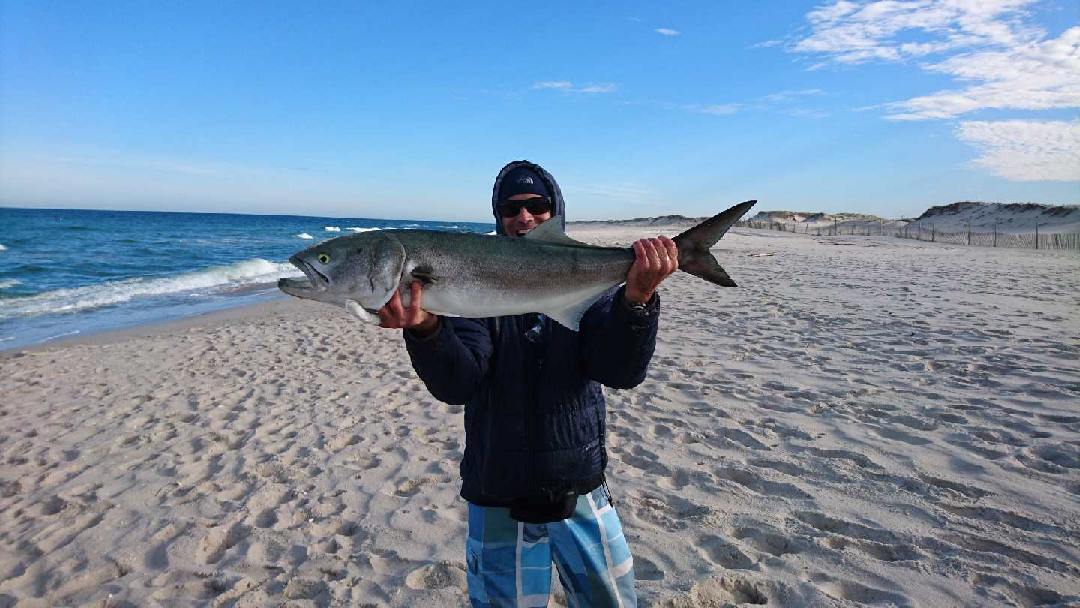
February is the apex of winter striper fishing on the Chesapeake Bay. Trophy rockfish — many pushing over 40 inches and carrying full weight from winter feeding — hold in the lower Bay’s deepest channels and around the CBBT structure in water temperatures of 38–43°F. The yellow perch spawn run also begins in the Bay’s freshwater tributaries by mid-month, offering a welcome change of pace from the winter grind on the lower Bay.
Inshore Fishing — February 2025
Striped Bass — Trophy Window
February produces the largest average-size stripers of the Chesapeake season. Fish concentrate in the Chesapeake Channel (the shipping lane south of the Bay Bridge), the Outer Middle Grounds, and around the CBBT tunnel islands in 35–65 feet of water. The same vertical jigging and live-lining techniques that worked in January continue to produce, but February fish are often easier to locate on the sounder as cold water keeps them tighter to bottom structure.
The Cell Buoy artificial reef (off Virginia Beach) is worth the run in February — artificial structure concentrates both rockfish and tautog and sees significantly less pressure than the CBBT in winter. The Lumps, a series of shell-bottom shoals in the lower Bay near the Virginia line, hold winter stripers in water as shallow as 18 feet on the warmest February days.
Yellow Perch — Spawn Run in the Tributaries
One of the Chesapeake’s most beloved winter events begins in February: the yellow perch spawn migration into the freshwater tributaries. The Choptank River, Patuxent River, Piankatank River, and Nanticoke River all host significant runs. Fish average 8–12 inches with the occasional 14-incher (1+ pound). Light spinning gear with 1/16 oz tube jigs in chartreuse or white, micro blade baits, or live small shiners fished in 4–10 feet of current seams produce the most consistent perch.
Offshore Fishing — February 2025
February offshore action is limited to the most committed anglers with weather windows and appropriate offshore boats. The deep wrecks along the Delmarva coast in 90–130 feet still hold cod and pollock accessible on calm days from Ocean City and Virginia Beach ports. The Chesapeake Bay Light Tower area sometimes holds winter stripers for boat anglers willing to make the exposed run from the Bay mouth.
Top Techniques — February
1. Live-spot for trophy stripers: Large spot (6–9 inches) hooked through the nose on a 9/0 circle hook, drifted on 60 lb fluorocarbon in 40–60 feet near channel edges and structure, is the gold standard for Chesapeake winter trophy rockfish. The bite is deliberate in cold water — free-spool on the clicker until the fish turns with the bait, then engage and let the circle hook do its work.
2. Micro jigging for yellow perch: In the tributaries, rig a 1/16 oz chartreuse tube jig on 4 lb fluorocarbon and work it through current seams at 4–8 feet depth. Feel for the subtle tap of a perch pickup — these fish barely move the rod tip. Keep the jig moving slowly and set the hook at any hesitation.
3. CBBT structure fishing at night: The tunnel island lights attract baitfish after dark, and stripers and tautog both feed under the lights in winter. Fishing the lit side of the island on incoming tide from 8pm–midnight in February is a relatively low-competition pattern that produces quality fish.
Insider Tips
The Patuxent River in February is underrated. While most anglers are running to the CBBT, the Patuxent River between Solomons Island and the Route 4 bridge holds winter stripers and produces the first yellow perch of the season by mid-February in most years. Much less pressure than the lower Bay.
Watch for the spring tide surge of warm water in late February. On the highest tides of the month (full and new moon periods), warmer water from offshore occasionally pushes into the Bay mouth and can trigger a brief but intense striper feeding spree on the lower Bay structure. Keep an eye on water temperature trends at the CBBT.
Looking Ahead to March
March is the month every Chesapeake angler circles: the Susquehanna Flats spawn run begins, producing some of the most spectacular striper fishing on the East Coast. Large schools of 20–40 pound fish stack on the Flats in the upper Bay. March also brings the first cobia scouts to the CBBT area and Spanish mackerel to the Bay mouth.
Updated every Thursday. See our Chesapeake Bay Fishing Guide for year-round detail.
Planning a trip to Chesapeake Bay?
This report tells you what happened. ReelAI tells you what to do about it — a briefing for your date, your target species and how you're fishing, built from our reports plus live NOAA and USGS data.
Powered by ReelAI — fishing.digital's intelligence layer. Answers are generated from fishing.digital reports and public NOAA, NWS and USGS data, and may be incomplete or out of date. Regulations and marine safety information are summaries only; always confirm with the responsible authority before you fish.