
Updated: Thursday, August 13, 2026 · Next update: Thursday, August 20, 2026
This Chesapeake Bay fishing report covers mid-August, when the Chesapeake is a lower-bay fishery. Upper-bay water sits near 85 and striped bass go deep and quiet under summer restrictions, but cobia are the lead target on the lower bay, with Spanish mackerel and red drum in good numbers. The new moon at the end of the week moves a lot of water through the bay mouth, which usually improves the drum and trout fishing on the shoals, so plan around that exchange and the morning calm.
What’s Hitting
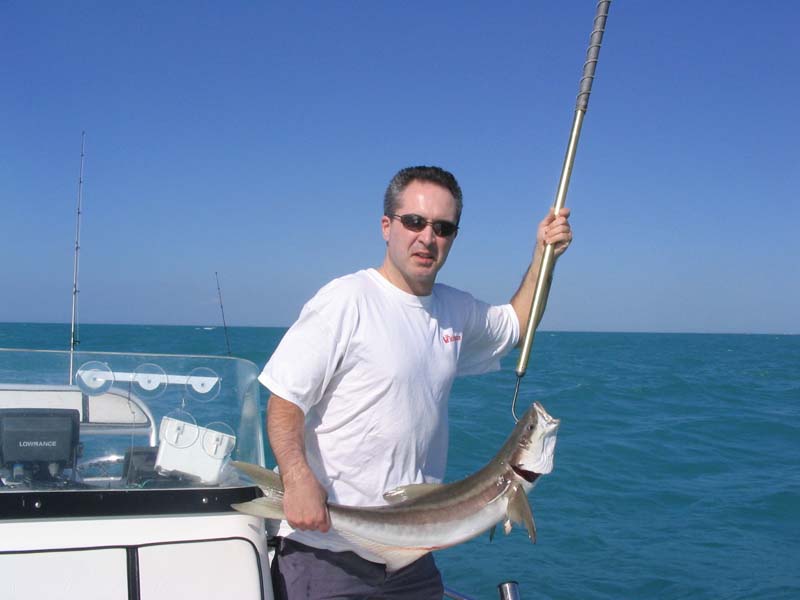
Cobia are the marquee fish, sight-cast and chummed on the lower bay from the Cell down to the bay mouth. Spanish mackerel and bluefish are thick on the bait along the channel edges and are the easiest trolling fishery going.
Speckled trout are on the shoals and grass edges in the Poquoson and Mobjack areas, with red drum on the shallow shoals at the bay mouth. Croaker and spot are steady on bottom rigs. Striped bass are around but under summer restrictions, so check current rules before targeting them.
Where to Find Them
The Cell, the Nine-Foot Shoal and the shallow water around Latimer and Inner Middle are the primary cobia and red drum areas. The Chesapeake Bay Bridge Tunnel structure holds trout, drum and flounder on the moving tide; pilings and rock break the current and create eddies where bait collects.
The channel edges from the Baltimore Channel south are the Spanish trolling water. Look for speckled trout on the grass and shell in Mobjack Bay and the Poquoson flats.
Tides & Conditions
Expect water of 82 to 86 degrees through most of the bay. New-moon tides bring the strongest exchange of the month through the bay mouth, pushing bait onto the shoals and getting the drum and trout moving.
Plan for light morning winds that build southwest by noon. Sight-casting is a morning game and gets very difficult once there is a chop, because surface ripple hides the outline of a cruising fish. Lower-bay clarity is good.
Tackle & Tactics
- Cobia sight-casting: a heavy spinner with 40- to 60-pound leader and a large soft plastic eel, or a live eel ready to pitch.
- Cobia chumming: fresh menhaden on a fish-finder rig.
- Spanish: troll small spoons behind planers at 6 to 7 knots; the planer gets a light spoon down to the fish without a heavy trolling lead.
- Speckled trout: a soft plastic on a quarter-ounce jighead worked over grass at first light.
- Croaker and spot: bloodworm or squid on a two-hook rig.
Local Intel This Week
Sunset Beach and the Kiptopeke State Park ramp give quick access to the bay mouth and the CBBT; Gloucester Point and Messick Point cover the Mobjack and Poquoson water. Launch close to the shoal you plan to run so you are on the fish while the morning light and calm last.
Fish concentrate on the shoals and the bridge tunnel structure rather than the open bay. Striped bass are under summer restrictions, and cobia and red drum carry strict size and permit rules that differ between Virginia and Maryland. Check current state and federal regulations and seasons before keeping fish.
This Week’s Tip
For cobia, get the sun behind you and run the shoal edges rather than the open water. The fish cruise the color change where the shoal drops off, and a boat working with the light at its back sees three fish for every one spotted running into the glare.
Planning a trip to Chesapeake Bay?
This report tells you what happened. ReelAI tells you what to do about it — a briefing for your date, your target species and how you're fishing, built from our reports plus live NOAA and USGS data.
Powered by ReelAI — fishing.digital's intelligence layer. Answers are generated from fishing.digital reports and public NOAA, NWS and USGS data, and may be incomplete or out of date. Regulations and marine safety information are summaries only; always confirm with the responsible authority before you fish.