
Fort Myers/Sanibel Fishing Report — February 2025
Best sheepshead month; seatrout in deeper Pine Island Sound grass. Updated every Thursday with current conditions, what’s biting, and where to focus your fishing effort.
What’s Biting in Fort Myers/Sanibel — February 2025
Check back every Thursday for updated fishing conditions and current bite reports for Fort Myers/Sanibel. See our Fort Myers/Sanibel fishing guide for full seasonal information.
Sheepshead — Peak Season
February is the absolute peak month for sheepshead fishing on Florida’s southwest coast. The Sanibel Causeway, the bridges of Pine Island Sound, the Punta Rassa rocks, and the pilings of every dock in the system are stacked with pre-spawn fish ahead of their March offshore migration. Fiddler crabs on a 1/0 jighead and a knocker rig setup is the standard. Live shrimp will work too but get picked off faster by smaller fish. Set the hook the moment you feel anything — sheepshead bite by sucking, not biting, so by the time you “feel” the bite the fish has often already spit. Trophy fish over 5 lbs come every February.
Snook in Winter Pattern
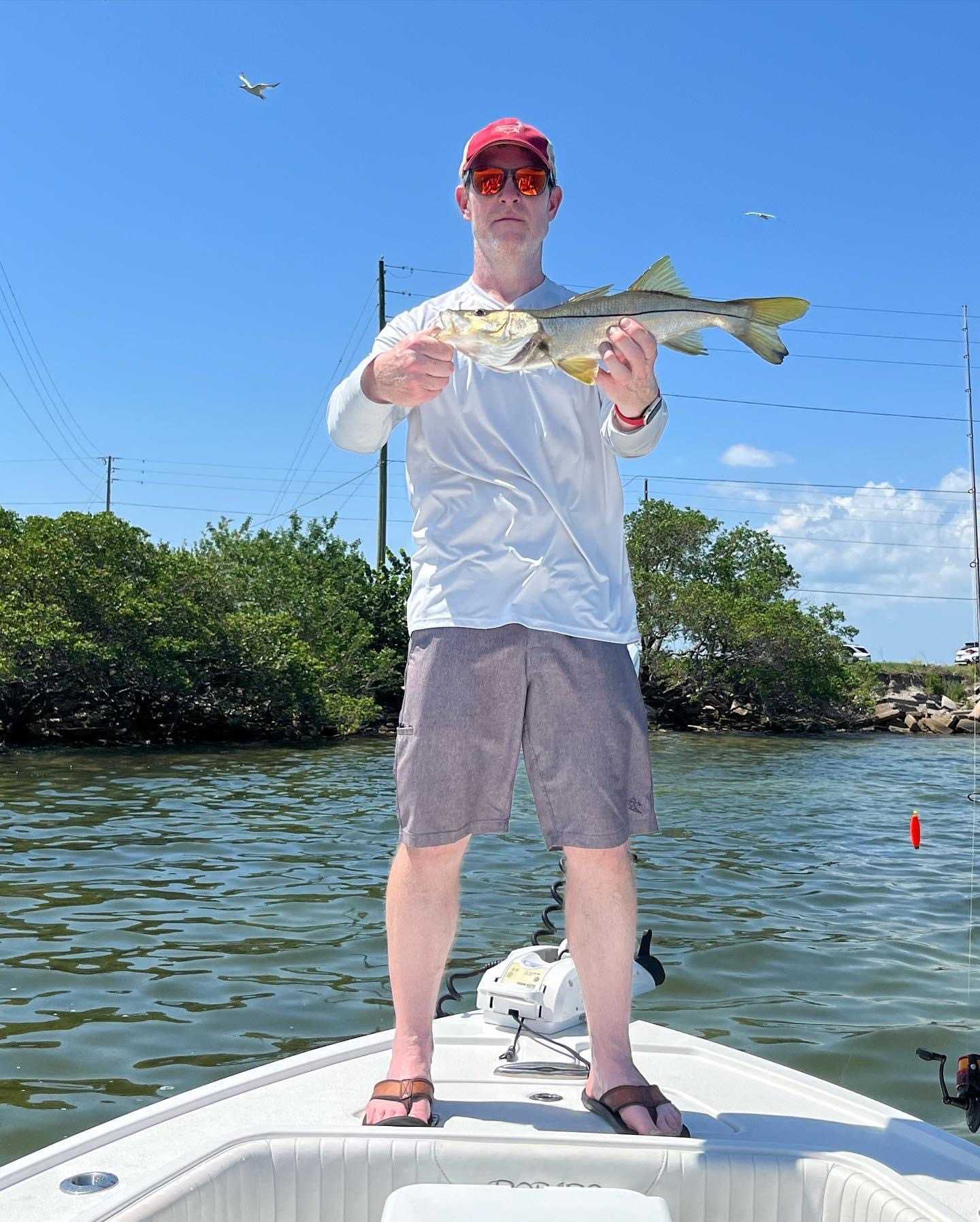
Snook are in their winter pattern — schooled tight in the deepest, warmest water of the back bays and canals. The Caloosahatchee River canals, the back bays of Pine Island Sound, and the warm-water effluent areas hold concentrations of fish during the cold months. Live shrimp or small pilchards fished slow on the bottom or under a popping cork. Cold fronts shut the bite off — give the water 48 hours to recover after each front. Catch-and-release only this month if your fish are out of slot.
Trout in the Creeks, Redfish Staging
Speckled trout are stacked in the deeper creek holes and warmer pocket waters off Pine Island Sound. Live shrimp under a popping cork in 6–12 feet of water is the high-percentage approach. Slow-rolled soft plastics on a 1/4 oz jighead also produce. Gator trout over 22 inches are caught in February more than any other month. Redfish are schooled in the warmest backwaters — the back of Tarpon Bay, the dark mud flats inside Pine Island, and the canal systems. Sight-casting on calm sunny afternoons to tailing fish is the technique.
Local Hotspots
Sanibel Causeway A and B for sheepshead, especially on outgoing tide. The Punta Rassa rocks at slack high for trophy convicts. Caloosahatchee bridges (Cape Coral, Edison) for snook on the deepest pilings. Tarpon Bay back lakes for tailing reds at low tide. Matlacha Pass on warming afternoons for trout.
Conditions, Ramps, Regs
Water temps 60–65°F. Florida saltwater license required. Sheepshead 12-inch minimum, 8-fish bag, no closed season. Snook stamp for harvest, slot 28–32 inches, 1-fish bag — but consider catch-and-release in the cold water (high mortality on stressed winter fish). Trout slot 15–19 inches, 5-fish bag. Top ramps: Punta Rassa, Burnt Store, Tarpon Bay Marina. Tight lines.
Boat Ramps and Winter Strategy
Punta Rassa ramp puts you on the pass and Pine Island Sound channels. Burnt Store Marina for the Charlotte Harbor entry. Tarpon Bay Marina on Sanibel for the back lakes. For shore anglers, the Sanibel Causeway A and B sections (small fee) and the Tony Saprito Beach area give walk-on access for sheepshead and the occasional snook. February cold fronts cycle every 5-7 days — fish the day before a front for the most aggressive bite, and give the water 48 hours to recover post-front. Bundled-up dawn fishing is when the sheepshead boil. Tight lines.
Planning a trip to Fort Myers/Sanibel?
This report tells you what happened. ReelAI tells you what to do about it — a briefing for your date, your target species and how you're fishing, built from our reports plus live NOAA and USGS data.
Powered by ReelAI — fishing.digital's intelligence layer. Answers are generated from fishing.digital reports and public NOAA, NWS and USGS data, and may be incomplete or out of date. Regulations and marine safety information are summaries only; always confirm with the responsible authority before you fish.