
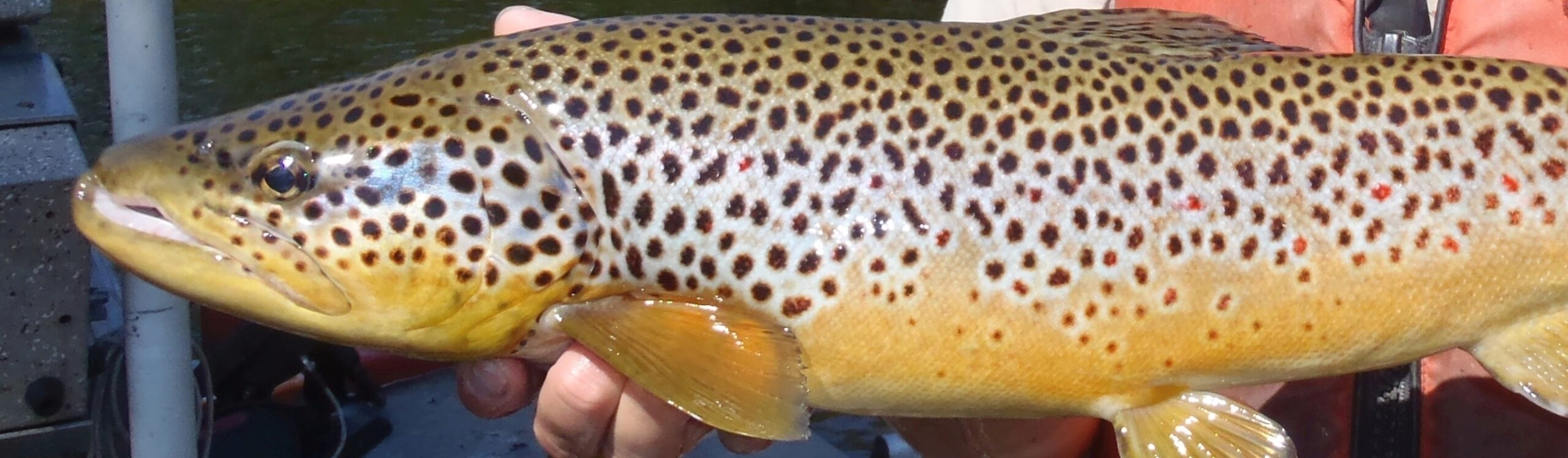
Brown trout (Salmo trutta) are the most challenging and sophisticated trout in North America — more selective, more wary, and more likely to hold in difficult, inaccessible water than their rainbow cousins. Brought over from Europe in the late 1800s and naturalized coast to coast, browns have become the prestige target of serious trout anglers. They are also the largest trout most freshwater anglers will ever encounter: trophy fish regularly exceed 20 lbs in premier tailwaters and large lake systems, and a wild 20-inch brown demands precise presentation, accurate casting, and an understanding of feeding behavior that takes years to develop.
Range & Habitat
Brown trout prefer cold (below 68°F), clear to slightly stained rivers, streams, and lakes. They are more tolerant of warm water than brook trout — surviving in streams that push into the low 70s — which lets them thrive in marginal trout habitat where other species fail. They hold in undercut banks, deep pools, log jams, and beneath overhanging vegetation, choosing the most difficult, inaccessible positions they can find. The Delaware, Madison, and Bighorn rivers and the spring creeks of Pennsylvania are legendary brown trout water; so are the Catskills, the limestone streams of the Cumberland Valley (Yellow Breeches, Letort), Montana’s spring creeks, and the tailwaters of the Missouri, White, and San Juan. Sea-run brown trout — sea trout — occur in Europe and parts of South America but not in the US.
Best Tackle
Fly fishing: 9′ 4–6 weight, matched reel, 9–15′ tapered leader, 4–6X fluorocarbon tippet for dry flies; 3–4X for nymphs; 0–2X for streamers. Spinning: 6′6″–7′ ultralight to medium-light rod, 1500–2500 reel, 4–8 lb fluorocarbon. The variable that matters most with browns is leader diameter — going heavier than conditions require costs you bites from exactly the large, selective fish you came for.
Top Techniques
Matching the Hatch: More important for brown trout than for any other species. Observe what is emerging and present the closest possible imitation in size and silhouette. Browns inspect artificials carefully, and on quality streams they key on specific hatches so tightly they can be nearly impossible to fool on the wrong pattern. Fooling a big brown on a dry fly is the reward that keeps people coming back.
Streamer Fishing: Large streamer flies or minnow lures fished aggressively — stripped fast with occasional pauses, or swung through a run — produce the largest brown trout. Browns are highly predatory, and articulated streamers fished at dawn, dusk, and after dark are the most reliable route to a trophy.
Nymphing: Fishing nymphs below the surface on a tight-line or indicator setup produces well all season, and is the right answer any time fish are not rising. Euro-nymphing is particularly productive in freestone streams where a long, direct connection lets you fish pocket water thoroughly.
Night Fishing: Trophy brown trout are predominantly nocturnal. Large Muddler Minnows, Zonkers, and surface plugs fished after dark in summer produce the biggest fish of the year.
Best Baits & Lures
- Elk Hair Caddis: The most reliable dry fly for brown trout across the entire season.
- Woolly Bugger (black or olive): The all-time great streamer — it works on every size of brown trout in every water type, worldwide.
- Articulated Streamers (Drunk and Disorderly, Circus Peanut): Trophy-fish flies for dawn, dusk, and after dark.
- Rapala Original (2–3″): Top spinning lure for brown trout in rivers and lakes.
- Small Inline Spinner (Mepps size 1–3): Gold blade in stained water, silver in clear. Retrieved slowly near the bottom.
- Pheasant Tail Nymph: The most essential nymph pattern — it imitates a huge range of aquatic insects in sizes 14–20.
- Night Crawlers: Excellent bait for large browns, particularly after dark, drift-fished in current.
Seasonal Patterns
Spring: Excellent fishing as hatches begin. Blue-winged olives, March Browns, Hendricksons, and early caddis bring fish to the surface. Summer: Best early and late — avoid midday heat and concentrate on spring creeks and tailwaters that hold their temperature. Terrestrial fishing with hoppers, ants, and beetles is a summer highlight. Fall (October–November): The peak season. Brown trout spawn in fall, and pre-spawn fish are aggressive and in top condition. Night streamer fishing for trophies is legendary in this window. Winter: Browns stay active year-round in most water, and midge hatches on tailwaters produce surprisingly good winter dry fly fishing.
Pro Tips
- Stealth above all: Brown trout are the most cautious trout. Approach pools from downstream, move slowly, wear earth tones, and stay low. A shadow on the water ends the bite.
- Long, light leaders in clear water: Use 12–15′ leaders tapering to 5X or 6X fluorocarbon on spring creeks and clear freestone streams. Large browns in gin-clear water will see 4X and refuse it; 6–7X is sometimes required.
- Trophy fish come at night: The largest brown trout are almost completely nocturnal in summer and in pressured streams. If a 20-inch brown is the goal, plan after-dark trips.
- Focus on the best lies: Undercut banks, log jams, and deep sheltered pools hold the largest fish. Don’t waste casts on obviously unproductive water.
- Be patient and methodical: Browns reward deliberate fishing. Working one good pool thoroughly beats covering a mile of river quickly.
Regulations
Many premier brown trout streams carry special regulations — catch-and-release sections, fly-fishing-only stretches, delayed-harvest water, and seasonal closures around the fall spawn. Always verify current state regulations for the specific water you plan to fish.
Best Brown Trout Tackle
Affiliate disclosure: fishing.digital earns a small commission on qualifying purchases at no extra cost to you.
1. Woolly Bugger, Size 10 Black
The most productive single fly for large brown trout worldwide. Swing it or strip it. Check price on Amazon
2. Pheasant Tail Nymph, Size 14 Beadhead
The most proven subsurface fly for selective brown trout. Fish it on a tight-line rig. Check price on Amazon
3. Rapala Original Floater, Size 05
A small floating minnow is a stream classic for browns. Twitch it upstream and let it swing. Check price on Amazon
4. Orvis Clearwater Fly Rod, 5 Weight 9′
The definitive entry-level fly rod for brown trout on streams and spring creeks. Check price on Amazon
Browse all species guides: How To Catch Fish — Complete Species Guides | Weekly Fishing Reports — updated every Thursday.
Planning a trip to Brown Trout?
This report tells you what happened. ReelAI tells you what to do about it — a briefing for your date, your target species and how you're fishing, built from our reports plus live NOAA and USGS data.
Powered by ReelAI — fishing.digital's intelligence layer. Answers are generated from fishing.digital reports and public NOAA, NWS and USGS data, and may be incomplete or out of date. Regulations and marine safety information are summaries only; always confirm with the responsible authority before you fish.