
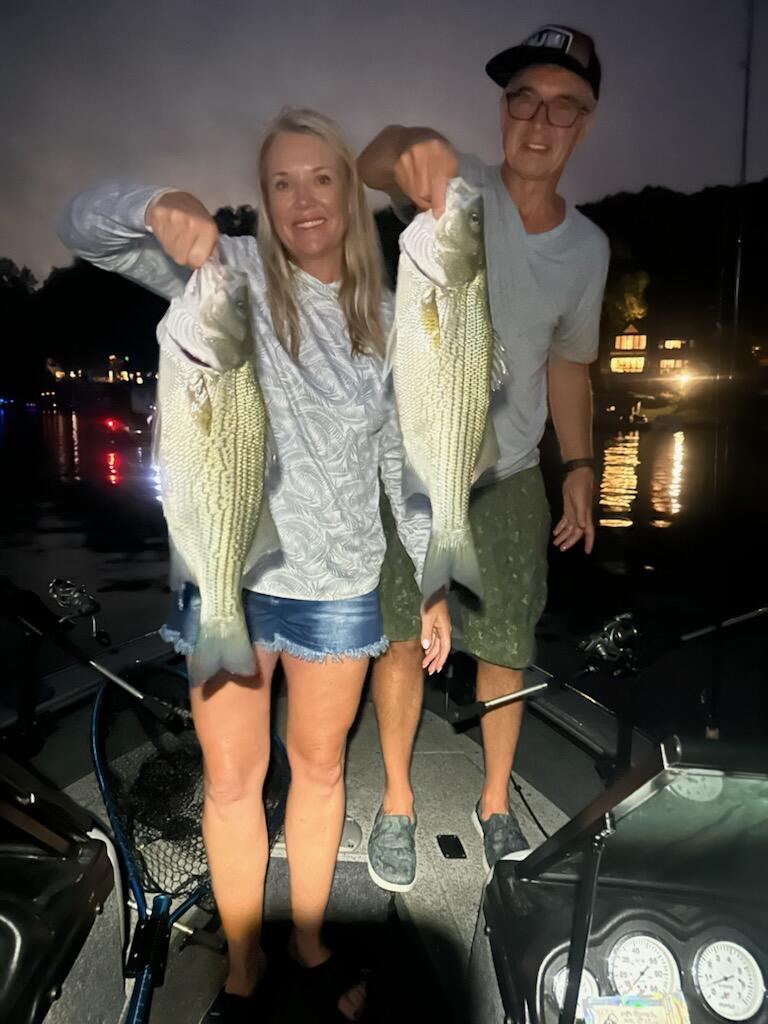
Hybrid striped bass — the cross between a white bass (Morone chrysops) and a striped bass (Morone saxatilis) — combine the explosive aggression of white bass with the size potential of stripers, creating one of the most exciting sport fish available in freshwater reservoirs across the United States. Known as “wipers” or “sunshine bass,” hybrids are widely stocked in reservoirs from Virginia to California and grow quickly to sizes that test any freshwater angler’s tackle. A 10-pound wiper is a realistic target in most stocked waters; fish over 20 pounds are caught every year.
Affiliate disclosure: fishing.digital earns a small commission on qualifying Amazon purchases at no extra cost to you.
Where Hybrid Striped Bass Are Found
Hybrids are exclusively stocked fish — they don’t reproduce naturally in the wild. State fish and wildlife agencies stock them across the country as sport fish in reservoirs that can support them. Key hybrid fisheries: Lake Texoma (TX/OK) — one of the premier hybrid fisheries in the country; Lake Lanier (GA); Leesville Lake and Smith Mountain Lake (VA); Kerr Lake (NC/VA); Lake Sam Rayburn and Lake Conroe (TX); many California reservoirs including San Luis Reservoir and Diamond Valley Lake.
Best Techniques
Schooling Fish on the Surface — The Most Exciting Approach
Hybrid striped bass are notorious blitz feeders. When a school corners threadfin shad near the surface, the surface eruption covers acres and every cast into the melee produces a fish. This can happen from spring through fall in most waters. Any shad-colored lure works during a blitz: 1/2 oz chrome Rat-L-Traps, Kastmaster spoons, white bucktails, and 4″ shad-tail swimbaits on 3/4 oz jig heads. The challenge is getting to the school quickly — keep a rod rigged at all times when on hybrid water in warm months.
Downlining and Trolling
Outside of blitz conditions, hybrids suspend at the thermocline following shad schools. Downlining large live shad (3–6 inches) at the sounder-indicated depth is the highest-percentage technique for large hybrids. Trolling with umbrella rigs (Alabama rigs) at 2–4 mph at the correct depth produces consistently on the deeper, clearer reservoirs where these rigs are legal.
Night Fishing Under Lights
In summer when hybrids retreat to deep, cool water during the day, night fishing at boat docks and marinas with floating dock lights produces fish that move up to feed on shad attracted by the light. A large white swimbait worked at 8–12 feet under dock lights from midnight to 3am is a productive summer hybrid technique on many Southern reservoirs.
Best Tackle
- Rod: 7–7.5 ft medium-heavy spinning or casting
- Line: 15–20 lb monofilament or 20–30 lb braid
- Lures: Large swimbaits (4–6 inch), umbrella rigs, large Rat-L-Traps (3/4 oz), heavy spoons
Browse hybrid striped bass lures on Amazon →
Planning a trip to Freshwater Fishing?
This report tells you what happened. ReelAI tells you what to do about it — a briefing for your date, your target species and how you're fishing, built from our reports plus live NOAA and USGS data.
Powered by ReelAI — fishing.digital's intelligence layer. Answers are generated from fishing.digital reports and public NOAA, NWS and USGS data, and may be incomplete or out of date. Regulations and marine safety information are summaries only; always confirm with the responsible authority before you fish.