
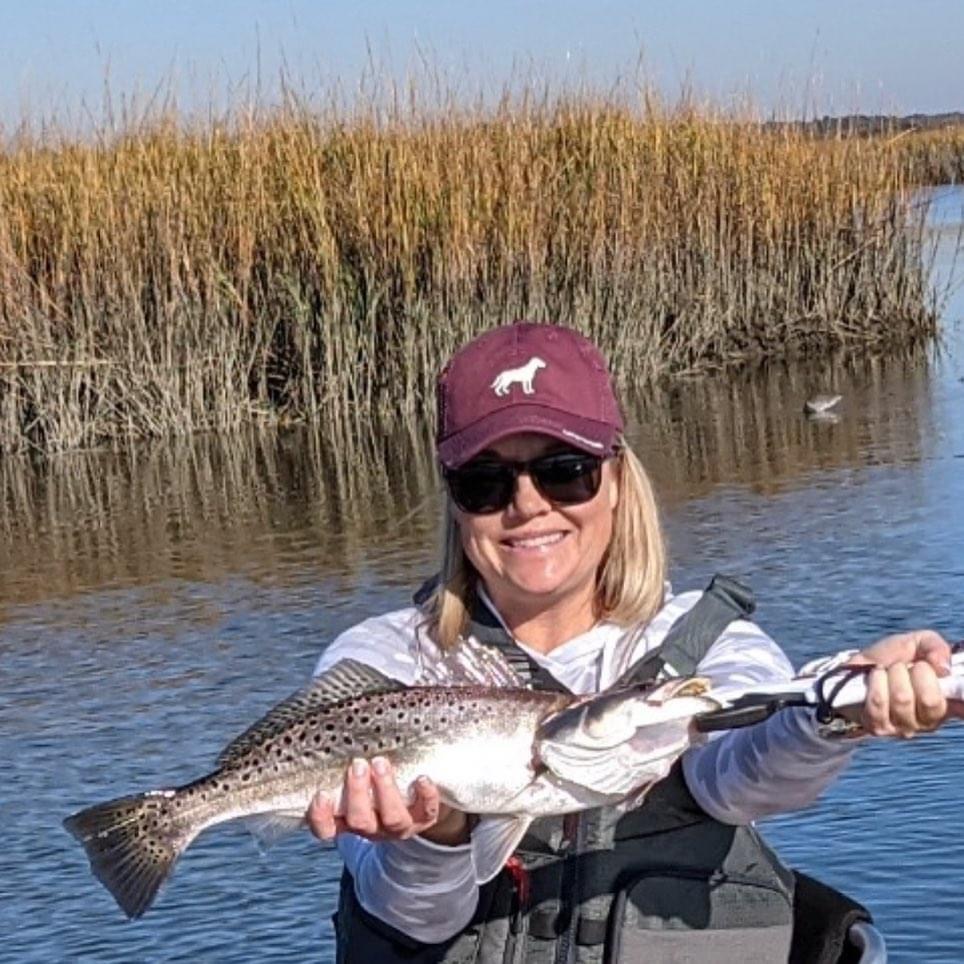
Spotted seatrout (Cynoscion nebulosus) — also called speckled trout, specs, or simply trout throughout the South — are one of the most widely targeted inshore saltwater fish in the US. Found in grass flats, estuaries, and tidal creeks from the Chesapeake Bay to Texas, they’re accessible to anglers of all skill levels, fight hard for their size, and are among the finest-tasting fish in saltwater.
Where to Find Spotted Seatrout: Range & Habitat
Spotted seatrout range from the Chesapeake Bay south through Florida and across the Gulf Coast to Texas and Mexico. They’re estuarine fish that prefer shallow grass flats, oyster bars, tidal creeks, and sandy-bottom areas in bays and sounds. They’re temperature-sensitive — cold snaps push them into deeper, warmer water. Pamlico Sound in NC, the Indian River Lagoon in FL, and the Louisiana marsh are legendary seatrout fisheries. Seagrass is the single most important variable in the whole equation — where the grass has been lost, the trout go with it. Find healthy grass in two to eight feet of water and you have found the fishery.
Best Tackle for Spotted Seatrout
Rod: 6’6″–7’6″ medium-light to medium fast action spinning rod.
Reel: 2500–3000 size spinning reel with 10–15 lb braid.
Leader: 15–20 lb fluorocarbon, 18–24″. Seatrout have sharp teeth — fluorocarbon is essential.
Top Techniques for Catching Spotted Seatrout
Topwater at Dawn: The most exciting way to catch seatrout. Walk-the-dog plugs or chuggers worked over shallow grass flats in the first hour of light produce explosive strikes and are especially effective in fall and spring.
Slow Sink/Twitch: A suspending twitch bait like the MirrOlure MirrOdine or Corky worked with a slow twitch-pause-twitch retrieve through the middle of the water column is deadly year-round.
Popping Cork: A live shrimp or Gulp under a popping cork is the most consistent seatrout method for all experience levels. The pop imitates a feeding fish and attracts trout from a distance.
Jigging the Grass: A DOA CAL or similar paddle tail on a 1/8–1/4 oz jighead bounced slowly through grass flat potholes is the most versatile seatrout technique across all conditions.
Best Baits & Lures for Spotted Seatrout
- Live Shrimp: The universal seatrout bait. Under a popping cork or free-lined over grass flats.
- Gulp Shrimp (3″): The top seatrout artificial. Rig on a 1/8 oz jighead and work slowly through grass flat potholes.
- MirrOlure MirrOdine: Slow-sinking suspending twitch bait. The most effective mid-water column seatrout lure on the market.
- DOA CAL Jig & Shad: The workhorse South Florida and Gulf Coast seatrout lure.
- Topwater Plugs (She Dog, Top Dog, MirrOlure She Pup): Dawn and dusk topwater action — some of the most exciting fishing in the estuary.
- Paddle Tail Swimbaits: A 3-4″ paddle tail on a 1/4-3/8 oz head covers water fast and is the easiest way to find a scattered school.
- Corky/Devil Eye: Slow-sink soft plastic favored in the Gulf Coast. Fish on a slow drift over grass flats.
Seasonal Patterns
Spring: Seatrout move onto shallow flats as water warms. Topwater produces excellent results.
Summer: Fish move deeper or to shadier areas midday. Early morning and late evening on the flats produce well.
Fall: Peak season throughout much of their range. Seatrout are aggressive and fattening up for winter. Some of the largest “gator trout” are caught in October–November.
Winter: Fish move to deeper grass edges and channels. Slow presentations near the bottom — Corky, MirrOdine, and live shrimp — are most effective.
Pro Tips
- Soft mouths require gentle pressure: Seatrout have notoriously soft mouths — aggressive hooksets tear the hook free. A moderate hookset and steady pressure is better than power.
- Work the potholes: Sandy openings (potholes) in the grass flat hold seatrout. Cast to the edges and allow your lure to sink into the pothole.
- Dawn topwater is non-negotiable: The first 30–45 minutes of light on a calm morning produces the best topwater seatrout bites of the year.
- Work the grass edge: The seam where grass gives way to sand or mud is an ambush lane. Run baits along it rather than across it.
- Trophy trout are loners: Schooling fish are usually 14-18 inches. The 5-pound-plus gators sit alone in deep grass holes and on isolated structure — if you want one, stop fishing the school.
- Circle hooks with live shrimp: Trout inhale a shrimp deep. A circle hook and steady pressure instead of a hookset dramatically improves survival on released fish.
- Fish the current: Moving tides activate seatrout feeding. Position on the upcurrent side of structure and grass edges.
Regulations
Nearly every state manages seatrout with a slot limit and a regional daily bag, and Florida in particular has revised both several times in recent years — often differently on the Atlantic and Gulf coasts and by management zone. Verify current FWC or state agency rules before keeping fish; the number you remember from last season is probably out of date.
Want current spotted seatrout conditions near you? Browse our weekly fishing reports — updated every Thursday.
Best Spotted Seatrout Tackle
Affiliate disclosure: fishing.digital earns a small commission on qualifying purchases at no extra cost to you.
1. MirrOlure MirrOdine 17MR
The suspending twitch bait that defines cool-water trout fishing. Twitch, pause, twitch — most bites come during the pause. Sold in many colors; pick one that matches your local bait. Check price on Amazon
2. DOA CAL Shad Tail
The workhorse soft plastic of the Gulf and Florida flats. Root beer with gold flake is the color most guides swear by, though listings vary — check the color on the page before ordering. Check price on Amazon
3. Berkley Gulp! Shrimp
Scent-soaked shrimp imitation, fished on a 1/8-1/4 oz jighead or under a popping cork. Confirm the size on the listing — the 3-inch is the one you want for trout. Check price on Amazon
4. Rapala Skitter Walk, Bone
A walk-the-dog topwater for the first 45 minutes of light. Bone and silver/black are the two colors worth owning. Check price on Amazon
Planning a trip to Spotted Seatrout?
This report tells you what happened. ReelAI tells you what to do about it — a briefing for your date, your target species and how you're fishing, built from our reports plus live NOAA and USGS data.
Powered by ReelAI — fishing.digital's intelligence layer. Answers are generated from fishing.digital reports and public NOAA, NWS and USGS data, and may be incomplete or out of date. Regulations and marine safety information are summaries only; always confirm with the responsible authority before you fish.