Updated: Thursday, May 14, 2026 · Next update: Thursday, May 21, 2026
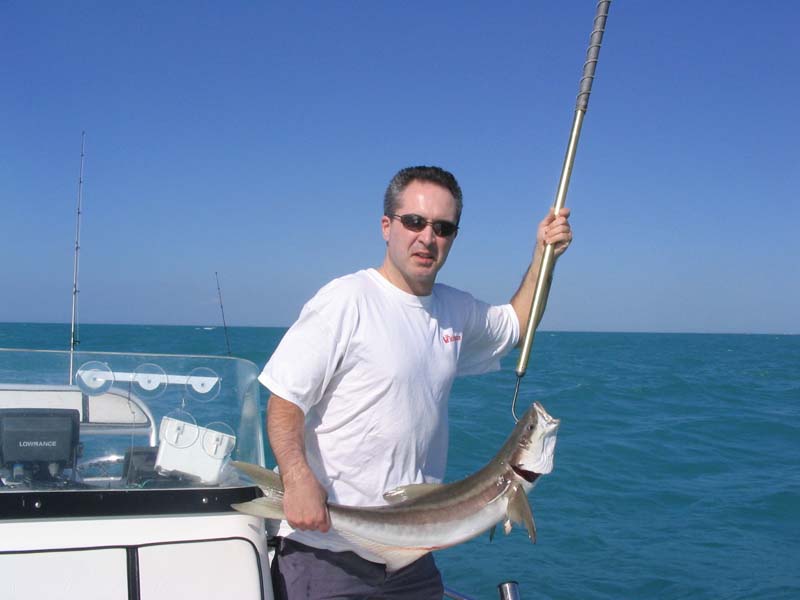
This Jacksonville fishing report covers mid-May, the heart of spring in Northeast Florida. Water temperatures push into the mid-70s, the cobia run reaches its peak, and inshore species get more active by the day. Cobia are the lead species, running thick at the Jacksonville sea buoy and along the beaches from Mayport south to St. Augustine. The condition to plan around is flat water: sight-casting only works on calm mornings, so watch the wind and get out early ahead of the Saturday new moon.
What’s Hitting
Cobia lead the week. Numbers peak in mid-May and start tapering by month-end, so do not wait. Flounder build in the St. Johns River and around the jetties; most run small, in the 14–17 inch range, but numbers climb steadily. Sheepshead hang on around bridge pilings and the jetties.
Redfish respond to the warming water on the flats and creeks around Sisters Creek, Cedar Point and the back side of Big Talbot. Trout show on the grass flats and oyster bars at dawn.
Where to Find Them
For cobia, the Jax sea buoy and the buoy line offshore are the most reliable starting points; idle the line and work the bow looking for fish on the surface. The beaches from Mayport south through Ponte Vedra hold scattered fish on calm days.
Flounder anglers do best at the jetties on the outgoing tide and around the dolphin pilings inside the river, and the Mayport ferry slip and the bridge fenders at the Sisters Creek bridge give up flounder daily. Redfish action is best in the back of Sisters Creek and along the spartina banks at the south end of Big Talbot at the bottom of the tide.
Tides & Conditions
Expect water temperatures of 73–75°F. The Saturday new moon sets up a strong dawn feed. Light southeast winds through Friday favor the flat-water mornings that cobia sight-casting depends on, and the breeze builds Saturday. Inshore, low tide is the key window: tailing reds show in the marsh grass and are easier to see, and the jetty flounder respond to the outgoing.
Tackle & Tactics
- Cobia: sight-cast 1.5–2 ounce bucktails in white or chartreuse when you spot fish. Live eels and pinfish fished at anchor with a chum bag also produce.
- Flounder: live mud minnows or finger mullet bounced along the bottom near structure, typically on a 3/8-ounce jighead.
- Sheepshead: fiddler crabs on a small jig.
- Redfish: cut mullet or live shrimp under a popping cork is the easy approach; sight-cast tailing fish in the marsh grass at low tide.
- Trout: gold spoons and topwater plugs early.
Local Intel This Week
The Jacksonville sea buoy and the beaches south to Vilano are the cobia zone, but only on flat-water mornings when sight-casting works. Sisters Creek and the cuts behind Big Talbot give up reds to anglers fishing cut mullet under a popping cork at low tide. The Mayport jetties hold sheepshead and the first flounder of the year, and the Mayport ferry slip offers shore-based flounder access; bounce a mud minnow along the pilings. The Sisters Creek bridge fenders are another spot to drop a jig for flounder. Check current FWC and federal regulations and seasons before keeping fish.
This Week’s Tip
Make visibility your first piece of gear. Start early on calm mornings, run slowly along the Jax buoy line, and keep a rigged white or chartreuse bucktail ready on the bow. A cobia seen first and approached quietly is far more likely to eat than one surprised at close range.
Planning a trip to Jacksonville?
This report tells you what happened. ReelAI tells you what to do about it — a briefing for your date, your target species and how you're fishing, built from our reports plus live NOAA and USGS data.
Powered by ReelAI — fishing.digital's intelligence layer. Answers are generated from fishing.digital reports and public NOAA, NWS and USGS data, and may be incomplete or out of date. Regulations and marine safety information are summaries only; always confirm with the responsible authority before you fish.