
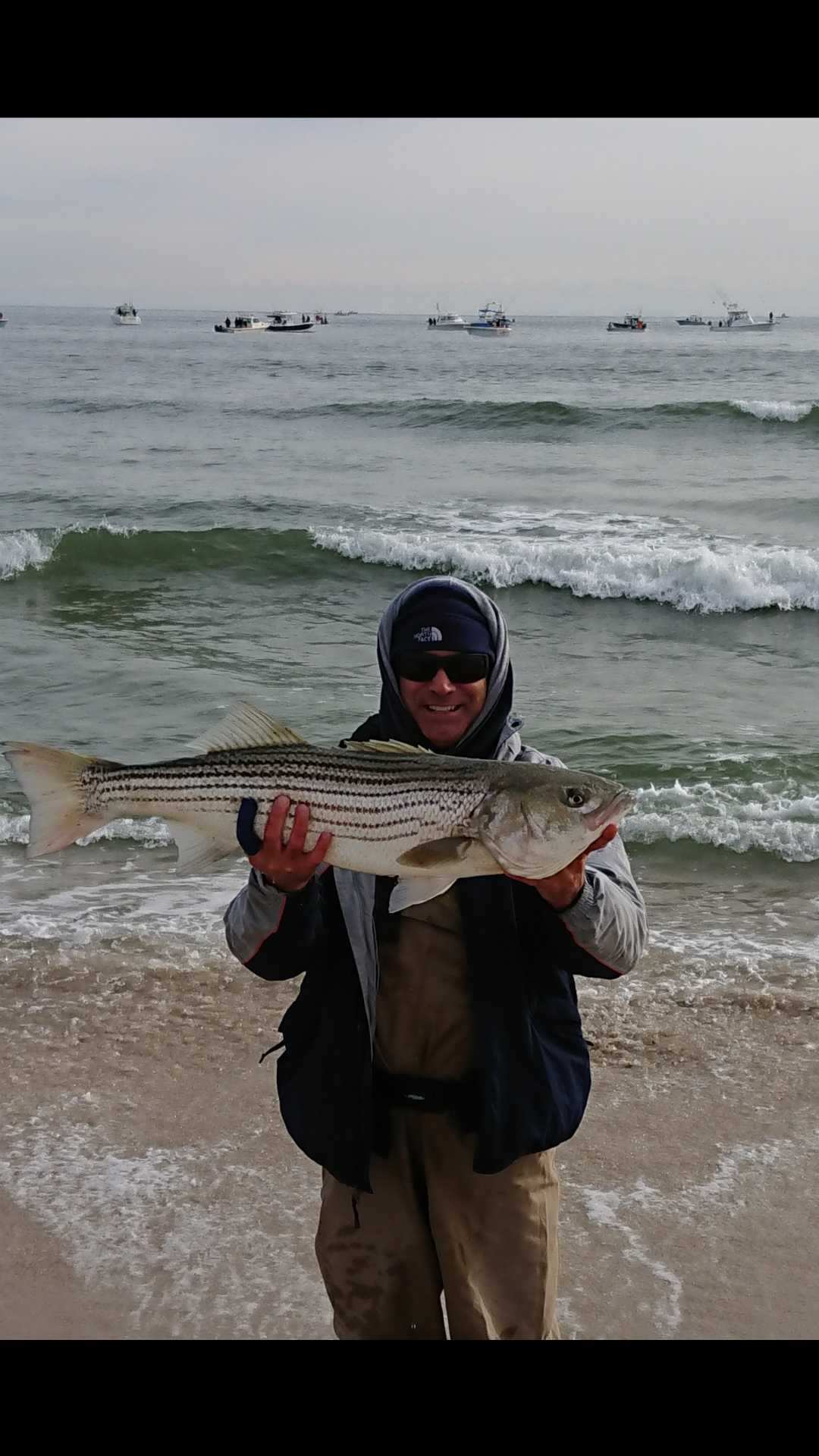
The Montauk striped bass run is on, and the fishing has been strong this week. Bass are stacked around the Point, the rips, and along the south-side beaches, taking bucktails, jigs, and live and chunk bunker on the moving tides. The rip bite has been best around the tide changes, and the beach bite has produced at first and last light.
Summer flounder (fluke) are hitting well over the sandy bottom and along the structure edges in the surrounding waters, with Gulp-and-bucktail combos and squid-minnow rigs drifted on the moving tide producing keeper-class fish. Black sea bass are stacked on the wrecks and reefs for steady bottom action and good eating.
Porgies (scup) are thick around the rock piles and structure and offer fast action for anglers of all ages. Bluefish are mixed into the bass blitzes and along the beaches, providing toothy, fast-paced fun on plugs and jigs — heavier leader recommended.
Offshore, the early-season tuna and a few mahi are starting to show at the deeper edges for boats making the run on the weather windows. The nearshore bottom fishing has been a reliable fallback when the wind keeps boats close.
The striper bite is the headline and should hold strong through June. Fish the rips around the tide changes, work the beaches at low light, and keep the fluke and sea bass gear aboard for the bottom bite.
Spots & Access This Week
Montauk Harbor is the practical base for almost everyone fishing the Point. The Star Island ramp and the East Lake Drive ramp both put you in the harbor with a short run out to the north and south rips, and the Three Mile Harbor ramp in East Hampton is the better option when the harbor lot is jammed on a June weekend.
Shore anglers have some of the best striper access on the East Coast here. Montauk Point State Park, the boulder fields at Turtle Cove and the rocks below Camp Hero all put you within casting range of moving water. The wading is genuinely hazardous in a running tide — study the boulders at low water before you ever try it in the dark, and wear a belt and studded soles.
Fish have been concentrating on the down-current side of the rip lines and along the boulder edges where the tide accelerates. Striped bass regulations in New York change on a regular basis and include a strict slot limit plus circle-hook requirements when fishing with bait — check current NYSDEC marine regulations before keeping anything.
Tactics That Are Working
The most productive approach in the June rips has been drifting a bucktail through the standing wave and letting it wash down the back side, rather than casting into the white water and reeling straight back. A three-quarter to two-ounce head, adjusted to the stage of the tide, keeps you in the strike zone without dragging bottom.
Live eels remain the reliable night bait here. Fish them on a 7/0 circle with a 50-pound fluorocarbon leader, cast up-tide, and give a fish a two-count before you come tight. From the rocks, a darter or a needlefish swung slowly across the current outfishes anything worked fast, particularly on the darker phases of the moon.
This Week’s Tip
Fish the seam, not the froth. Striped bass in a Montauk rip sit in the calm pocket immediately behind the standing wave, waiting for bait to tumble past disoriented. Put your offering into the fast water above the rip, let it wash through with a controlled drift, and be ready the instant it drops out the back edge — that is where the overwhelming majority of strikes happen.
More Montauk Resources
Montauk Fishing Guide · Montauk Seasonal Calendar · All Montauk reports →
Also read: Montauk Fishing Report — Week of July 30, 2026: Doormat Fluke, Bass in the Rips
Reports updated every Thursday on fishing.digital.
Planning a trip to Montauk?
This report tells you what happened. ReelAI tells you what to do about it — a briefing for your date, your target species and how you're fishing, built from our reports plus live NOAA and USGS data.
Powered by ReelAI — fishing.digital's intelligence layer. Answers are generated from fishing.digital reports and public NOAA, NWS and USGS data, and may be incomplete or out of date. Regulations and marine safety information are summaries only; always confirm with the responsible authority before you fish.