
This week off Palm Beach, the Gulf Stream edge has been holding fish close enough for a short run, and the reef comes alive after the sun goes down. Between the two, there’s a full day of fishing for anyone willing to split it around the afternoon storms.
What’s Hitting
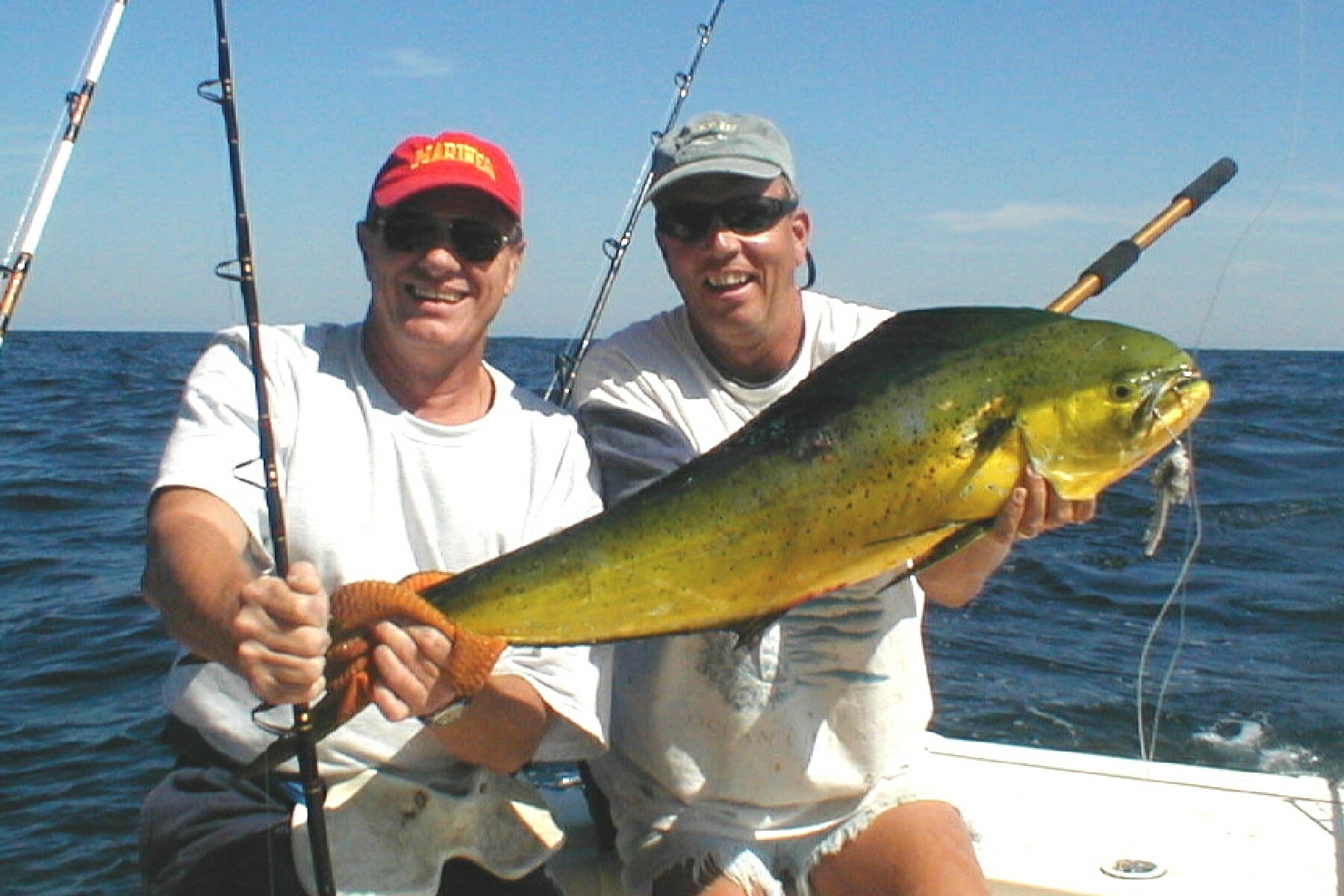
Mahi are the daytime draw, working the current edge and scattered weed in 300 to 800 feet — mostly schoolies with the occasional gaffer mixed in. Mangrove snapper are feeding hard on the reefs in 60 to 90 feet after dark, kingfish are steady over the structure during the day, and there are enough blackfin tuna on the edge at first light to justify a dawn troll. Inside, tarpon and jacks are working the bait schools along the beach.
Where to Find Them
The mahi water has been a short run east — find the edge where the blue water starts and work north with the current. Night snapper are on the reef lines off Palm Beach and Juno, and the blackfins have been up early around the same color change as the kings.
Tides & Conditions
Seas have run 2 to 3 feet on the morning window with the usual afternoon build. The strong tides this week put good current through the Palm Beach and Jupiter inlets — time your runs to avoid an outgoing against an east breeze.
Tackle & Tactics
Troll small ballyhoo on the edge until the mahi show, then chunk to hold the school. Night snapper want fresh dead sardines or bonito strips on 20-pound fluorocarbon with minimal lead. A live goggle-eye slow-trolled at dawn covers kings, blackfin, and any mahi that slide inshore.
Local Intel This Week
Phil Foster Park at the Blue Heron Bridge, Currie Park in West Palm, and Burt Reynolds Park in Jupiter are the main public ramps this week. The fish are concentrating along the offshore edge by day and the mid-depth reefs at night. Snapper limits differ between state and federal waters — check current FWC regulations and seasons before keeping fish.
Spots & Access This Week
The Riviera Beach municipal ramp on Blue Heron Boulevard is the practical launch for Palm Beach Inlet and the offshore run, and it fills before sunrise on summer weekends — plan on arriving in the dark or launching from Boynton Harbor Marina instead. Shore anglers have the Boynton Inlet catwalk and the Juno Beach Pier, both of which produce snapper, jacks and the occasional snook on the moving tide. Inside, the Lake Worth Lagoon dock lights and the bridges along the Intracoastal give kayak and small-boat anglers protected water when the ocean is up. Fish are concentrated at the inlets and along the color change rather than spread across the reef flat, so pick one and work it thoroughly instead of running spot to spot.
Dialing In the Offshore Bite
The offshore work rewards patience over speed. Rather than trolling a big circle, find a clean current edge with grass and bait on it and work it methodically — a slow troll along the line with a pitch rod ready produces more mahi than covering ten miles of empty water. On the reef, drift with the current and fish a knocker rig with the lightest lead that holds bottom; muttons in clear summer water refuse heavy leaders, so drop to 40-pound fluorocarbon and lengthen it. At the inlets after dark, position outside the tarpon and let the bait swing to them on the outgoing rather than casting into the middle of the school.
This Week’s Tip
On the night snapper grounds, the moon dictates the drift. Around this week’s bright moon the fish feed in windows, not all night — fish the tide changes hard, and if the bite dies, wait it out rather than running. The next window usually opens within the hour.
More Palm Beach Resources
Palm Beach Fishing Guide · Palm Beach Seasonal Calendar · All Palm Beach reports →
Also read: Palm Beach Fishing Report — Week of July 30, 2026: Mahi Offshore, Snapper on the Reef
Reports updated every Thursday on fishing.digital.
Planning a trip to Palm Beach?
This report tells you what happened. ReelAI tells you what to do about it — a briefing for your date, your target species and how you're fishing, built from our reports plus live NOAA and USGS data.
Powered by ReelAI — fishing.digital's intelligence layer. Answers are generated from fishing.digital reports and public NOAA, NWS and USGS data, and may be incomplete or out of date. Regulations and marine safety information are summaries only; always confirm with the responsible authority before you fish.