
Updated: Thursday, August 13, 2026 · Next update: Thursday, August 20, 2026
This Stuart fishing report covers mid-August on the Treasure Coast: glass-calm mornings, backcountry water in the upper 80s and a thunderhead line stacking over the interior by two o’clock. Snook on moving water at the bridges and inlet lead the way, with mangrove snapper the most dependable fish in the system. A new moon at the end of the week puts the strongest tides of the month against the darkest nights of summer, so plan around first light and full dark. The window is narrow, but it is sharp.
What’s Hitting
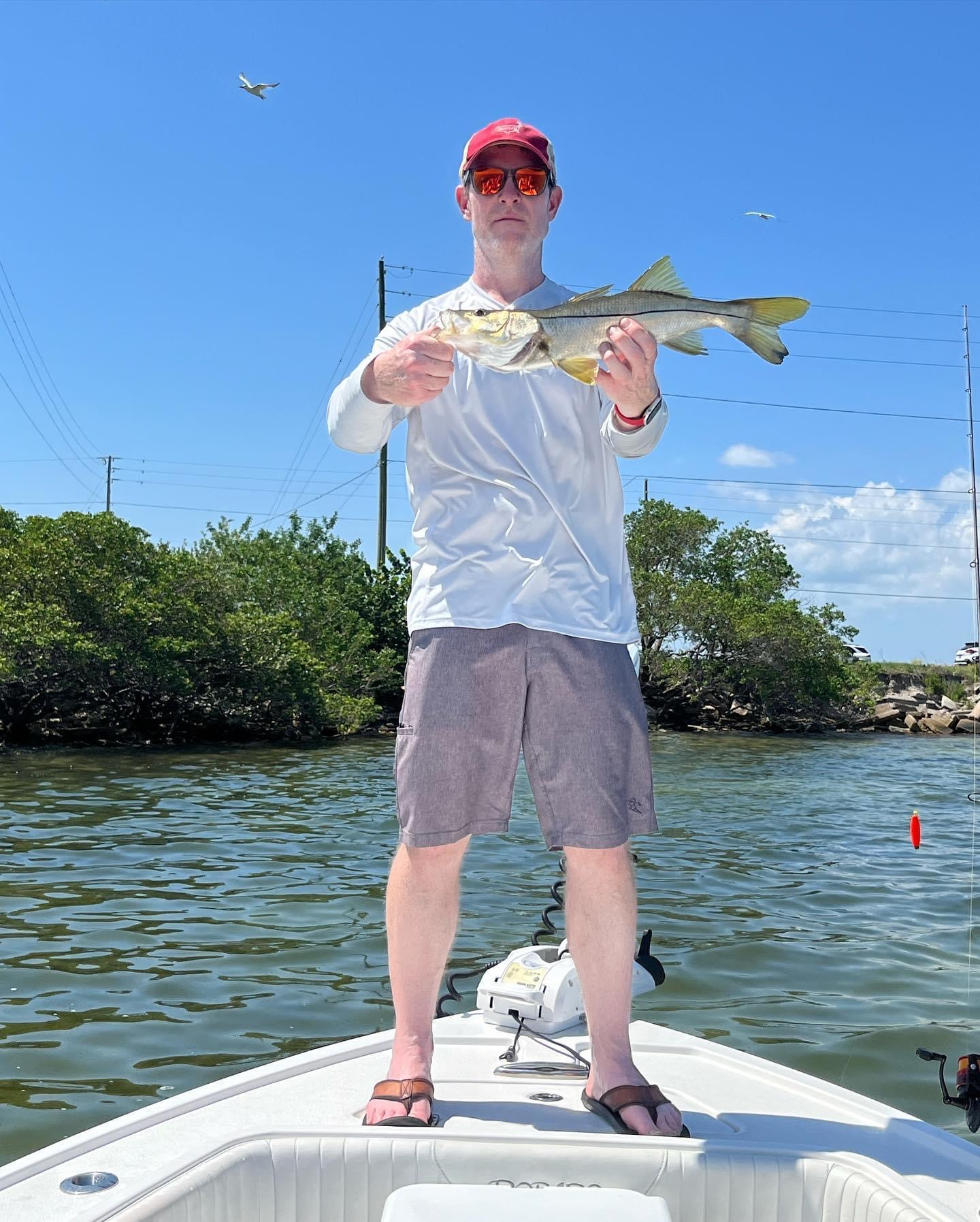
Mangrove snapper are the most dependable target, stacked on the Roosevelt Bridge pilings, the causeway rock and the inlet jetty. Snook feed well on moving water, though Atlantic-coast snook harvest stays closed through the end of August, so plan on catch-and-release. Tarpon are available along the beach and inside the inlet on night tides, mostly 20- to 60-pound fish with the occasional bigger one rolling. Offshore, mahi are scattered but findable on weedlines in 120 to 200 feet, and kingfish sit on the nearshore reefs.
Where to Find Them
The St. Lucie Inlet rocks and the adjacent Sailfish Flats are the two highest-percentage areas. In the river, the Roosevelt and Evans Crary bridge lights hold snook and snapper after dark. The South Fork and Bessey’s Creek run fresher after rain, which pushes juvenile tarpon and snook toward the creek mouths rather than deep inside, so fish the mouths first. Peck Lake and the beach north of the inlet are worth a pre-dawn look.
Tides & Conditions
The new moon brings spring tides, with more water moving and moving faster. Expect hard outgoing current through the inlet, especially on the late-evening drop. Inshore water runs 86 to 89 degrees, with the low 80s offshore. Mid-August storms fire between 2 and 5 p.m. most days, so plan an early finish. Nearshore visibility is decent on the incoming and dirty on the outgoing after a heavy rain day.
Tackle & Tactics
One inshore outfit covers most of the work:
- Inshore outfit: a 3000- to 4000-size spinning reel with 20- to 30-pound braid and 30- to 40-pound fluorocarbon.
- Bridge snook: live pilchards, croakers and mullet are the best baits; after dark, a half-ounce to one-ounce flair hawk jig swum slowly across the shadow line is the reliable artificial.
- Snapper: drop to 15-pound fluorocarbon and a small live shrimp on a 1/0 hook. The lighter leader matters in clear water.
- Offshore: keep a pitch rod rigged with a naked ballyhoo for mahi on the weedlines.
Local Intel This Week
Sandsprit Park is the workhorse inlet ramp and crowds by 7 a.m. on weekends, so launch before dawn if the inlet is the plan. Leighton Park in Palm City and Phipps Park put you on the South Fork quickly and stay far quieter. Shore anglers can work the Stuart Causeway catwalks after dark for snapper and the odd snook. Fish concentrate hard on structure and moving water, meaning the bridges, inlet rocks and causeway, rather than spreading over open flats. Check current FWC and federal regulations and seasons before keeping fish.
This Week’s Tip
On the bridge lights, don’t cast into the bright water. Set up on the up-current side, let the bait drift into the dark edge of the shadow line and swim it back across. Snook sit in the dark facing the light, so a lure that appears out of the darkness looks like food.
Planning a trip to Stuart?
This report tells you what happened. ReelAI tells you what to do about it — a briefing for your date, your target species and how you're fishing, built from our reports plus live NOAA and USGS data.
Powered by ReelAI — fishing.digital's intelligence layer. Answers are generated from fishing.digital reports and public NOAA, NWS and USGS data, and may be incomplete or out of date. Regulations and marine safety information are summaries only; always confirm with the responsible authority before you fish.