
Updated: Thursday, August 13, 2026 · Next update: Thursday, August 20, 2026
This Florida Keys fishing report covers mid-August, a heat-and-patience month. Flats water runs near 90 in the afternoon and bonefish go largely nocturnal or slide to the edges, so the real production shifts to permit on the wrecks and other deeper structure. The new moon at the end of the week brings big tidal swings and dark nights, good news for snapper anglers and harder work for anyone poling a flat at midday. Plan around the strong bridge-channel current and the afternoon squalls.
What’s Hitting
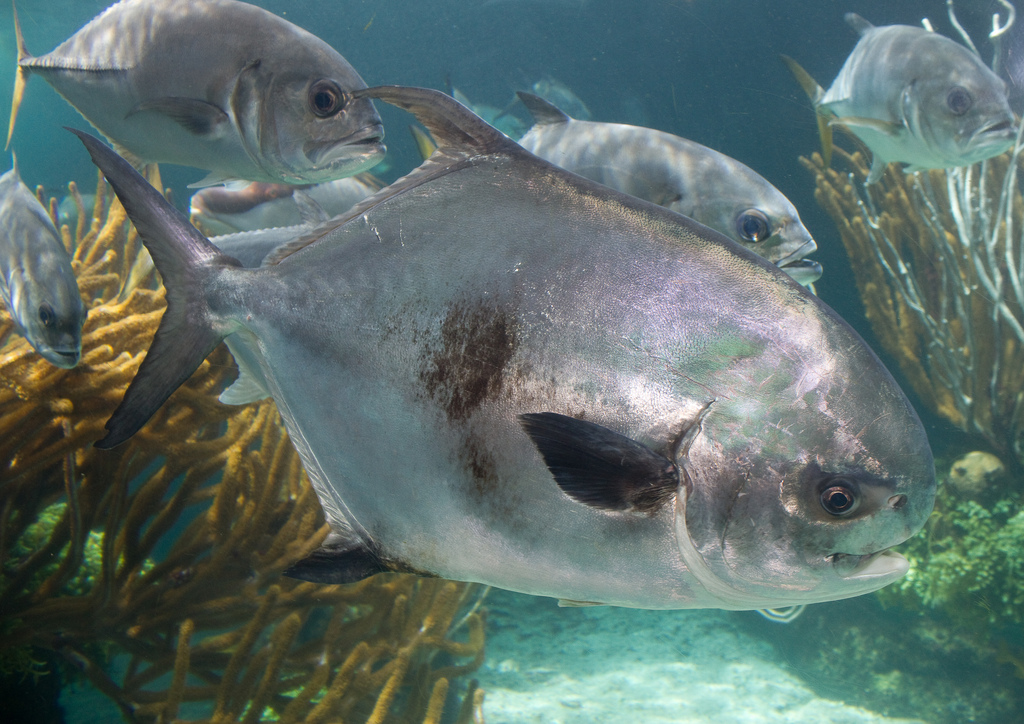
Permit are the standout, holding thick on the wrecks in 60 to 120 feet from Islamorada down through the Marathon humps. Mutton snapper feed on the deeper patch reefs and the edges, and yellowtail chumming is steady on the reef line in 60 to 90 feet. Mangrove snapper gang up around the bridges on the strong night tides. Offshore, mahi are scattered and small on average, but a good weedline in 400 to 800 feet is still worth the run.
Where to Find Them
The Islamorada and Marathon wrecks are the permit play. Look for fish stacked on the up-current side and stay off them with the trolling motor. Wrecks gather crabs and baitfish and break the current, which gives permit an easy ambush point. Alligator Reef, Sombrero and Looe Key give up yellowtail on a good chum slick. The Seven Mile Bridge and Channel Five hold mangrove snapper and tarpon after dark. On the flats, fish the deeper edges and channel dropoffs at dawn rather than the interior.
Tides & Conditions
Water runs 87 to 90 degrees on the flats and 84 to 86 on the reef. The new moon brings the biggest tidal exchange of the month, which turns the bridge channels into a firehose, so time snapper trips for the first and last hours of the run rather than the peak. Afternoon squalls are the norm. Expect seas of 2 feet or less most mornings, building past noon.
Tackle & Tactics
Each target has its own short program:
- Wreck permit: a live crab on a 4/0 circle hook and 30-pound fluorocarbon under a 7-foot medium-heavy spinner is the whole program.
- Mutton snapper: a fresh ballyhoo or pinfish on a long 40-pound leader, fished on the bottom with a sliding egg sinker. The sliding sinker lets a wary fish pick up the bait without feeling weight.
- Yellowtail: a steady chum slick and a small hook on 15- to 20-pound fluorocarbon, with as little weight as the current allows.
- Night bridge snapper: live shrimp, a 20-pound leader and no light on the water.
Local Intel This Week
Founders Park in Islamorada, the Marathon boat ramp at 33rd Street and Sunset Park in Key West are the practical public launches. Use Founders Park for the Islamorada wrecks and Alligator Reef, 33rd Street for the Marathon humps, Sombrero and the Seven Mile Bridge, and Sunset Park for the lower Keys. Fish concentrate on structure with current over it, such as wrecks, bridge channels and reef edges, while the open flats go quiet in the heat. Several reef and snapper species carry seasonal or size restrictions, and permit rules differ inside the special permit zone. Check current FWC and federal regulations and seasons before keeping fish.
This Week’s Tip
On the wrecks, resist the urge to anchor right on top. Set up well up-current and let the crab drift back naturally. Permit that see a boat sitting over their structure shut off, and once they do, the spot is done for the tide.
Planning a trip to Florida Keys?
This report tells you what happened. ReelAI tells you what to do about it — a briefing for your date, your target species and how you're fishing, built from our reports plus live NOAA and USGS data.
Powered by ReelAI — fishing.digital's intelligence layer. Answers are generated from fishing.digital reports and public NOAA, NWS and USGS data, and may be incomplete or out of date. Regulations and marine safety information are summaries only; always confirm with the responsible authority before you fish.