
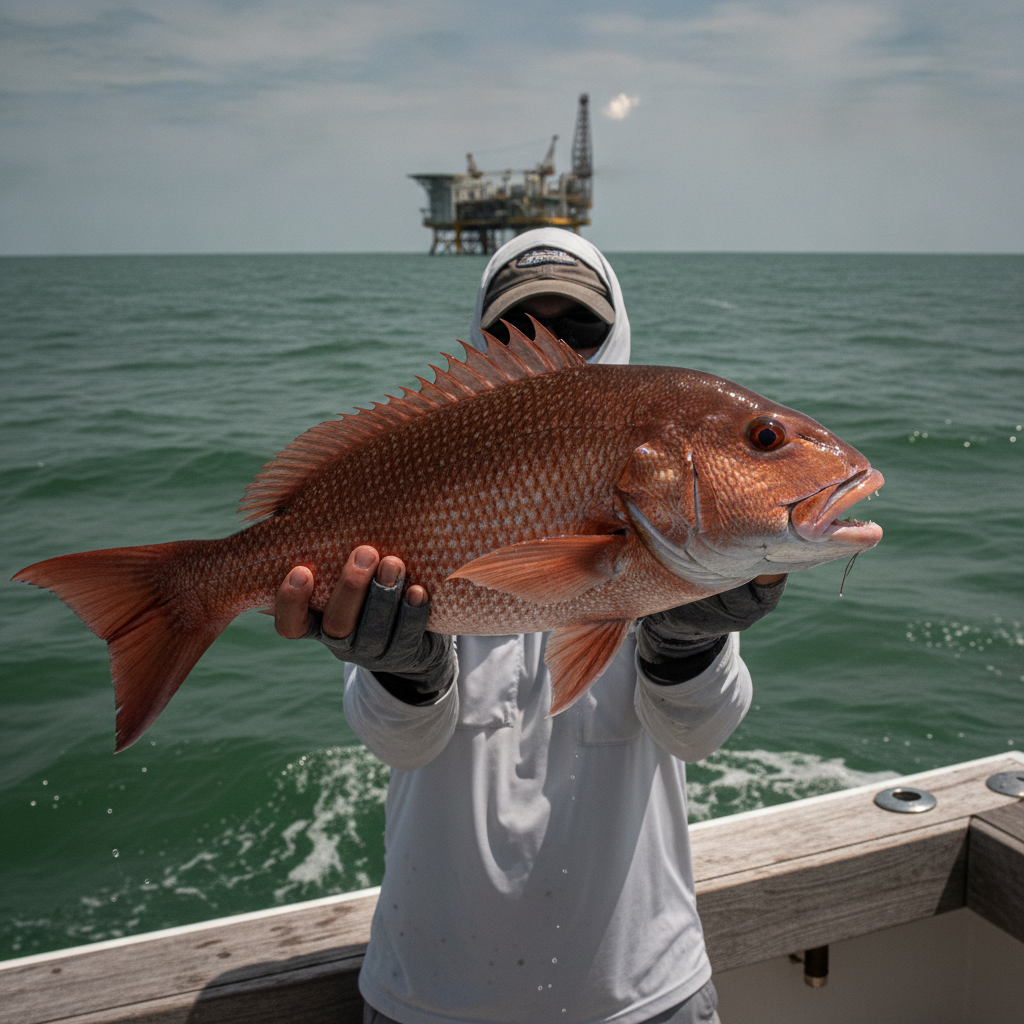
Texas Gulf Coast fishing report for the week of September 17, 2026. The fall pattern has taken hold along the Texas coast this week. Bull reds are piling up at every jetty system from Sabine Pass to Port Aransas, flounder are on the move toward the passes, and the nearshore snapper spots inside state waters have been steady for the boats that can get out on the calm mornings.
What’s Hitting
This week on the water the bull reds are the headline. Fish from 30 to 45 inches are stacked at the Sabine, Galveston, Freeport, Matagorda, and Port Aransas jetties on the moving tide, and they are working the surf along the Bolivar and Padre beaches. Red snapper are on the nearshore rocks and structure in 40 to 60 feet inside the nine-mile state-water line, where the season runs year-round. Flounder are beginning to stage along the channel edges and pass shorelines, with keepers coming from Sabine Lake, the Galveston jetties, and the Port O’Connor cuts. Speckled trout are on the bay shell and the deep reefs in Galveston, Matagorda, and Aransas bays, and Spanish mackerel and kingfish are on the bait along the beachfront.
Where to Find Them
Bull reds are on the channel side of the jetties and along the rocks at the ends, best on the falling tide, and in the surf guts along Bolivar Peninsula and Mustang Island. Snapper are on the nearshore rocks, wrecks, and rigs in 40 to 60 feet inside state waters off Freeport, Matagorda, and Port Aransas. Flounder are along the channel edges, the jetty rocks, and the bayou mouths on the outgoing tide. Trout are on the mid-bay shell reefs in Galveston and Matagorda bays early and in the deeper reefs of Aransas Bay.
Tides & Conditions
Moderate tides this week between the moons, with a single daily swing on the Texas coast and the morning falling tide the best jetty window. Surf and bay water is in the low to mid-80s and easing at night. Winds have been light out of the north and east, which has laid the Gulf down for nearshore runs and cleaned up the surf. Afternoon storms have been scattered.
Tackle & Tactics
For bull reds at the jetties, a cracked blue crab, cut mullet, or a live croaker on a 7/0 circle hook with a fish-finder rig and enough weight to hold in the current, on a heavy spinning or conventional outfit with 50-pound braid. Snapper want a live pinfish, cigar minnow, or a chunk of squid on a heavy bottom rig or a vertical jig over the structure. Flounder want a live mud minnow or finger mullet on a Carolina rig or a Gulp on a jig head dragged slowly along the bottom. For trout on the shell, live croaker or shrimp under a popping cork or a soft plastic on a jig head.
Local Intel This Week
The Galveston Yacht Basin and the Texas City Dike ramps serve the Galveston jetties and bay, with the Surfside and Freeport ramps for the Freeport jetties, the Matagorda Harbor ramp, and the Port Aransas public ramps and Conn Brown Harbor in Aransas Pass for the coastal bend. Shore anglers are catching bull reds from the Galveston and Port Aransas jetties and the Texas City Dike. Fish are concentrating at the jetties on the falling tide and on the nearshore structure inside state waters. Only one oversized red drum may be kept with a tag, and snapper regulations differ between state and federal waters; check current Texas Parks and Wildlife regulations before keeping fish.
This Week’s Tip
At the jetties, fish the eddy behind the rocks on the falling tide rather than the open channel. Bull reds hold on the down-current side of the jetty where the water swirls back and bait gets disoriented, and a crab sitting in that slack water gets picked up quickly.
More Texas Gulf Coast Resources
All Texas Gulf Coast fishing reports · Seasonal fishing calendars · Submit your own report
Planning a trip to Texas Gulf Coast?
This report tells you what happened. ReelAI tells you what to do about it — a briefing for your date, your target species and how you're fishing, built from our reports plus live NOAA and USGS data.
Powered by ReelAI — fishing.digital's intelligence layer. Answers are generated from fishing.digital reports and public NOAA, NWS and USGS data, and may be incomplete or out of date. Regulations and marine safety information are summaries only; always confirm with the responsible authority before you fish.