
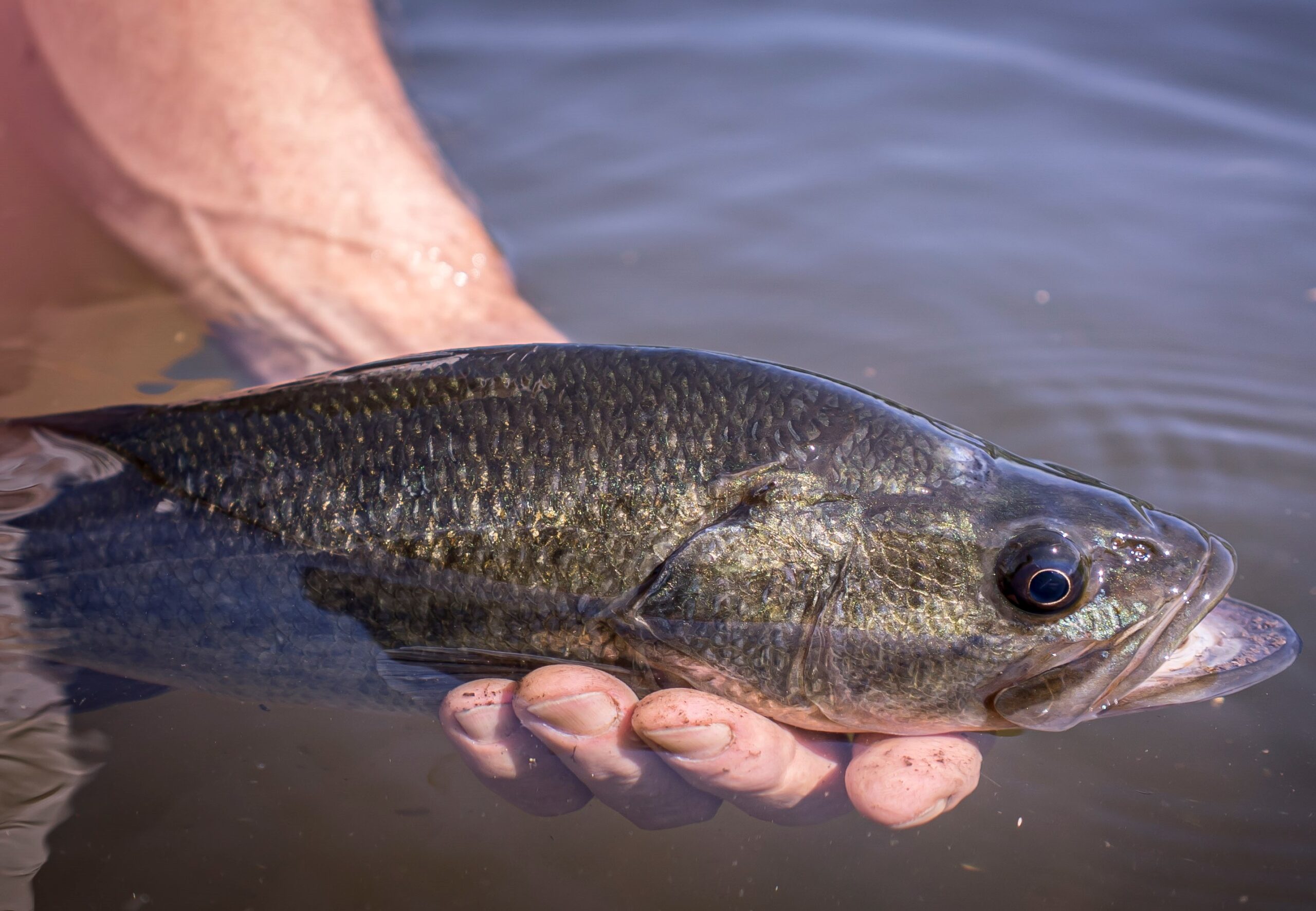
Largemouth bass (Micropterus salmoides) are the most popular freshwater gamefish in America — a powerful, aggressive predator found in virtually every lake, pond, river, and reservoir in the contiguous US. The bass fishing industry is a multi-billion dollar economy with professional tours, specialized tackle, and a dedicated following that rivals any sport. This guide covers everything you need to consistently catch largemouth bass.
Range & Habitat
Largemouth bass are native to the eastern US but have been introduced virtually everywhere. They prefer warm, still or slow-moving water with abundant aquatic vegetation, wood, and structure. They’re found in the shallows and on structure from 1 to 40+ feet deep depending on season and conditions. Reservoirs, natural lakes, rivers, ponds, and even brackish coastal waters all hold largemouth.
Best Tackle
Spinning: 6’6″–7′ medium-light to medium rod for finesse techniques, 2500–3000 reel, 8–12 lb fluorocarbon or 10–20 lb braid with fluoro leader.
Baitcaster: 7–7’6″ medium-heavy to heavy rod for power techniques, quality baitcasting reel, 14–20 lb fluorocarbon or 40–65 lb braid.
Top Techniques
Texas Rig: The most versatile bass technique. A plastic worm, creature bait, or craw rigged weedless on a offset worm hook with a bullet weight. Fish slowly through cover — wood, grass, docks. Flipping and Pitching: Precise short-range presentations to heavy cover — matted vegetation, boat docks, laydowns. Use heavy braid (50–65 lb) and a heavy jig or punching weight. Topwater: Walking baits, frogs, and poppers worked over shallow grass, around wood, and in pockets at dawn and dusk. Crankbaits: Deflecting off structure in the mid-depth range (5–15 feet) triggers reaction strikes from bass. Swimbaits: Mid-depth and deep presentations mimicking shad and bluegill — excellent year-round technique.
Best Baits & Lures
- Plastic Worm (Zoom Trick Worm, Senko): The all-time great bass lure. Texas rig, wacky rig, or drop shot — a plastic worm catches bass in every situation.
- Jig: Football jig, flipping jig, swim jig — jigs catch the largest bass consistently. Fish slowly near bottom structure.
- Frog (Spro, Booyah Pad Crasher): Topwater hollow-body frog over grass mats and pads. One of bass fishing’s most exciting presentations.
- Crankbait (Rapala, Strike King): Deflecting off structure in the 5–15 foot range. Square-bill cranks for shallow wood; deep divers for ledges.
- Spinnerbait: All-weather, all-season producer. White or chartreuse in stained water; more natural colors in clear water.
- Swimbait (Keitech, Megabass): The modern staple for quality bass in all conditions.
Seasonal Patterns
Spring (March–May): Pre-spawn and spawn — the most productive season. Bass are in the shallows, aggressive, and feeding heavily. The spawn (typically April–May depending on latitude) concentrates fish in predictable shallow areas. Summer: Bass move deeper or to shade. Early morning topwater followed by deep structure fishing with Carolina rigs and football jigs. Fall: Bass move shallow to feed aggressively before winter. One of the most fun seasons — fish are chasing shad and eating topwater enthusiastically. Winter: Bass are slow and relate to the deepest structure available. Slow jigs, drop shots, and blade baits in 15–30 feet.
Pro Tips
- Match the bait: Observe what baitfish the bass are keying on and match it in size and color. Bass in a shad-filled reservoir want shad-colored baits; bass on a bluegill flat want bluegill-colored swimbaits.
- Slow down: Most anglers fish too fast. Slowing down — especially in cold water and post-frontal conditions — dramatically improves catches.
- Work the edges: Bass live on structure transitions — where grass meets sand, where wood meets open water, where shallow flats drop into deeper water. These edges concentrate fish.
- Fish the wind: Wind-blown shorelines concentrate baitfish and bass. Wind-blown points and windward banks are consistently more productive than calm, protected banks.
Regulations
Largemouth bass regulations vary significantly by state and water body. Most states have a minimum size of 12–15 inches and a daily bag limit of 5–10 fish. Some waters have trophy regulations (16–22″ minimum or slot limits). Always check current state regulations.
Fishing.Digital publishes weekly fishing reports every Thursday. Browse all reports.
Planning a trip to Largemouth Bass?
This report tells you what happened. ReelAI tells you what to do about it — a briefing for your date, your target species and how you're fishing, built from our reports plus live NOAA and USGS data.
Powered by ReelAI — fishing.digital's intelligence layer. Answers are generated from fishing.digital reports and public NOAA, NWS and USGS data, and may be incomplete or out of date. Regulations and marine safety information are summaries only; always confirm with the responsible authority before you fish.
[…] How to Catch Largemouth Bass […]