
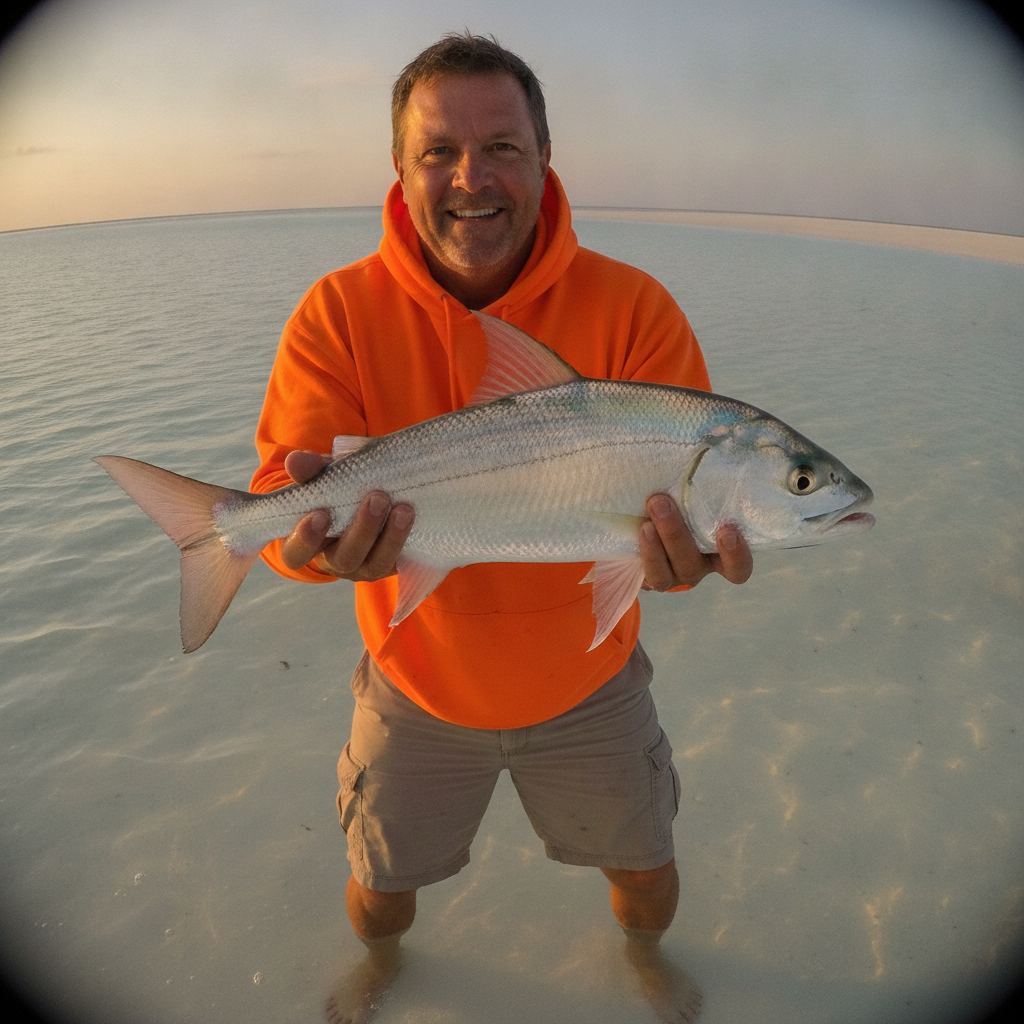
Bonefish (Albula vulpes) are the quintessential flats gamefish — the fish that defined sight-fishing, that inspired generations of fly anglers, and that continues to draw pilgrims to the Bahamas, Florida Keys, Belize, and Caribbean destinations worldwide. They’re not large — typically 2–8 lbs — but their speed is extraordinary. A hooked bonefish can strip 100 yards of line in under 10 seconds. The combination of sight-fishing in gin-clear water, the challenge of a perfect presentation, and that blistering first run makes bonefish fishing an experience unlike any other.
Range & Habitat
Bonefish are found throughout tropical and subtropical flats worldwide — the Atlantic range runs from Florida and the Bahamas through Central America and the Caribbean to Brazil. In the US, the Florida Keys offer the most accessible bonefish fishing, with the Lower Keys particularly productive. The Bahamas (Andros, Abaco, Bimini) and Belize are considered world-class destinations. Bonefish prefer shallow, clear flats with marl, sand, or grass bottom where they root for crabs, shrimp, and worms.
Best Tackle
Light spinning: 7–7’6″ medium-light fast action, 2500 reel, 10–12 lb braid, 12–15 lb fluorocarbon leader 6 feet. Fly (preferred by most dedicated bonefish anglers): 7–9 weight rod, large arbor reel with 200 yards of backing, weight-forward flats line, 12–15 lb fluorocarbon leader 9 feet, 12–15 lb tippet.
Top Techniques
Sight-Casting (wading or from a skiff): The standard bonefish method. Read the flats for tailing, mudding, or cruising fish. Cast 6–10 feet ahead of the fish’s direction and let the fly or jig sink to the bottom naturally. When the fish approaches, give one or two small strips to simulate a fleeing shrimp or crab. Permit-style: Fish quiet, clear shallow flats at low or rising tides for tailing fish. The sight component is 80% of the game.
Wading: On hard-bottom flats, wading beats a skiff. You are quieter, lower, and closer to the fish, and you can stand still and let a school come to you. Move slowly, stop often, and let your eyes do the work before your feet do.
Fishing the Muds: A group of bonefish rooting the bottom kicks up a discolored cloud that drifts down-current. Cast to the leading edge of the mud, not the middle — the actively feeding fish are at the front, and the fly is visible there.
Best Baits & Lures
- Live Shrimp: The top bonefish live bait. Hook lightly through the tail and free-line toward visible fish.
- Gotcha Jig (1/4–3/8 oz, gold/yellow): The most popular bonefish spinning lure. Cast ahead of the fish and hop along the bottom slowly.
- Crazy Charlie Fly: The most famous bonefish fly worldwide. White or tan, size 4–6, with bead-chain eyes to sink quickly.
- Spawning Shrimp Fly: Pink or orange spawning shrimp imitations are extremely effective in the Bahamas and Keys.
- Clouser Minnow (size 4-2, tan/white): The most versatile fly in the box — it fishes as a shrimp, a small baitfish, or nothing in particular, and bonefish eat it worldwide.
- Flexo Crab Fly: For bonefish keyed on crabs on the flats — very effective in deeper flat situations.
Seasonal Patterns
Year-round in the Keys and Bahamas: Bonefish are resident on the flats year-round. Summer: Best sight-fishing visibility on calm days — longer daylight hours. Fall (September–November): Excellent season with comfortable temperatures and less wind. Winter: Cold fronts push fish off the flats temporarily, but bonefish return when it warms.
Pro Tips
- Polarized glasses are non-negotiable: You cannot see bonefish without quality polarized lenses. Invest in the best you can afford — amber or copper lenses work best on the flats.
- Strip strike, never lift: Set the hook by stripping line with your non-rod hand sharply, not by lifting the rod. Lifting creates slack — a strip strike stays tight on the fish.
- Clear the line before casting: The bonefish’s first run will strip every inch of loose line through the guides. Clear all loose line from around your feet before presenting to a fish.
- Silence matters as much as stealth: Bonefish hear and feel far more than they see. A dropped pair of pliers, a foot dragged through marl, or a loud conversation empties a flat.
- Accuracy beats distance: A clean 40-foot cast that lands three feet ahead of a tailing fish catches bonefish. An 80-foot cast that lands on top of it does not. Practice the short game.
- Release without removing from water: Bonefish are pure catch-and-release fish in the US. Wet your hands, remove the hook quickly, and hold the fish in the water until it recovers fully.
Regulations
Bonefish are catch-and-release only in Florida. No minimum size or bag limit in the Bahamas but C&R is standard practice. Handle quickly and gently — bonefish are fragile out of water.
Want current conditions? Browse our weekly fishing reports — updated every Thursday.
Best Bonefish Tackle
Affiliate disclosure: fishing.digital earns a small commission on qualifying purchases at no extra cost to you.
1. Crazy Charlie Fly, Size 6
Tan and pink, sizes 4-6, with bead-chain eyes. The pattern every bonefish box starts with. Check price on Amazon
2. 8-Weight, 9-Foot Flats Outfit
A complete 8-weight, 9-foot saltwater kit — rod, reel, line, and leader — rather than a bare rod. A sensible way into flats fishing if you are not already committed to a rod brand. Check price on Amazon
3. Costa Del Mar Polarized Sunglasses, Copper Lens
Not optional equipment. Copper and amber lenses cut glare and lift a gray fish off gray marl — you literally cannot fish this way without them. Check price on Amazon
4. Bonefish Bitters Fly
A small, fast-sinking shrimp pattern that lands quietly on skinny water. Sold in a couple of hook sizes — check which size the listing is before ordering. Check price on Amazon
Planning a trip to Bonefish?
This report tells you what happened. ReelAI tells you what to do about it — a briefing for your date, your target species and how you're fishing, built from our reports plus live NOAA and USGS data.
Powered by ReelAI — fishing.digital's intelligence layer. Answers are generated from fishing.digital reports and public NOAA, NWS and USGS data, and may be incomplete or out of date. Regulations and marine safety information are summaries only; always confirm with the responsible authority before you fish.