
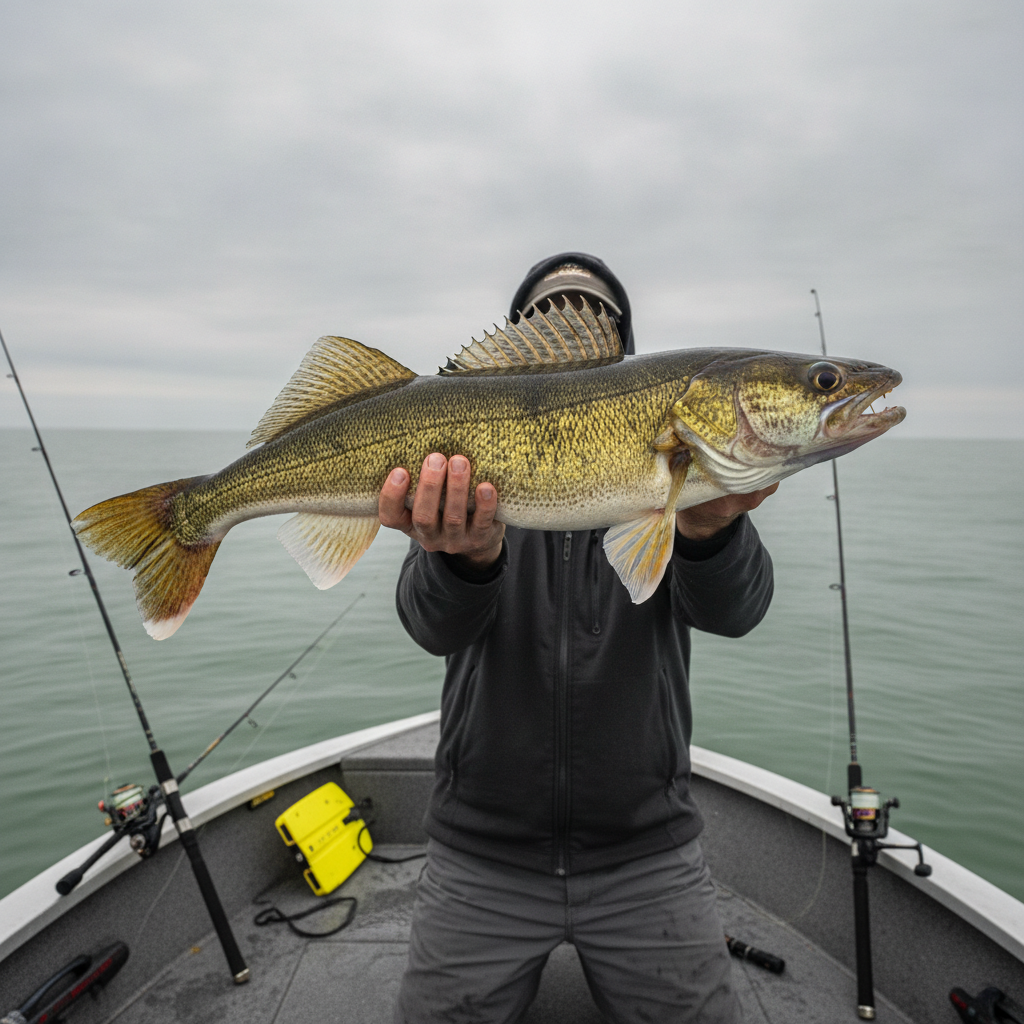
Walleye (Sander vitreus) are the most popular freshwater fish in the northern US and Canada — a schooling predator found in lakes and rivers from the Great Lakes states through the upper Midwest and into Canada. Named for their distinctive glassy, light-sensitive eyes, walleye are nocturnal hunters that dominate the low-light bite and provide some of the finest table fare in freshwater fishing.
Range & Habitat
Walleye are native to the Great Lakes and St. Lawrence drainage, the Missouri River system, and much of Canada. They’ve been widely stocked throughout the US. They prefer clear to slightly stained, cool, deep lakes and large rivers — avoiding both the warm, weedy largemouth bass habitat and the cold, current-heavy trout stream environment. They strongly associate with rock, gravel, and sandy bottom structure.
Best Tackle
Medium spinning: 6’6″–7′ medium or medium-light action spinning rod, 2500–3000 reel, 8–10 lb monofilament or 8–14 lb braid with 10 lb fluorocarbon leader. Sensitivity is key: Walleye bites are often subtle — a rod with a sensitive tip is important.
Top Techniques
Jigging: The most productive year-round technique. A 1/8–1/2 oz jig tipped with a live minnow, plastic, or crawler worked along rocky points, gravel flats, and channel edges. Trolling Crankbaits: The standard technique on large lakes. Trolling Rapala shad raps, Husky Jerks, and similar crankbaits at 1.5–2.5 mph along structure contours. Live Bait Rigging (Lindy Rig): The classic walleye technique — a walking sinker rig with a live minnow or nightcrawler drifted slowly along bottom.
Best Baits & Lures
- Live Minnow (3–4″): The top walleye live bait. Hook through the back behind the dorsal fin on a jig or lindy rig.
- Nightcrawler: Excellent walleye bait on a slow drift or trolling harness. Half a crawler on a lindy rig is very effective.
- Jig with Plastic (Berkley Gulp Minnow, Keitech): Tipped or untipped jigs are the year-round standard.
- Rapala Original Floating: The all-time classic walleye trolling and casting lure. Slow trolled at 1.5 mph or twitched on a slow retrieve.
- Shad Rap (Rapala): The most popular walleye crankbait for trolling on large lakes.
- Blade Bait (Swedish Pimple, Kastmaster): Excellent for vertical jigging walleye in deep water in winter and early spring.
Seasonal Patterns
Spring (April–May): The best walleye season — post-spawn fish feeding aggressively in the shallows and on rocky points. Summer: Fish move to deeper structure and thermoclines. Low-light periods (dawn, dusk, night) produce best. Fall: Excellent walleye season as fish feed aggressively before winter. Shallow rock and gravel areas produce well. Ice Fishing: Walleye are a top ice fishing target — tip-ups with live minnows and vertical jigging through the ice.
Pro Tips
- Fish low-light periods: Walleye have extremely light-sensitive eyes and feed most actively at dawn, dusk, and after dark. Night fishing on lakes and rivers is often the most productive strategy.
- Slow down: Walleye are not aggressive, explosive strikers like bass. They mouth baits slowly — a slow retrieve and long pauses between hops are often necessary.
- Find the thermocline: In summer, walleye relate to the thermocline (temperature break in the water column). Find this depth on your sounder and fish it.
- Fluorocarbon leader in clear water: Walleye in clear water can be extremely leader-shy. Use the lightest fluorocarbon leader you can get away with.
Regulations
Walleye regulations vary by state. Most have a minimum size of 15–18 inches and a daily bag limit of 5–6 fish. Always check current state regulations.
Fishing.Digital publishes weekly fishing reports every Thursday. Browse all reports.
Planning a trip to Walleye?
This report tells you what happened. ReelAI tells you what to do about it — a briefing for your date, your target species and how you're fishing, built from our reports plus live NOAA and USGS data.
Powered by ReelAI — fishing.digital's intelligence layer. Answers are generated from fishing.digital reports and public NOAA, NWS and USGS data, and may be incomplete or out of date. Regulations and marine safety information are summaries only; always confirm with the responsible authority before you fish.