
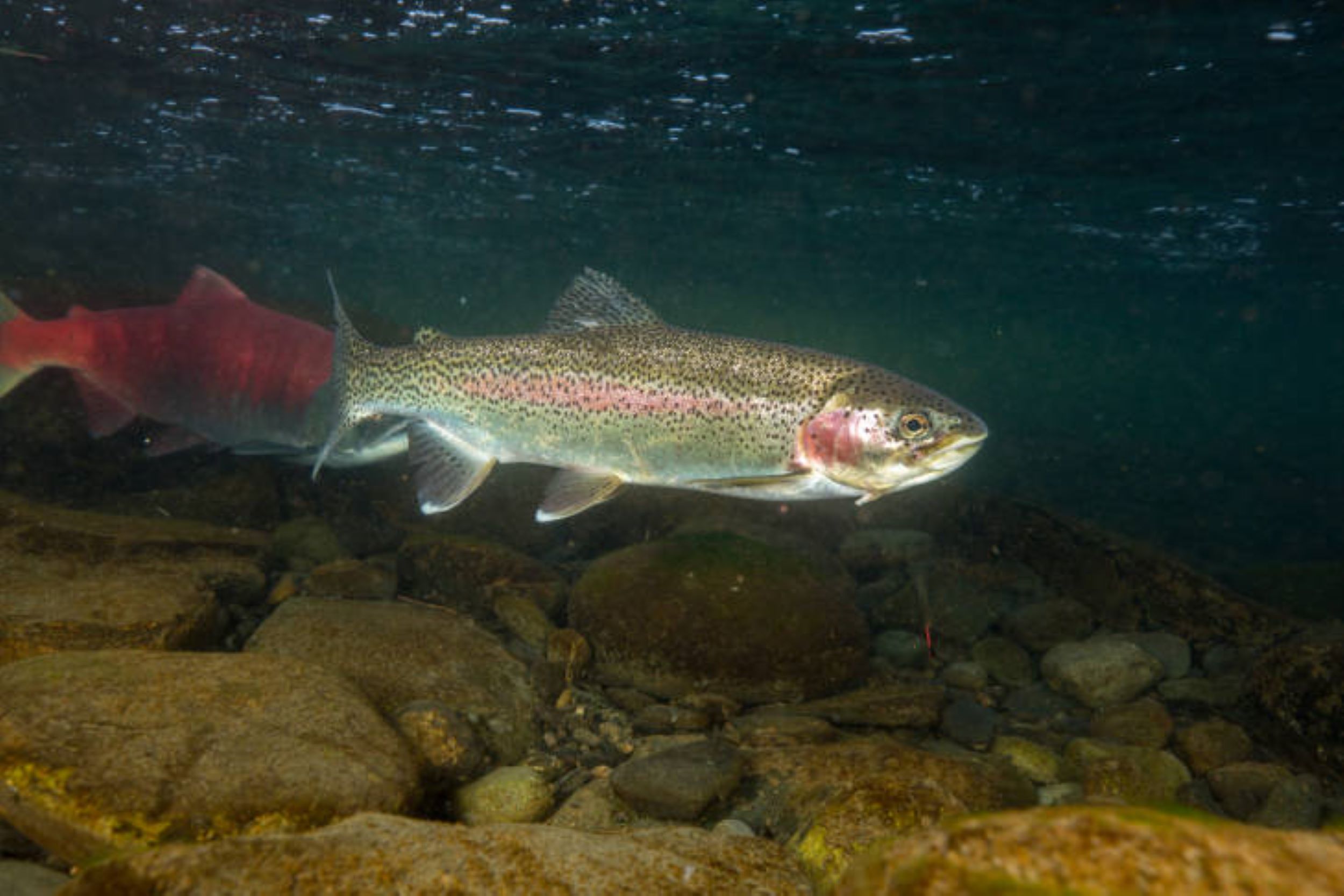
Rainbow trout (Oncorhynchus mykiss) are the most widely distributed and heavily stocked trout species in the US — a beautiful, acrobatic fish found in everything from remote wilderness streams to neighborhood put-and-take ponds. They’re the gateway fish for millions of new anglers and a lifelong obsession for fly fishing devotees. Their brilliant colors, willingness to take flies and lures, and exceptional fight make them one of freshwater fishing’s finest targets.
Range & Habitat
Native to the Pacific slope from Alaska to Baja California, rainbow trout have been introduced throughout North America and the world. Wild fish prefer cold (below 65°F), well-oxygenated streams and rivers with gravel substrate. They’re also heavily stocked in ponds, lakes, and tailwaters. Steelhead — the sea-run form of rainbow trout — are found in Great Lakes tributaries and Pacific Northwest rivers.
Best Tackle
Spinning: 6–7′ ultralight to medium-light rod, 1000–2500 reel, 4–8 lb monofilament or fluorocarbon. Fly fishing: 9′ 4–6 weight fly rod, matching reel, weight-forward line. Lighter is generally better: Trout in clear streams are highly leader-shy — 4–6 lb test is standard in most situations.
Top Techniques
Fly Fishing: The premier trout technique. Dry flies fished on the surface imitate hatching insects; nymphs fished below the surface imitate underwater stages; streamers imitate small fish. Match the hatch — observe what insects are emerging and present the right fly. Spin Fishing: Inline spinners, small spoons, and jerkbaits work well in rivers and lakes. Cast upstream and retrieve downstream to maintain natural drift. Bait Fishing: Powerbait, salmon eggs, and nightcrawlers on a simple egg sinker rig are highly effective for stocked fish in lakes and ponds.
Nymphing: Trout do the large majority of their feeding below the surface, and nymphing is how you reach them. Dead-drift a weighted nymph under an indicator through the seam at the head of a pool, or fish it tight-line Euro style with a long rod and no indicator at all. It is less romantic than the dry fly and it catches several times as many fish.
Trolling (Lakes): On stocked lakes and reservoirs, trolling a small spoon, an inline spinner, or a wet fly behind the boat at 1.5-2.5 mph is the fastest way to find where the fish are holding, and depth is easily controlled with a little added weight or lead-core line.
Best Baits & Lures
- PowerBait (Chartreuse/Rainbow): The most effective stocked rainbow trout bait in still water. Form a small ball around the hook and suspend off the bottom with a slip sinker rig.
- Salmon Eggs (Pautzke Fire Balls): Excellent river and lake bait. Hook through the tough end and fish near the bottom.
- Inline Spinner (Panther Martin, Blue Fox): The top spin fishing lure for trout. Gold blade in stained water, silver in clear. Slow retrieve near the bottom.
- Rapala Original (1″ or 2″): Floating minnow twitched slowly in pools and below riffles.
- Adams Dry Fly: The most versatile and reliable dry fly for rainbow trout. Works when fish are rising to any general mayfly or caddis hatch.
- Nymphs (Pheasant Tail, Hare’s Ear, Copper John): The three subsurface patterns that cover most trout water in North America. Sizes 14-18.
- Elk Hair Caddis: Essential dry fly for caddis hatches — standard summer evening fly throughout trout country.
Seasonal Patterns
Spring (March–May): Excellent trout fishing as water warms. Major hatches begin — blue-winged olives, little black stoneflies. Pre-spawn rainbows are aggressive. Summer: Trout become more selective during midday heat. Fish early morning, late evening, or at night during summer hatches. Fall (September–November): Excellent fishing as water cools. Large brown trout spawn in fall and become very aggressive. Winter: Trout are active year-round in most water — slower metabolism means smaller baits and slower presentations. Tailwaters below dams hold steady temperature all winter and fish extremely well on midges and small nymphs when freestone streams are locked up.
Pro Tips
- Match the hatch on fly water: Observing what insects are emerging — size, color, behavior — and matching them precisely is the key to consistent fly fishing success.
- Upstream casting in streams: Cast upstream and mend your line to create a natural drag-free drift. Trout in streams face upstream — your fly needs to float naturally with the current.
- Early and late: The best trout activity happens in the first two hours of light and the last two hours before dark. Midday heat during summer kills the bite.
- Do not fish marginal water on hot afternoons: When a summer stream pushes past the mid-60s, a hooked trout may not survive release no matter how carefully you handle it. Fish early, or fish somewhere colder.
- Keep the fish in the water: Wet your hands, skip the hero shot, and let the fish go without lifting it out. Rainbows are far less durable than they look.
- Stealth: Trout have exceptional vision and spook easily. Approach pools from downstream, keep a low profile, and avoid wading ahead of your intended fishing area.
Regulations
Trout regulations are the most varied in freshwater fishing. Individual stretches of the same river routinely carry different rules — catch-and-release-only sections, artificial-lure-only or fly-only water, delayed-harvest stretches, seasonal closures, and special slot limits. Read the regulations for the specific water you are fishing, not just the state summary, and check for in-season emergency closures during hot, low-water summers.
Fishing.Digital publishes weekly fishing reports every Thursday. Browse all reports.
Best Rainbow Trout Tackle
Affiliate disclosure: fishing.digital earns a small commission on qualifying purchases at no extra cost to you.
1. Berkley PowerBait Trout Dough, Chartreuse
The most effective stocked-trout bait there is. Mold a small ball around a treble or size 14 bait hook and float it off the bottom on a sliding sinker rig. Check price on Amazon
2. Rooster Tail Inline Spinner, 1/8 oz
The classic stream spinner. Cast up and across, retrieve just fast enough to keep the blade turning, and swing it through the tail of the pool. Check price on Amazon
3. Elk Hair Caddis Dry Fly, Size 14
The most useful single dry fly in trout country. It floats well, it is easy to see, and it covers every caddis hatch from spring through fall. Check price on Amazon
4. Shimano Sienna 2500 Spinning Reel
A dependable, inexpensive reel that will outlast a lot of pricier ones. Load it with 4-6 lb monofilament and go fishing. Check price on Amazon
Planning a trip to Rainbow Trout?
This report tells you what happened. ReelAI tells you what to do about it — a briefing for your date, your target species and how you're fishing, built from our reports plus live NOAA and USGS data.
Powered by ReelAI — fishing.digital's intelligence layer. Answers are generated from fishing.digital reports and public NOAA, NWS and USGS data, and may be incomplete or out of date. Regulations and marine safety information are summaries only; always confirm with the responsible authority before you fish.