
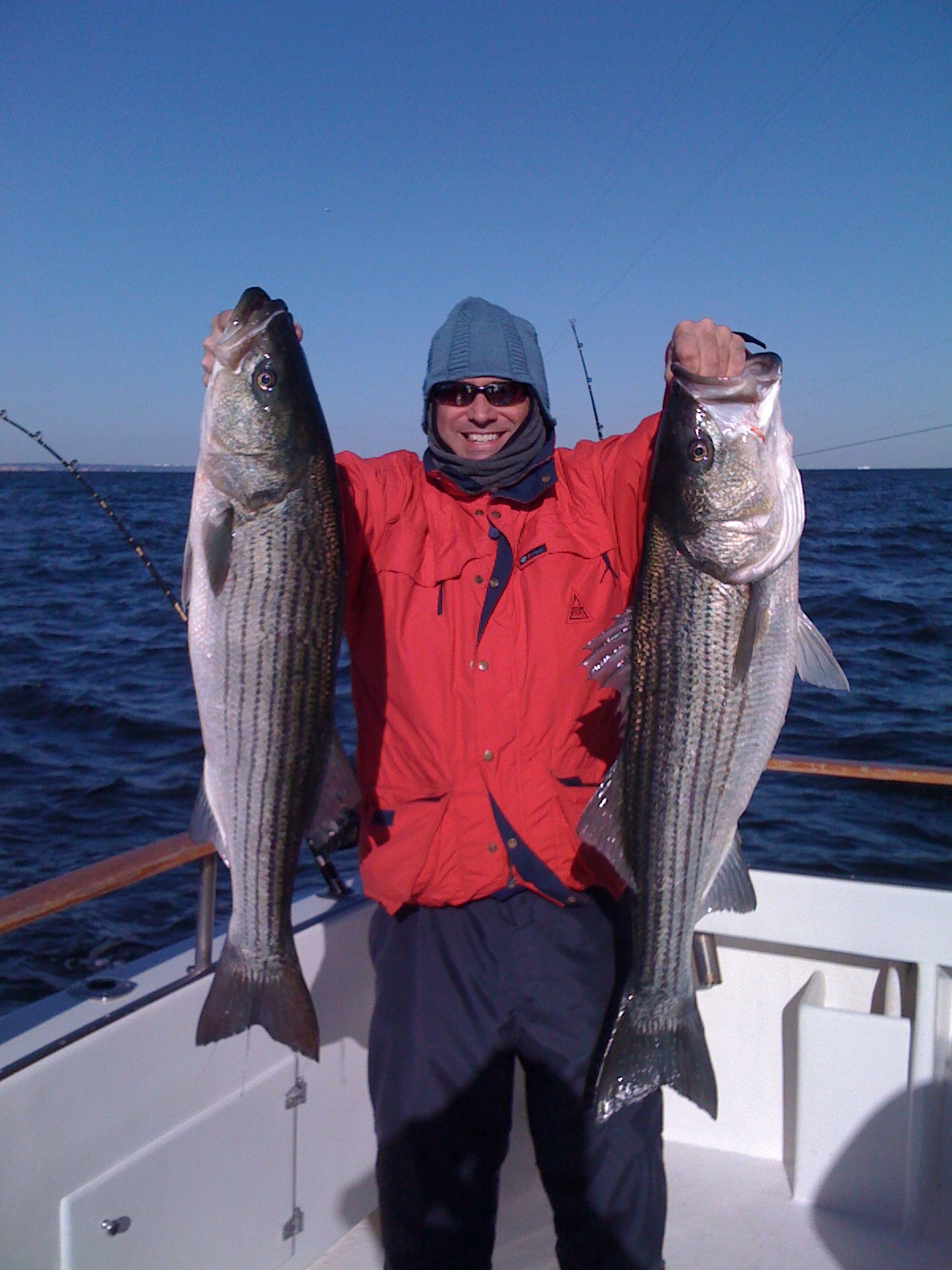
February on the Outer Banks is the deep winter season — cold water, fewer crowds, and a fishery that rewards anglers willing to bundle up and target the right species. Tautog hit their winter peak on nearshore structure, the first hints of the spring striper run begin to develop at the inlets, and offshore bluefin tuna provide world-class action for those who can make the long run.
Tautog — Winter Peak
February is tautog month on the Outer Banks. The cold water concentrates fish on the nearshore wrecks and artificial reefs in 50 to 90 feet of water, where they bunker down on structure and feed on crabs and other crustaceans. Hatteras and Oregon Inlet boats running to spots like the Triangle, the Diamond Shoals tower wreck, and the AR-130 series reefs are catching solid limits of tog in the 3 to 10 pound class, with the occasional double-digit fish.
Green crabs are the bait of choice — fished on a tautog rig with a 4 to 6 ounce sinker on the bottom and a heavy 50-pound fluorocarbon leader. Asian shore crabs work when available. The bite is subtle: tog mouth the bait and chew, so a slight tap-tap before the rod loads up is normal. Set hard on the second tap.
Weather windows are everything in February. The Outer Banks gets pounded by northeasters from Thanksgiving through March, and tautog trips often get blown out for weeks. When a calm 3-day window opens up, the inshore wrecks fish hot because they haven’t been pressured.
Stripers — First Hints
February is the very beginning of the spring striper transition. The big winter run of bass that pushed offshore in November and December is starting to scatter, and the first migratory fish are showing up at Oregon Inlet on the late-month warming windows.
Catches at this point are mostly schoolie-class fish (24 to 32 inches) in the surf and at the inlet mouth on cut bunker and bucktails. Bigger fish (the over-slot 40-plus inch trophy bass) are still a March-April story, but every year a few early arrivals show up in late February.
Check NCDMF current striper regulations before keeping any fish — North Carolina’s rules have tightened in recent years in line with the coastwide conservation plan.
Offshore — Bluefin Tuna and Wreck Fishing
Hatteras is one of the great bluefin tuna destinations on the East Coast in winter. The fish stack up on the temperature breaks 30 to 50 miles offshore, and giants over 500 pounds are caught every February by boats willing to run in cold weather. Live bait (bluefish, mackerel) on heavy gear is the standard, though some boats are now jigging and casting topwaters when fish are working bait on the surface.
Federal HMS regulations and Highly Migratory Species permits are required for bluefin — make sure your paperwork is in order before targeting them.
On the wrecks in 100 to 200 feet, bottom fishing for blueline tilefish, gag grouper (closed February in NC — check current regs), and the occasional snowy grouper produces solid table fare.
Inshore — Speckled Trout and Reds
Pamlico Sound speckled trout fishing in February depends entirely on water temperature. After a long warm spell, the trout in the deeper holes of the Pamlico River and the New River feeder creeks will bite slowly fished MirrOlure suspending plugs and soft plastics worked along the bottom.
After a hard freeze or extended cold snap, the trout shut down completely. North Carolina has a long history of cold-stun events on speckled trout — please release fish quickly and don’t target them if water temps drop below 45°F.
Redfish (red drum) are still around in the marsh creeks of the Pamlico, though the bite slows dramatically. Cut mullet on the bottom in the deeper holes is the patient approach.
Conditions and Best Windows
Water temps along the OBX in February run 45–52°F. The Gulf Stream just offshore stays in the upper 60s, which is why the bluefin tuna and wreck fishing remain so productive in deep winter.
Most productive windows are the 2-3 day calm periods between cold fronts. Watch the marine forecast carefully — northeast winds over 20 knots will shut down most fishing options for days.
Where to Be This Month
Tautog wrecks 30 to 50 miles offshore for the best winter bite. Oregon Inlet for the first stripers on the warming days. Hatteras for the big-game bluefin tuna run. And if water warms briefly, the Pamlico River for slow-action winter trout.
Related on fishing.digital:
Planning a trip to NC Outer Banks?
This report tells you what happened. ReelAI tells you what to do about it — a briefing for your date, your target species and how you're fishing, built from our reports plus live NOAA and USGS data.
Powered by ReelAI — fishing.digital's intelligence layer. Answers are generated from fishing.digital reports and public NOAA, NWS and USGS data, and may be incomplete or out of date. Regulations and marine safety information are summaries only; always confirm with the responsible authority before you fish.