
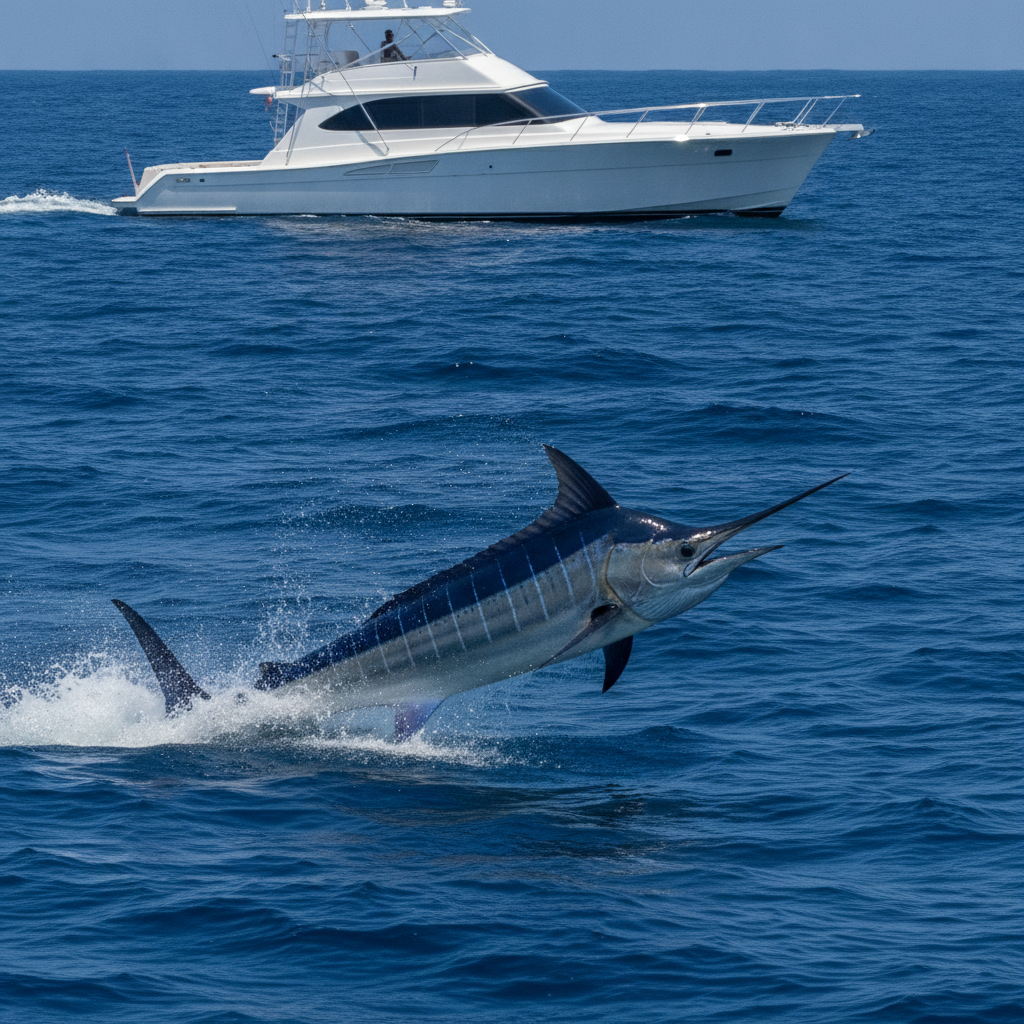
Blue marlin (Makaira nigricans) — the apex pelagic gamefish of the Atlantic and Pacific — is the ultimate bluewater quarry. Blues exceed 1,000 pounds (the famous “grander”), run for blistering miles, and tail-walk across the ocean. Catching a blue marlin requires bluewater preparation, the right boat, and proven techniques. This guide covers everything serious bluewater anglers need to know.
Where to Find Blue Marlin: Range & Habitat
Blue marlin inhabit warm tropical and subtropical waters worldwide. In the U.S., key destinations include: Atlantic — North Carolina (Oregon Inlet, Hatteras), Maryland (Ocean City), the Gulf of Mexico (Venice LA, Orange Beach AL, Pensacola FL, the Floater Rigs out of Port Aransas TX), South Florida (Miami, the Keys), and Bermuda. Pacific — Hawaii (Kona is the bluefin marlin capital of the world, hosting many granders annually), the Channel Islands of Southern California (rare), and the Eastern Pacific off Mexico (Cabo, La Paz, Mazatlan). Blues follow temperature breaks, weed lines, and bait concentrations — typically in 200-2,000+ feet of water along the continental shelf or over offshore seamounts.
Tackle for Blue Marlin
Rods: 80W or 130-class bent-butt trolling rods for proper marlin work; 50W class acceptable for smaller blues. Reels: Two-speed lever-drag reels — Penn International, Shimano Tiagra, Accurate ATD. 80W reels with 80 lb mono or 130W with 130 lb. Line: 80-130 lb monofilament main line. Leader: 300-500 lb monofilament wind-on leader, 8-15 feet. Hooks: 9/0-12/0 circle hooks for natural baits; large J-hooks 7/0-9/0 for lures. Bait & Lures: Skirted trolling lures (Black Bart, Joe Yee, Marlin Magic, Mold Craft), large rigged ballyhoo, mackerel, mullet, or skipjack tuna.
Top Techniques
Skirted-Lure Trolling: The dominant blue marlin technique worldwide. Pull a 5-7 lure spread at 7-9 knots: short rigger, long rigger, short corner, long corner, and a center “shotgun” line. Position lures in clean wake water and stagger sizes — bigger lures on outer positions, smaller in close. Live-Bait Slow-Trolling: Where regulations and conditions allow, slow-troll live skipjack, tinker mackerel, or scad at 2-4 knots. Effective when fish are seen but won’t hit faster lures. Bait-and-Switch: Pull lures to raise fish, then “switch” to a live or dead bait when a marlin appears in the spread.
Reading Bluewater
Look for: temperature breaks (1-3°F changes over short distances); current edges where bluewater meets greenwater; weed lines and floating debris; bird activity (frigatebirds especially); bait pods on the surface or sonar. Major underwater structure — canyons, seamounts, ledges — concentrate forage and predators. Modern bluewater anglers use SST charts (Hilton’s Realtime, FishTrack) and chlorophyll satellite data to locate productive water before leaving port.
The Bite & Hook-Set
Blue marlin strikes are explosive — the fish often slashes at a lure with its bill before eating, knocking it sideways. Resist the urge to set the hook immediately on lures with J-hooks; let the marlin grab and swim with it. With circle hooks and natural baits, free-spool briefly, then engage the reel and let the boat tighten the line — the circle hook does the work. Once tight, the fish usually jumps immediately.
Fighting a Marlin
Boat handling: Critical. The captain backs down on the fish to recover line and keep the angler in position. Stay calm and let the angler work. Drag pressure: Start at 25-35% of line breaking strength; increase only as needed. Pump and reel: Lift the rod with leg/back power, drop and reel as the rod descends. Time: A grander may take 4-8 hours; most blues come to the boat in 30-90 minutes. Avoid over-fighting — exhausted marlin die after release.
Catch-and-Release Best Practices
Conservation matters — blue marlin populations are stressed. Use circle hooks (often required by tournament). Keep fights short. Lift the leader, NOT the fish. Take photos quickly with the marlin in the water at boatside. Use a Bonefish Tarpon Trust or NOAA tagging kit when participating in research. Most U.S. tournaments are catch-and-release for blues under 99-110″ (different events have different lengths). Boating a marlin should be reserved for fish that will likely die from release or for record attempts.
Best Times to Fish
Atlantic: Generally May through October, with peak action June through September. Hatteras NC and the Gulf of Mexico produce best summer through early fall. Pacific (Hawaii): Year-round, with summer (May-September) producing the most granders. Atlantic Caribbean: February through September depending on location. Lunar phase matters — major periods and full/new moons concentrate baitfish.
Hot Spots
Hawaii: Kona Coast (the world’s premier grander fishery). U.S. East Coast: Hatteras NC, Ocean City MD, Cape May NJ, Montauk NY. Gulf of Mexico: Venice LA (Mississippi Canyon), Orange Beach AL, the “Floater Rigs” out of Port Aransas, Pensacola FL. Caribbean: St. Thomas USVI, Punta Cana DR. Mexico: Cabo San Lucas, La Paz, Mazatlan.
Regulations
NOAA HMS Angling Category permit required for vessels targeting blue marlin in U.S. Atlantic. Minimum size: 99″ lower jaw fork length (LJFL). Most blues are released. Tournaments enforce stricter minimums. ICCAT international rules apply offshore. Always verify current NOAA HMS rules and tournament rules before fishing.
More Resources
Browse all How-To Guides · Location Guides
Planning a trip to Saltwater Fishing?
This report tells you what happened. ReelAI tells you what to do about it — a briefing for your date, your target species and how you're fishing, built from our reports plus live NOAA and USGS data.
Powered by ReelAI — fishing.digital's intelligence layer. Answers are generated from fishing.digital reports and public NOAA, NWS and USGS data, and may be incomplete or out of date. Regulations and marine safety information are summaries only; always confirm with the responsible authority before you fish.