
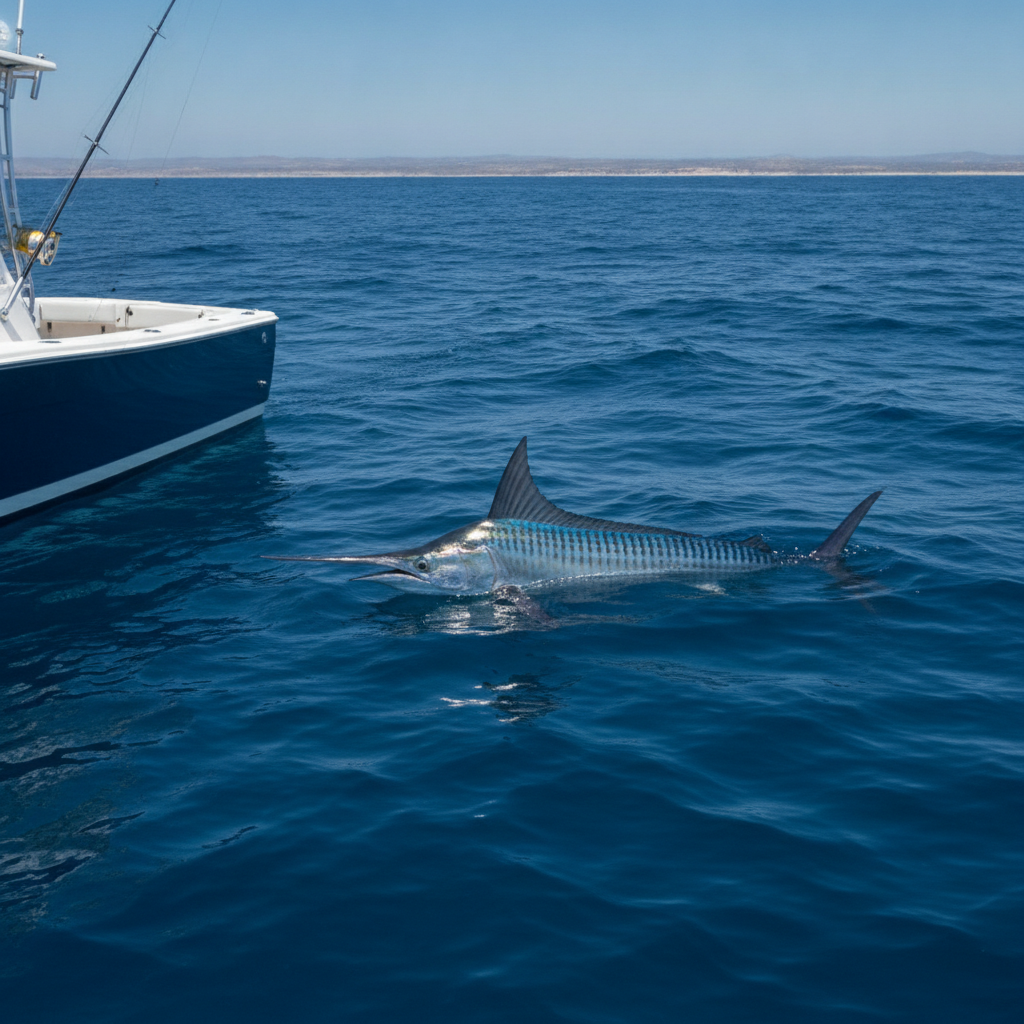
Striped marlin (Kajikia audax) — the most acrobatic and visually striking billfish in the Pacific — is a bluewater favorite of light-tackle anglers. Stripeys average 100-250 pounds (rarely topping 400), tail-walk on long, repeated jumps, and respond to teasers in ways that make them perfect targets for catch-and-release sport fishing. This guide covers the techniques that put stripers in the spread.
Where to Find Striped Marlin: Range & Habitat
Striped marlin inhabit the temperate and subtropical Pacific Ocean from California south through Mexico, Central America, the Galapagos, and across to Hawaii, Australia, and New Zealand. Major U.S./Mexico destinations: Cabo San Lucas (the world’s most consistent striped marlin fishery), the Magdalena Bay region of Baja, San Diego (summer/fall offshore), the Channel Islands. Pacific Mexico produces year-round, with peak fall numbers off Cabo and Magdalena. Hawaii has stripers but blues dominate. New Zealand and Australia produce trophy stripers from January through April.
Tackle for Striped Marlin
Conventional Trolling: 30-50 class trolling rods with two-speed lever drag reels (Shimano Talica, Penn International 30VSX, Accurate ATD-30). 30-50 lb monofilament main line, 200-300 lb leader. Light Tackle / Spin Stand-Up: 50-lb class stand-up rods or spinning gear with 8000-class reels and 65-80 lb braid — great for “casting” lures to teased fish. Fly Tackle: 14-16 weight rod, large saltwater reel with 600+ yards of backing, billfish flies (Cam Sigler tubes, large poppers). Lures: Joe Yee Apollo, Black Bart 1656, smaller skirted lures (chuggers, slant-heads), small to medium rigged ballyhoo. Hooks: 8/0-10/0 circle hooks for natural baits.
Top Techniques
Lure Trolling: Standard spread of 4-6 skirted lures at 7-9 knots — short and long riggers, short and long corners, optional center shotgun. Teaser-and-Switch: The most exciting striper technique. Pull hookless teasers (dredges, daisy chains, large skirted teasers) to raise fish, then “switch” them onto a hooked bait or fly. The angler stays ready at the cockpit to make the cast. Live-Bait Drifting: Off Cabo and Magdalena, locate cruising or “tailing” stripers on the surface, position the boat ahead of them, and present a live mackerel or pilchard via slow-troll or flat drift. Bait-and-Switch with Fly: The ultimate light-tackle game — tease a marlin to within fly-rod range, snatch the teaser, and cast a billfish fly into the slot.
Identifying Striped Marlin
Stripers are distinguished from blues by: more pronounced vertical body stripes (lavender-blue bars); longer, thinner bill; tall, scythe-shaped first dorsal fin (often as tall as the body is deep); slimmer body profile. Tail-walking and repeated jumping is also signature striper behavior — they’re generally more acrobatic than blues. “Tailers” — striped marlin lazily cruising on the surface with tail and dorsal exposed — are the iconic Cabo sight-fishing opportunity.
Reading the Ocean
Stripers favor 70-80°F surface water, with major action around current breaks, temperature breaks, and bait concentrations. Sardine schools, flying fish populations, and squid activity are key indicators. Look for: frigatebirds working bait pods; visible “tailers” on calm days; weed lines and floating debris; SST breaks identified via Hilton’s or FishTrack satellite imagery.
Sight-Fishing Tailers
Cabo San Lucas and Magdalena Bay offer the world’s best opportunity to sight-fish for striped marlin. On calm days (especially October-December), idle or troll slowly looking for fish with tails and dorsals out of the water. When spotted, position the boat 30-50 yards ahead and across the marlin’s path; present live bait, a lure, or a fly. This is some of the most addictive fishing on Earth.
The Bite & Hook-Set
Striped marlin often pile onto lures aggressively. With J-hook lures, let the fish run briefly before tightening the drag. With circle hooks on natural bait, free-spool, then engage the reel as the boat moves forward — the circle hook sets itself in the corner of the jaw. Stripers jump immediately — keep the rod tip down to avoid pulled hooks during jumps.
Fighting Striped Marlin
Stripers are faster but smaller than blues — they jump more, run less drag-melting line. Most fights run 15-45 minutes. Stay calm, follow the fish with the boat, and keep steady pressure. Avoid over-fighting — for catch-and-release survival, get the fish to the boat as quickly as possible.
Best Times to Fish
Cabo San Lucas: Year-round but peaks October through December. Magdalena Bay: October through January, with massive concentrations on the “Magdalena Bay Striped Marlin Migration” sight-fishing event. San Diego: Summer to early fall (warm-water years). Australia/NZ: January through April. Hawaii: Year-round but secondary to blues.
Conservation
Striped marlin populations are managed through international treaties (IATTC, WCPFC). The Magdalena Bay fishery has been documented as the largest annual gathering on Earth. Catch-and-release is standard practice; most tournaments require it. Use circle hooks, keep fights short, lift the leader rather than the fish for photos, and revive boatside with bow-pressure or controlled forward motion to push water through the gills.
Regulations
U.S. waters: NOAA HMS Angling Category permit required for U.S. vessels. Minimum size: 51″ LJFL. Mexico: SAGARPA/CONAPESCA fishing license required. Tournament rules typically require catch-and-release of all stripers. Always verify current regulations and tournament rules before fishing.
More Resources
Browse all How-To Guides · Location Guides
Planning a trip to Saltwater Fishing?
This report tells you what happened. ReelAI tells you what to do about it — a briefing for your date, your target species and how you're fishing, built from our reports plus live NOAA and USGS data.
Powered by ReelAI — fishing.digital's intelligence layer. Answers are generated from fishing.digital reports and public NOAA, NWS and USGS data, and may be incomplete or out of date. Regulations and marine safety information are summaries only; always confirm with the responsible authority before you fish.