
Updated: Thursday, July 2, 2026 · Next update: Thursday, July 9, 2026
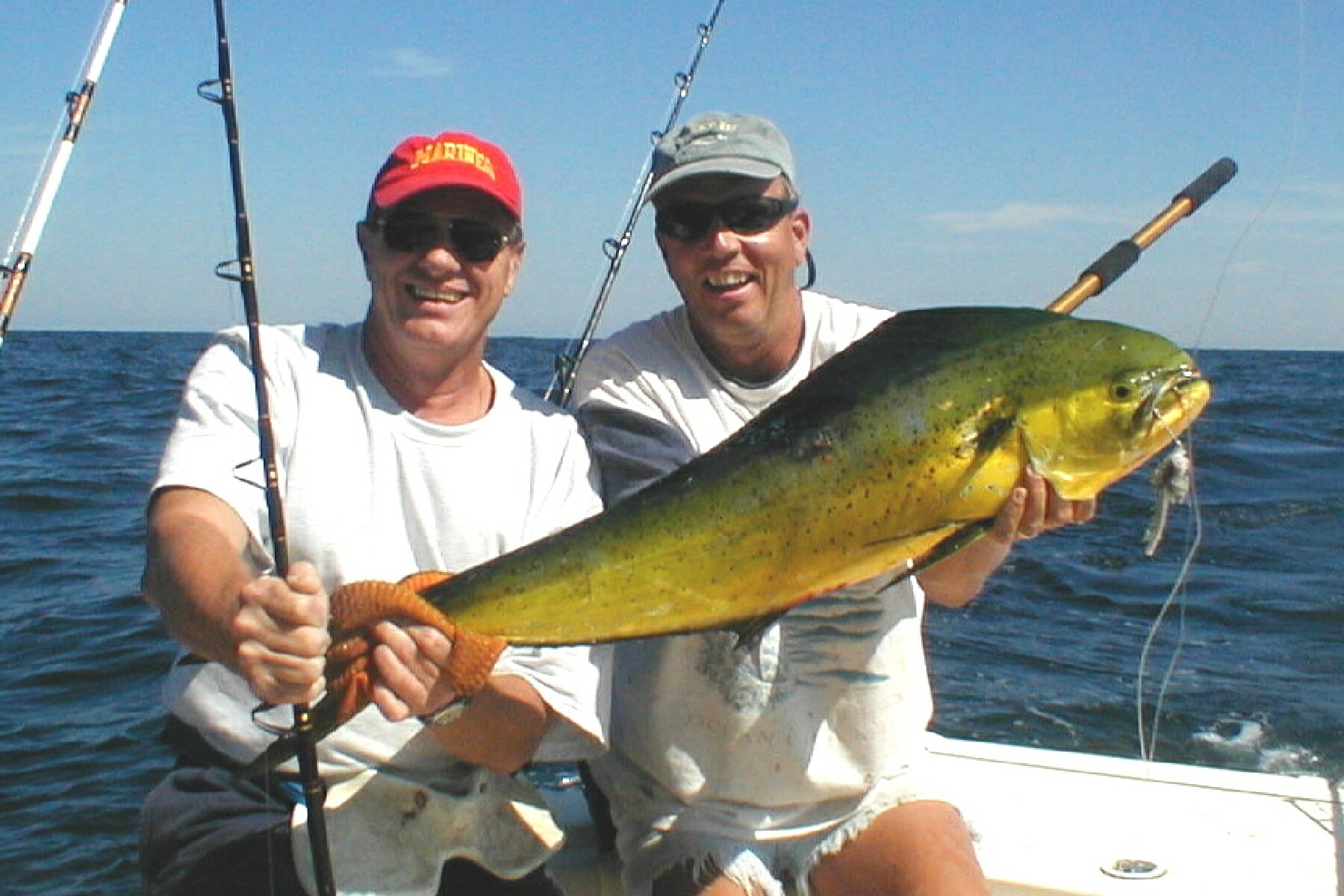
This Palm Beach fishing report for early July centers on deep water that sits close and productive. Mahi are the lead target, scattered along the Gulf Stream edge under weed lines and birds within a short run of the inlets. Inshore, tarpon pile into the Palm Beach and Jupiter inlets on the summer night pattern, mangrove and mutton snapper work the reefs, and kingfish hang on the nearshore structure. The main condition to plan around is the daily afternoon thunderstorm, so plan an early start offshore and save the inlets for the night tides.
What’s Hitting
Mahi scatter along the stream edge under weed lines and working birds. Tarpon stack in the Palm Beach and Jupiter inlets and feed hard on the night tides. Mangrove and mutton snapper work the reefs, and kingfish are still around on the nearshore structure, a good reef option after the morning offshore run.
Where to Find Them
Run to the 200–400 foot edge and hunt weed lines and current rips for mahi. Weed lines and rips collect the small bait that pelagics feed on, which is why they are the first thing to look for along the stream edge.
Tarpon hold in the Palm Beach and Jupiter inlets and around the ICW bridges after dark. The reefs in 60–120 feet give up snapper on the drift.
Tides & Conditions
Warm water and a close stream set up the offshore run. Morning is best for mahi before the wind builds a chop along the edge, and afternoon thunderstorms are the norm, so an early start pays off.
Mahi key on flying fish and small bait riding the Gulf Stream weed lines and rips, so covering water to find clean, holding weed is the difference-maker offshore. Inshore, mullet and pilchards around the inlets and bridges keep the tarpon fed on the night tides, when they do most of their feeding.
Tackle & Tactics
- Mahi: pitch ballyhoo or bonito strips to fish holding under the weeds, or troll a small spread along the edge. Once a school shows, pitching to fish you can see is often faster than trolling.
- Tarpon: a live mullet or crab on 50–60 lb leader in the inlets.
- Snapper: live baits and cut bait dropped to the reef on a knocker rig.
Local Intel This Week
Riviera Beach Municipal Marina and Phil Foster Park (Blue Heron) serve the Palm Beach and Lake Worth inlets, with Burt Reynolds Park in Jupiter covering the north end. Launch at Riviera Beach or Phil Foster for a quick run out the Palm Beach Inlet to the stream edge, and use Burt Reynolds Park for the Jupiter Inlet tarpon after dark. Mahi concentrate on the stream edge, tarpon in the inlets at night. Check current FWC and federal regulations and seasons before keeping fish.
This Week’s Tip
Working inlet tarpon at night, downsize your leader and keep the presentation quiet. Pressured inlet fish under the lights get leader-shy, and dropping from 80 to 50 lb fluorocarbon and letting a crab drift naturally in the current earns eats when a heavy rig gets refused.
Planning a trip to Palm Beach?
This report tells you what happened. ReelAI tells you what to do about it — a briefing for your date, your target species and how you're fishing, built from our reports plus live NOAA and USGS data.
Powered by ReelAI — fishing.digital's intelligence layer. Answers are generated from fishing.digital reports and public NOAA, NWS and USGS data, and may be incomplete or out of date. Regulations and marine safety information are summaries only; always confirm with the responsible authority before you fish.