
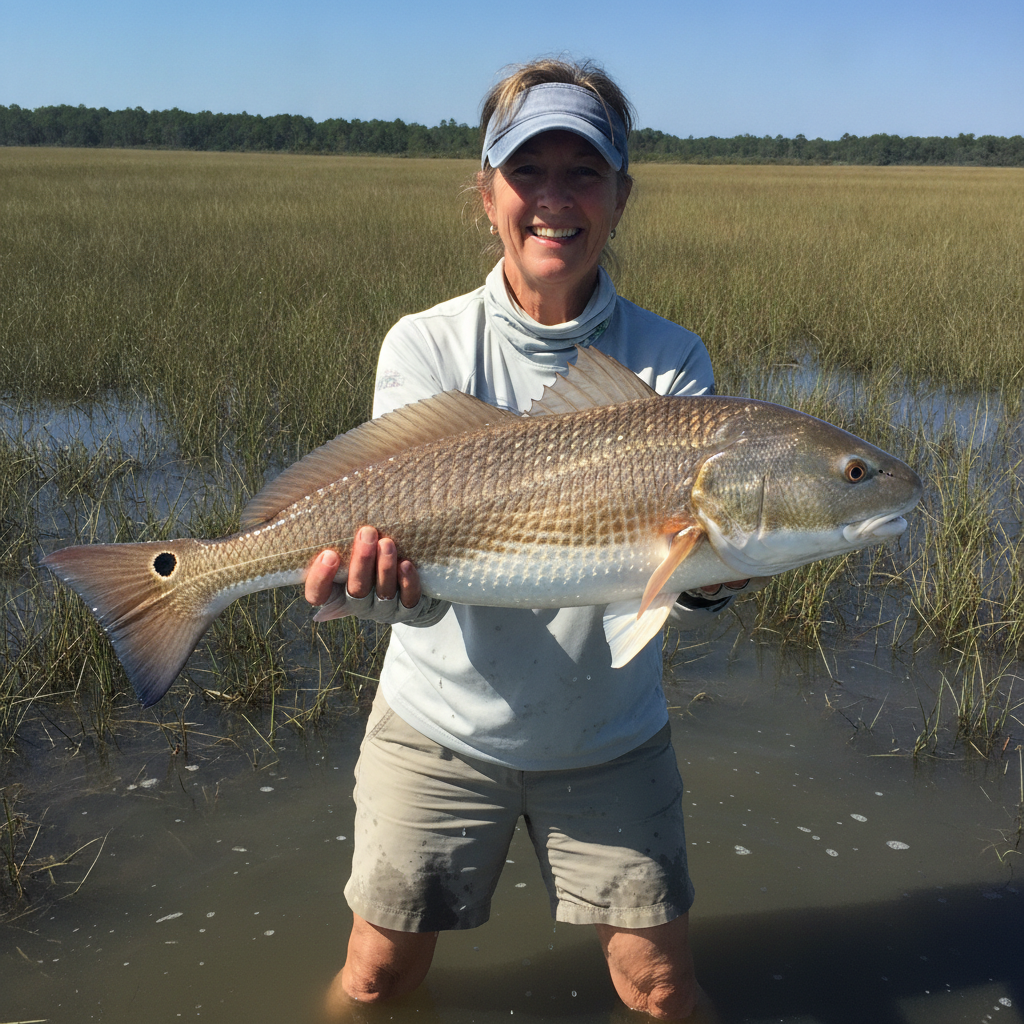
Late August in Tampa Bay is a heat game. Water temperatures on the shallow flats are pushing into the upper 80s by mid-morning, which compresses the good action into a narrow window at either end of the day. The trade-off is that the redfish schooling has started to organize, and that is the most exciting thing happening in the bay right now.
What’s Hitting
Redfish are the story. Fish are grouping on the upper-bay and lower-bay flats, working potholes and mangrove edges on the higher stages of the tide, and the schools are getting bigger week over week. Expect slot and over-slot fish traveling together.
Snook are on the beaches, the passes and the residential dock lines, with the strongest action in the dark and the first hour of daylight. Mangrove snapper are everywhere there is hard structure — bridges, rockpiles, artificial reefs and channel markers. Speckled trout are on the deeper grass in three to six feet, and the tail end of the tarpon season is still producing fish around the ship channel and the bridges for anglers willing to put in the hours.
Where to Find Them
The mangrove shorelines of the upper bay near Weedon Island and the Gandy corridor are holding redfish on the flood. Fort De Soto, Bunces Pass and the beaches from Pass-a-Grille north are snook water at dawn.
Mangrove snapper are stacked on the Skyway approaches, the Sunshine Skyway piers, the Howard Frankland pilings and the bay artificial reefs. Trout are on the deeper grass flats off Cockroach Bay, Terra Ceia and the Interbay peninsula. Look for the redfish schools by working a shoreline slowly with the trolling motor and watching for pushes and wakes rather than running from spot to spot.
Tides & Conditions
Tides run a moderate range this week with the best water movement early and late in the day. Water temps are in the mid to upper 80s and dissolved oxygen drops through the afternoon on the shallowest flats, which is exactly why fish slide to the deeper edges by 10 a.m.
Afternoon storms have been a daily feature. They also help — a cell that drops the surface temperature a few degrees can restart a dead flat for an hour. Just watch the radar and give yourself room to get back in. Wind has been light in the mornings with sea breeze filling in from the west by midday.
Tackle & Tactics
For schooling reds, a 7-foot medium spinning rod, 15- to 20-pound braid and 25- to 30-pound fluorocarbon leader. A weedless gold spoon or a soft plastic jerkbait rigged weightless covers water without spooking the school. Cut ladyfish or a live pinfish on a light jighead works when the fish get finicky.
Snook on the beach want a small white paddletail or a live scaled sardine on a 2/0 to 3/0 circle. Mangrove snapper require the same downsizing discipline as anywhere else — 20-pound fluoro, a No. 1 or 1/0 hook and a live shrimp fished tight to the structure. Trout on the deeper grass will eat a popping cork with a shrimp imitation under it all day long.
Local Intel This Week
Public ramps worth knowing: Fort De Soto Park in Tierra Verde, the E.G. Simmons Park ramp in Ruskin, Ballast Point Park in South Tampa, and the Gandy Boat Ramp on the Pinellas side. The Skyway Fishing Pier State Park gives shore anglers access to genuinely deep water without a boat.
Fish are concentrating on the deeper flat edges and around hard structure through the heat of the day, and pushing shallow on the early flood. Snook, redfish and trout all carry season, slot and bag rules that change by region and by year in Florida — check current FWC regulations before keeping anything.
This Week’s Tip
When you find a redfish school, resist the urge to cast into the middle of it. Cast well ahead of the school and let the lead fish swim to your bait. Landing a lure on top of forty reds in eighteen inches of water blows the whole group off the flat, and they will not settle down again for the rest of the tide.
Planning a trip to Tampa/St. Pete?
This report tells you what happened. ReelAI tells you what to do about it — a briefing for your date, your target species and how you're fishing, built from our reports plus live NOAA and USGS data.
Powered by ReelAI — fishing.digital's intelligence layer. Answers are generated from fishing.digital reports and public NOAA, NWS and USGS data, and may be incomplete or out of date. Regulations and marine safety information are summaries only; always confirm with the responsible authority before you fish.