
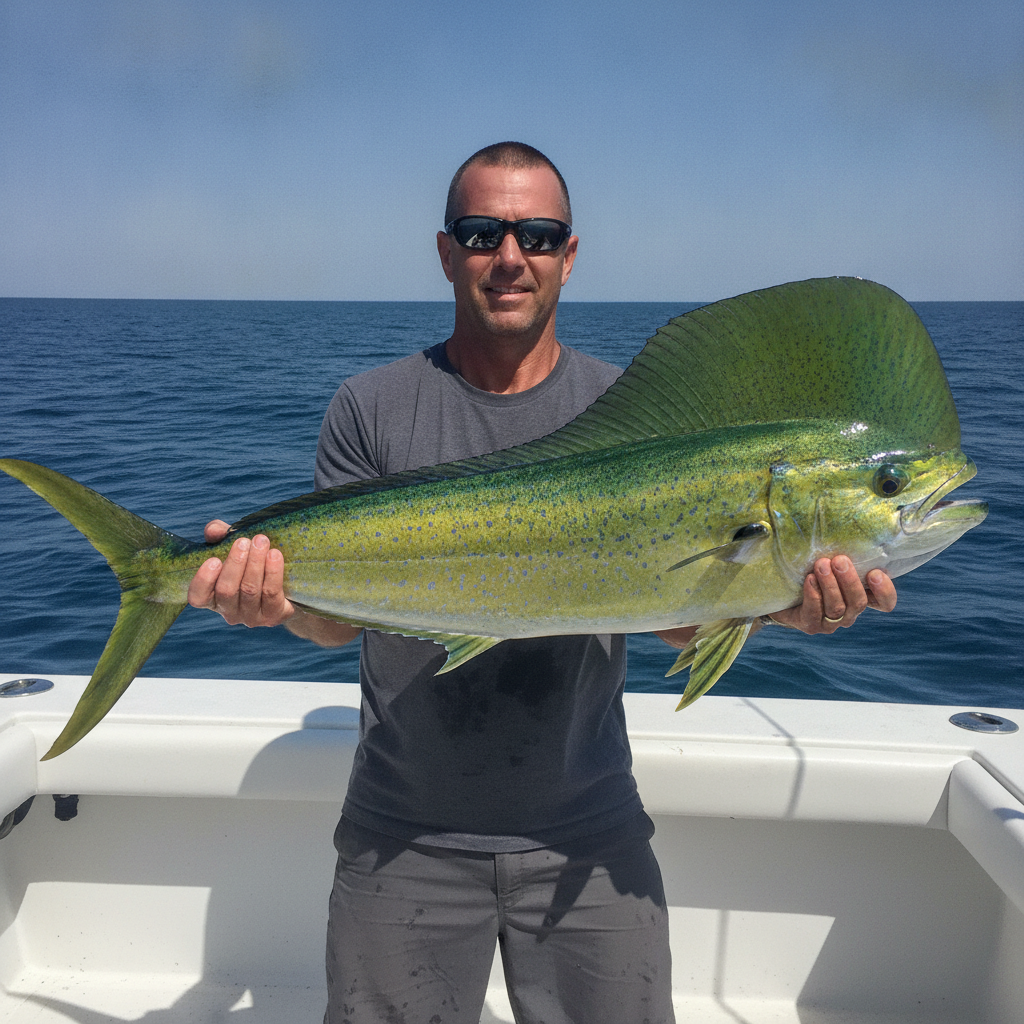
This week off Fort Lauderdale, it’s a classic July split shift: run offshore early for mahi before the breeze fills in, then work the reef after dark when the snapper wake up. The middle of the day belongs to the storms and the beach crowd.
What’s Hitting
Mahi are scattered but catchable along the weedlines and current edges in 400 to 900 feet, with most fish in the schoolie class and a few better bulls under birds. Mangrove snapper are the reliable night bite on the reefs in 40 to 90 feet, kingfish are patrolling the color change in 90 to 140 feet, and a handful of sailfish are still being caught on live bait despite the off-season timing. Tarpon are working the beach at dawn for the inshore crowd.
Where to Find Them
Offshore, find the current edge — the weed has been gathering on a rip that sets up anywhere from 5 to 12 miles out. The night snapper are on the second and third reef lines, and the kings are shadowing bait over the same structure during the day.
Tides & Conditions
Seas have been 2 to 3 feet early, building with the afternoon southeast breeze. The Gulf Stream edge has been swinging in closer this week, which is compressing the mahi water into a shorter run.
Tackle & Tactics
For mahi, troll small ballyhoo and feathers until you find fish, then hold the school with chunks and a pitch rod. Night snapper want a fresh ballyhoo plug or bonito strip on 20-pound fluorocarbon fished with as little lead as the current allows. Slow-troll a live goggle-eye or blue runner for the kings and any lingering sails.
Local Intel This Week
The 15th Street ramp on the intracoastal and Alsdorf Park in Pompano Beach are the busiest public launches, with Dr. Von D. Mizell-Eula Johnson State Park a good option at the Dania end. The fish are concentrating on the offshore rip early and the reef lines after sunset. Snapper and pelagic regulations differ between state and federal waters here — check current FWC regulations and seasons before keeping fish.
Spots & Access This Week
The 15th Street ramp and the Dania Cutoff Canal ramp are the practical launches for Port Everglades and the offshore run; both fill early on weekends. Shore anglers are catching snapper, jacks and the occasional snook from the Hillsboro Inlet jetty and along the Anglin’s Pier area in Lauderdale-by-the-Sea. Kayak anglers do well in the protected Intracoastal water around the bridge lights after dark. Fish are holding on the inlets and the current edge rather than spread across the flat reef, so commit to one pattern per trip. Snook harvest is closed on the Atlantic coast right now and reef species carry federal limits — check current FWC and NOAA regulations before keeping fish.
Making the Short Run Count
Fort Lauderdale’s advantage is how close the blue water sits, and the way to use it is to leave early and look before you fish. Run east until you find a weedline holding actual life — flying fish, small tripletail, birds — then work it slowly with a pitch rod rigged and ready. A 40-pound fluorocarbon leader gets noticeably more bites than heavier on summer mahi. On the reef, drift rather than anchor and let the bait move naturally in the current. At the inlets after dark, a heavy flair hawk jig swum across the shadow line is the most consistent artificial for both tarpon and snook.
This Week’s Tip
When you find a weedline, don’t just troll down it — check which side the bait is on. The mahi almost always hold on the clean-water edge, and a spread run 50 yards off the weed on that side out-produces dragging baits through the salad.
More Fort Lauderdale Resources
Fort Lauderdale Fishing Guide · Fort Lauderdale Seasonal Calendar · All Fort Lauderdale reports →
Also read: Fort Lauderdale Fishing Report — Week of July 30, 2026: Weedline Mahi, Reef Snapper
Reports updated every Thursday on fishing.digital.
Planning a trip to Fort Lauderdale?
This report tells you what happened. ReelAI tells you what to do about it — a briefing for your date, your target species and how you're fishing, built from our reports plus live NOAA and USGS data.
Powered by ReelAI — fishing.digital's intelligence layer. Answers are generated from fishing.digital reports and public NOAA, NWS and USGS data, and may be incomplete or out of date. Regulations and marine safety information are summaries only; always confirm with the responsible authority before you fish.