
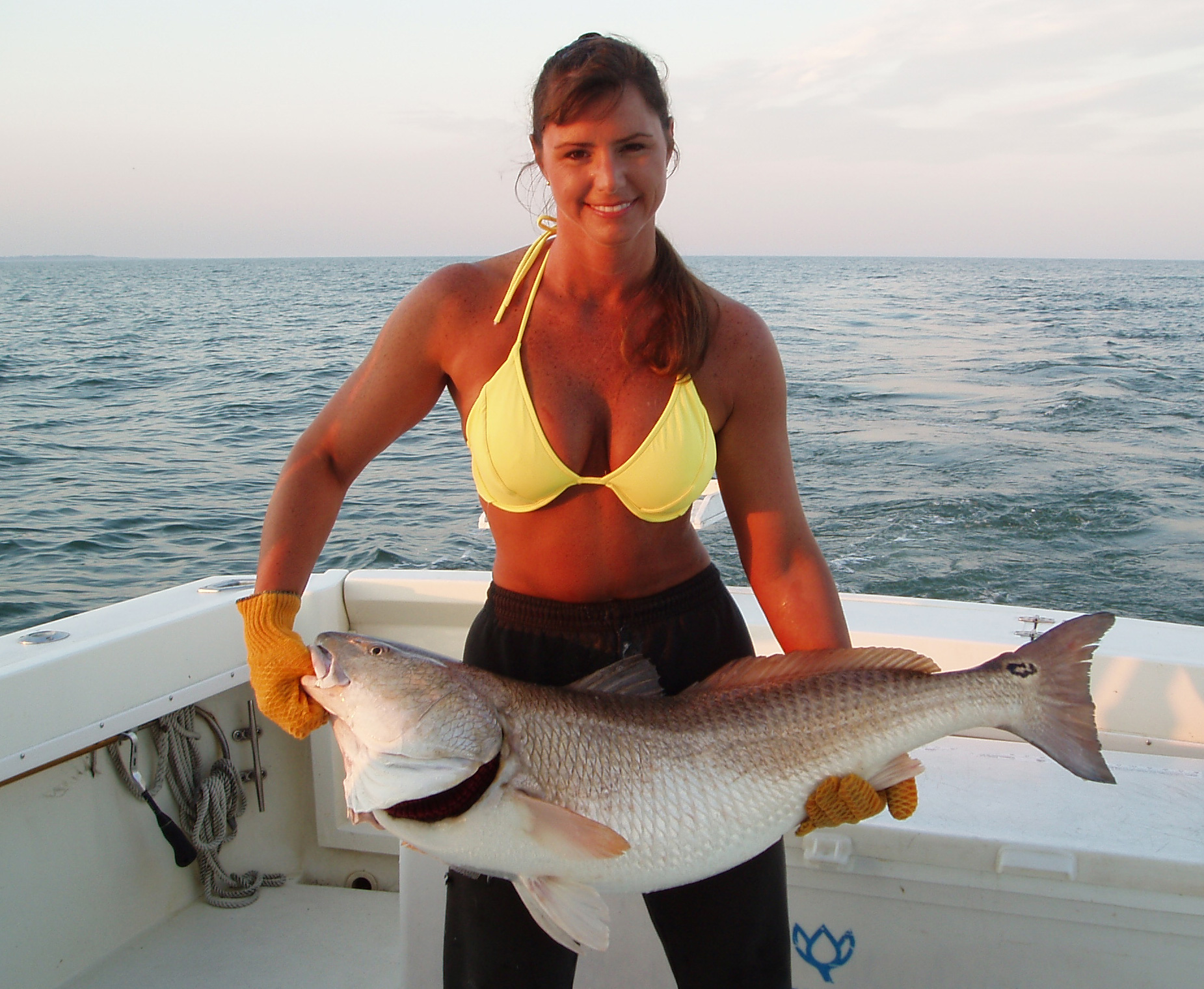
This week along the Daytona and Space Coast stretch, the lagoon is fishing like classic mid-summer — early topwater, schooling redfish, and glass-calm water before the storms — while the nearshore reefs keep producing kings for anyone who beats the sea breeze out of the inlet.
What’s Hitting
Redfish are grouped in good-sized schools in Mosquito Lagoon and the north Indian River, feeding hard in the first two hours of light. Kingfish are steady on the nearshore reefs and wrecks in 60 to 90 feet, tarpon and oversized reds are working the bait pods off Ponce Inlet, and trout are eating topwaters over grass at dawn. Mangrove snapper round it out on the inlet rocks and channel edges.
Where to Find Them
Look for the redfish schools pushing wakes on the shallow flats of the lagoon early, then sliding to the edges as the sun climbs. The kings are on the Party Grounds and the reefs northeast of Ponce in 70-plus feet. Tarpon are with the pogy pods within a mile of the beach north and south of the inlet.
Tides & Conditions
The lagoon is wind-driven rather than tidal, and light mornings this week have kept it sight-fishable. At the inlet, the stronger tides put a hard outgoing rip in play by mid-morning — good for tarpon, sporty for small boats.
Tackle & Tactics
School reds want a weedless soft plastic or gold spoon thrown well ahead of the lead fish — long casts matter in the clear shallow water. Slow-troll live pogies on stingers for the kings. Around the inlet bait pods, a live pogy free-lined on an 8/0 circle covers both the tarpon and the big reds.
Local Intel This Week
Parrish Park in Titusville is the workhorse ramp for the lagoon, the Port Orange Causeway ramp covers the Daytona end, and Freddie Patrick Park at Port Canaveral handles the offshore fleet. Fish are concentrating on the lagoon flats at dawn and the bait pods off the inlets. The lagoon redfish fishery has specific harvest rules in place — check current FWC regulations and seasons before keeping fish.
Spots & Access This Week
Haulover Canal and Bairs Cove give the fastest access to Mosquito Lagoon; the Ponce Inlet ramp at Lighthouse Point covers inlet and nearshore trips, and Beacon 42 handles the northern Indian River. Kayak anglers do particularly well in the lagoon, where a quiet approach is worth more than speed. Beach driving access at New Smyrna puts surf anglers on the productive troughs. Fish are concentrating around the spoil islands, the inlet and the deeper edges rather than spread across the open lagoon. Snook harvest is closed on the Atlantic coast and redfish rules vary by zone — check current FWC regulations before keeping fish.
Working the Lagoon Before the Heat
The lagoon in summer is a first-light fishery and the single biggest mistake is arriving too late. Be anchored or staked out before the sky lightens and let the flat settle. Gold spoons and weedless soft plastics cover water efficiently for redfish, and a topwater walker at grey light will draw strikes from fish that ignore everything else an hour later. When the sun gets high, look for the clean-water seam — the lagoon holds distinct bands of clearer and dirtier water in August and the trout stack right along the edge. At the inlet, the outgoing tide after dark is the reliable window for snook and tarpon.
This Week’s Tip
When a redfish school gets pressured and breaks up, don’t leave. Stake out quietly and give it fifteen minutes — the school almost always regroups nearby, and the first boat back on them without spooking them gets the best shots of the morning.
More Daytona / Space Coast Resources
Daytona / Space Coast Fishing Guide · Daytona / Space Coast Seasonal Calendar · All Daytona / Space Coast reports →
Also read: Daytona/Space Coast Fishing Report — Week of July 30, 2026: Surf Redfish, Pompano and Whiting
Reports updated every Thursday on fishing.digital.
Planning a trip to Daytona/Space Coast?
This report tells you what happened. ReelAI tells you what to do about it — a briefing for your date, your target species and how you're fishing, built from our reports plus live NOAA and USGS data.
Powered by ReelAI — fishing.digital's intelligence layer. Answers are generated from fishing.digital reports and public NOAA, NWS and USGS data, and may be incomplete or out of date. Regulations and marine safety information are summaries only; always confirm with the responsible authority before you fish.