Updated: Thursday, July 30, 2026 · Next update: Thursday, August 6, 2026
This Florida Keys fishing report covers late July, when heat and flat mornings reward anyone willing to leave the dock in the dark. Permit on the ocean-side wrecks are the lead target and in their summer prime, and the July 29 full moon sets off the mutton snapper spawn on the patch reefs and humps. Plan around strong full-moon tides early in the week and a building afternoon breeze, and expect the best fishing on the ocean side while the bay runs hot and slow.
What’s Hitting
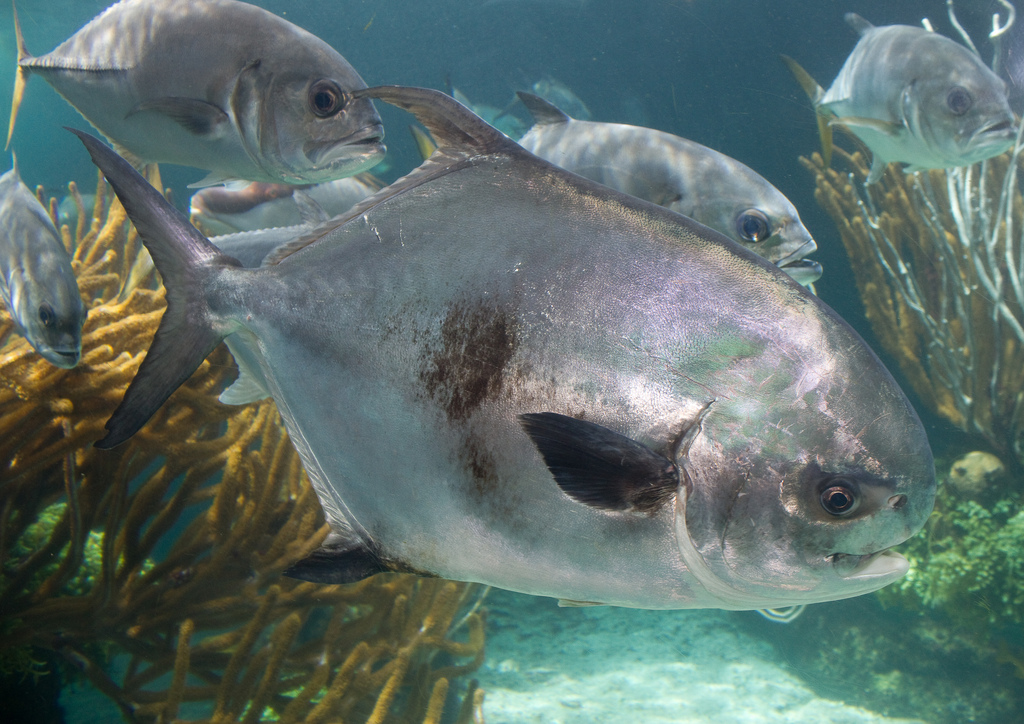
Permit are the standout. The ocean-side wrecks from Islamorada down through Marathon hold good numbers of 20- to 30-pound fish. Mutton snapper are the other headline, with post-full-moon aggregations working the deeper patches and reef edges in 60 to 90 feet.
Yellowtail snapper are steady on the reef behind a good chum slick. Mahi are scattered but present on the weedlines and under frigate birds out past the 200-foot line. Tarpon numbers thin out after June, but bridge fish are still around at night, and bonefish work the ocean-side flats in the very early morning.
Where to Find Them
Wreck permit hang just off the structure rather than on it, so look for them 50 to 100 feet up-current. Muttons sit on the rubble edges adjacent to the patch reefs, not in the middle of them. Yellowtail come to the boat behind a steady chum line in 50 to 70 feet.
Bonefish work the ocean-side flats from Lower Matecumbe to Long Key on the early flood, before the water heats. Bridge tarpon set up on the Channel Two and Channel Five spans when the current runs strong.
Tides & Conditions
Expect strong tides off the full moon early in the week, moderating toward the weekend. Ocean-side clarity is very good, with light southeast wind most mornings and a building afternoon breeze. Water temperatures run 86 to 88 on the flats and in the low 80s on the reef.
The bay side is very warm and very quiet in the middle of the day. Concentrate on the ocean side, and fish the flats and the reef early.
Tackle & Tactics
- Wreck permit: a live crab on a 4/0 circle hook with 30-pound fluorocarbon and just enough weight to hold. Switch to a jig-and-crab combo when the current picks up. A circle hook sets itself in the corner of the mouth as the fish turns, which suits a crab drifted back on a semi-slack line.
- Mutton snapper: a long leader, 5 to 6 feet of 40-pound fluorocarbon, with a whole ballyhoo or live pinfish on the bottom at first light.
- Yellowtail: a small hook, 15-pound fluorocarbon and a chunk of silversides drifted back in the slick.
- Mahi: a bucktail or a live pilchard pitched at the weedline.
Local Intel This Week
Founders Park in Islamorada, the Marathon city ramp at 33rd Street and the Murray E. Nelson ramp in Key Largo are the reliable public launches. Use Founders Park or the Marathon ramp to reach the ocean-side wrecks and reef edges from Islamorada through Marathon, and the Murray E. Nelson ramp for the upper Keys.
Several Keys species carry seasonal closures and special Keys-only rules. Check current FWC and federal regulations and seasons before keeping fish.
This Week’s Tip
When you set up on a wreck for permit, anchor well up-current and let the crab drift back to the fish rather than dropping on top of them. Permit that see the boat first will not eat, and one blown drift can shut the wreck down for an hour.
Planning a trip to Florida Keys?
This report tells you what happened. ReelAI tells you what to do about it — a briefing for your date, your target species and how you're fishing, built from our reports plus live NOAA and USGS data.
Powered by ReelAI — fishing.digital's intelligence layer. Answers are generated from fishing.digital reports and public NOAA, NWS and USGS data, and may be incomplete or out of date. Regulations and marine safety information are summaries only; always confirm with the responsible authority before you fish.