Updated: Thursday, July 23, 2026 · Next update: Thursday, July 30, 2026
This Florida Keys fishing report for late July is a hot, glassy grind at midday, but the mornings and nights pay off. Permit school on the Gulf-side wrecks, mangrove snapper stay stacked from the tail end of the spawn, and enough tarpon linger in the channels to keep the dawn patrol interested. The main conditions to plan around are tides building toward the month-end full moon and afternoon thunderheads, so fish early and watch the radar.
What’s Hitting
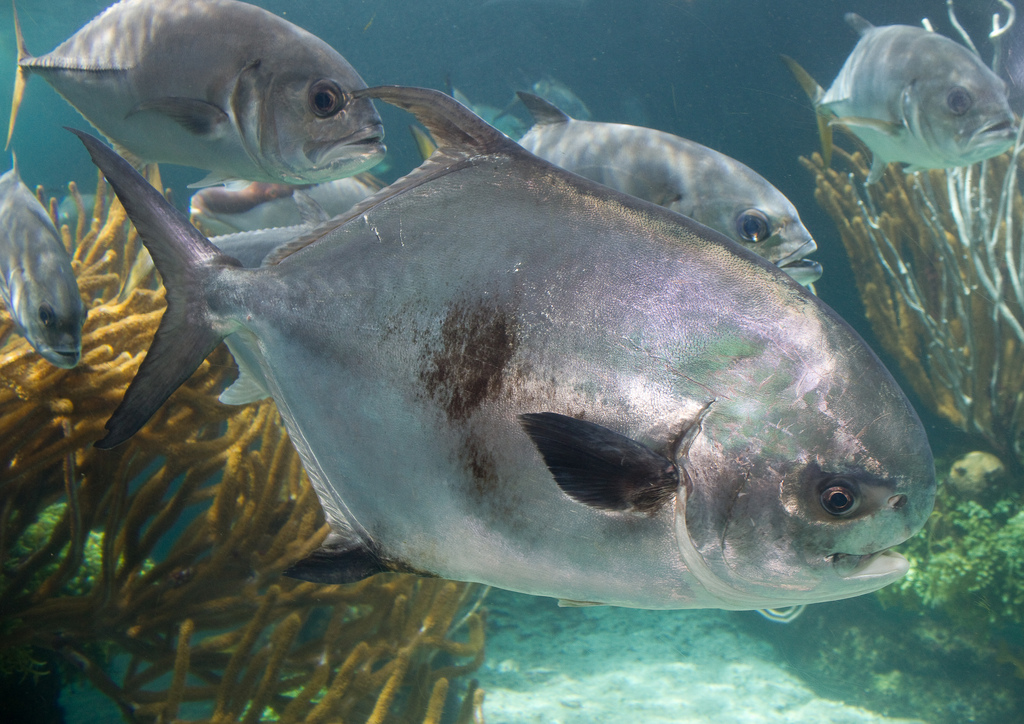
Permit in the 10- to 25-pound class circle the Gulf-side wrecks, where a well-placed live crab draws attention almost every drop. Mangrove snapper are thick on the patch reefs and channel edges after dark, with solid fish to 18 inches.
Yellowtail are steady on the reef in 40 to 60 feet, and mutton snapper appear on the deeper edges around the stronger tides. The bridge shadows offer a bonus mutton or two on the strongest tides.
Where to Find Them
Wrecks in 20 to 50 feet on the Gulf side hold the permit schools. Approach quietly and stake off up-current. If the wrecks are crowded, fall back to the deeper channel edges between the banks. Permit use them as highways between structure, and a drifted crab there intercepts travelers the anchored fleet never sees.
Patch reefs from Tavernier to Marathon are loaded with mangroves at night. Tarpon still slide through the Bahia Honda and Seven Mile Bridge channels at first light, fewer than in June but worth a look.
Tides & Conditions
Tides build toward the full moon at month’s end. That stronger flow fires the reef at night but makes the wreck permit spookier at slack. Expect a light east-southeast breeze early, afternoon thunderheads and bathwater temperatures.
Current matters on the reef because it carries chum and scent to waiting fish and gives them a reason to feed.
Tackle & Tactics
- Permit: a silver-dollar-size live crab on a 3/0 circle hook and 30-pound fluorocarbon, cast up-tide of the school. The circle hook lets the fish eat and turn, setting itself in the corner of the mouth.
- Night snapper: downsize to 15- to 20-pound fluorocarbon and a small knocker rig with fresh ballyhoo chunks.
- Yellowtail: a steady chum slick and small hooks buried in silversides.
Local Intel This Week
Founders Park in Islamorada and Harry Harris Park in Tavernier are the reliable public ramps in the mid-Keys, both close to the patch reefs. Bahia Honda State Park serves the Lower Keys crowd and puts you near the bridge channels for the dawn tarpon.
The patch-reef snapper crowd anchors by sunset, so claim your spot early. Focus on structure with current, because dead water means dead rods. Check current FWC and federal regulations and seasons before keeping fish. Snapper species deserve an especially close look.
This Week’s Tip
On the wrecks, hook your crab through the point of the shell and cast beyond the school, then drag it slowly into the zone. A crab that splashes down on a permit’s head sends the whole school down, while one that eases in from the edge looks like natural prey.
Planning a trip to Florida Keys?
This report tells you what happened. ReelAI tells you what to do about it — a briefing for your date, your target species and how you're fishing, built from our reports plus live NOAA and USGS data.
Powered by ReelAI — fishing.digital's intelligence layer. Answers are generated from fishing.digital reports and public NOAA, NWS and USGS data, and may be incomplete or out of date. Regulations and marine safety information are summaries only; always confirm with the responsible authority before you fish.